
Books and Movies to Inspire Adventure (That Are Not ‘Wild’ or ‘Free Solo’)
Purchases made through some links on this page may provide The Detour Effect with commissions (at no extra cost to you). Thank you!
If you Google movie or book recommendations that will inspire your outdoor adventures or nomadic lifestyle, you’ll get a lot of “have you seen/read Wild?” (or Into The Wild, or Free Solo, or Dawn Wall, or Valley Uprising), which is unhelpful, because of course you have. I am going to assume you’ve already seen all of these.
Some of my alternative recommendations below might still strike you as obvious (Jack Kerouac is not the most creative suggestion), but I’m hoping some of them could help get you thinking outside the box as to how different genres of film and literature can still lend themselves to informing your perspective on adventure. I’ve recently published an article called “What Philosophers Have Said About Hiking and the Outdoors” that suggests many more books; it’s almost like a de facto Part 2 of this post.
Books

My Journey to Lhasa: The Classic Story of the Only Western Woman Who Succeeded in Entering the Forbidden City (Alexandra David-Neel)
Alexandra David-Neel snuck herself into the holy city of Llasa during a time when Tibet was off-limits to foreigners due to political conflict. This was also a time when #FemaleSoloTravelers were not really a thing, although on this particular trip she did have a companion in her adopted Tibetan son. She learned Tibetan, studied Eastern philosophy with monks, and in this story, made an epic pilgrimage on foot over the Himalayas to reach her destination in disguise. Her account depicts a Tibet that no longer exists today in quite the same form, since the military invasion by the People’s Republic of China in 1949 and subsequent attempted genocide of the Tibetan people. It’s not only an adventure story or “thru-hiking” story, but also a precious cultural account from a time gone by.

Mad Travelers: Reflections on the Reality of Transient Mental Illnesses (Ian Hacking)
Fugue, also called conversion disorder or mass hysteria, is an endlessly fascinating topic. Everyone knows about the “hysteria” that gripped Victorian women, or has heard stories of laughing fits or “dancing mania” taking over entire towns or communes and lasting for days on end (this list of cases is a fun place to start. I also loved Crazy Like Us: The Globalization of the American Psyche, which is an interesting look at how mental illnesses actually present totally different symptoms around the world and only become homogenized when patients become familiar with the types of symptoms displayed by others). Before stumbling upon this book I never knew about “mad travelers” who travel obsessively, often in a dissociative state with no memory of who they are or why they’re traveling.

The Man Who Walked Through Time: The Story of the First Trip Afoot Through the Grand Canyon (Colin Fletcher)
When I moved to the Grand Canyon and was constantly posting about falling in a deep and obsessive love with it, everyone I knew started recommending this book to me. Colin Fletcher hiked the length of the Canyon – not the simple little Rim to Rim jaunt across the width that we all know, but the length. There was no precedent for it, making the journey full of unknowns. Most hikers have experienced for brief moments the wildness, seclusion, and reverie that is captured in his writing, and are therefore primed to appreciate the extent to which he must have glimpsed divinity.

Killing Yourself to Live: 85% of a True Story (Chuck Klosterman)
Chuck Klosterman is a music journalist, and I’ve always appreciated how his books make connections between broader pop culture topics which may seem irrelevant to daily life, and the very personal stories of how these things shape who we become and our perspectives on the world. In this book he goes on a road trip to places around the United States where rock stars have died, such as Kurt Cobain’s house, the site of Buddy Holly’s plane crash, and Sid & Nancy’s hotel room at the Chelsea, in an effort to draw conclusions about why these places have a hold on us. When I road trip, I often check out sites of musical significance; perhaps it makes me feel closer to and more personally involved in some sort of historical narrative I have about my identity. I left the music industry to pursue outdoor adventure, after all.

Dharma Bums (Jack Kerouac)
We’ve all read On The Road but Kerouac got into a whole host of other interesting messes. Dharma Bums is one of my all time favorites. I love his respect and admiration for his friend Japhy Ryder (based on poet Gary Snyder, a naturalist and student of Eastern philosophy. His wiki page also calls him a anarchoprimitivist). I remember flashes of different scenes from this book, like the main character living in a shack in someone’s backyard, or hiking alongside Japhy and having a sort of awakening about the fulfillment of being in nature. He spends a summer alone as a fire lookout at Desolation Peak in the North Cascades; I later hiked there in his footsteps. This book might have been one of my first introductions to the idea of seasonal work – one of those, “wait….you can do that?” moments. He makes the experience sound so spiritual, which is a common aspect of his writing across every single one of his novels. His frustration at not being able to achieve the level of zen he was constantly searching for is also something that stuck with me.

Planetwalker: 22 Years of Walking. 17 Years of Silence. (Dr. John Francis)
While taking on a vow of silence, Dr. John Francis walked two continents as a form of environmental protest against pollution. He soon began to form ideas about how society’s treatment of the environment is a reflection of our treatment of each other – a reflection of the overall physical and mental health of our society. I just learned about this book while researching for my article on “What Philosophers Have Said About Hiking and the Outdoors” and I can’t wait to read it!

The Valleys of the Assassins and Other Persian Travels (Freya Stark)
Freya Stark was a British explorer and travel writer in the early 20th century who visited places few western women had seen with their own eyes – which is probably still true today. It’s hard to choose where to start with her books; A Winter in Arabia, Baghdad Sketches, Perseus in the Wind, and The Lycian Shore are likely beautiful choices as well, but The Valleys of the Assassins is where I chose to begin my journey into Stark’s bibliography. She travels to Luristan, the mountainous region between Iraq and present-day Iran, looking for the abandoned castle ruins of a once-great and storied kingdom. For a rundown on the significance of this “fabled and fearsome” valley, check out a recent National Geographic report inspired by Stark.

Desert Solitaire (Edward Abbey)
Edward Abbey was a park ranger at Arches National Monument (back when it was a Monument and not a Park). He lived alone in a tin can trailer surrounded by slickrock and desert wildlife in a time before the area received much visitation. The memoir he wrote about his time in canyon country is an exultation of all things dry, hot, wild, and desolate. As a desert hiker myself, my favorite part of the country being the Southwest and having lived and worked at the Grand Canyon, his words strike a chord in my heart that few other authors have come close to reverberating. Perhaps even more than his descriptions of the desert, I appreciate his often taboo opinions about the intersection of tourism and wilderness preservation. Some of the things he says, I have thought myself yet never dared to utter out loud lest I be “cancelled” for lack of inclusivity.

Post Office (Charles Bukowski)
Nothing will make you want to quit the 9-to-5 grind in favor of literally anything else like Bukowski’s Post Office. The folks over at the “anti-work” subreddit probably love this one. I’ve also read Factotum and Ham on Rye, and to be honest can’t remember which one(s) I liked best, but you can see why this title would be particularly relevant for those of us who are looking to go a different direction in a Capitalistic society that only offers one path. Bukowski’s novels can make the daily monotony of life feel, at times, so depletingly soul-crushing that the only logical response is to opt out.

Essential Bukowski: Poetry (Charles Bukowski)
Here Bukowski offers glimpses of beauty in the every day. He does this in all his work, though for some reason people remember him only as being an asshole (especially Modest Mouse). I think he was able to see the divinity of life in even the grimiest and least expected of places. One of my tattoos is from a poem in this book, “X-jobs, X-wives, X-faces, X-lives”, to me a statement on transience and the value of being a Renaissance Man/Woman, someone who has followed their interests wherever it takes them and who has lived many lives, even if some of those lives have been messy or you’ve had to leave things behind.

Travels with Charley in Search of America (John Steinbeck)
Travels with Charley was sort of a #vanlife story before it was trendy. John and his dog Charley hit the road in his pimped out camper, stopping off in places often skipped over on generic “bucket list” trips, and meeting the people who truly make up America.

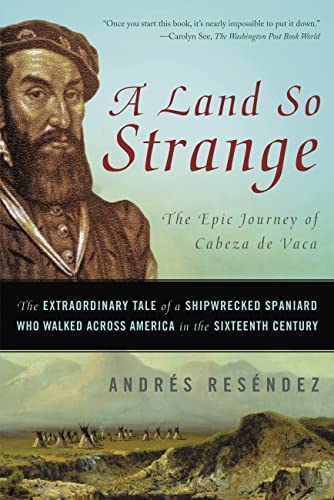
A Land So Strange (Andrés Reséndez)
I had never heard of Cabeza de Vaca until I spent a month exploring Big Bend National Park and came across a book called Brutal Journey at a store in Terlingua. I can’t believe this true story isn’t more widely known! In the 1500s a crew of 300 Spanish adventurers set out to explore the southern United States and northern Mexico, but after a never-ending series of misfortunes such as shipwrecks and indigenous raids, their numbers dwindled to 4. Cabeza de Vaca emerged from the wilderness years later, now a healer amongst the Native Americans. During his travels, he may have been the first European to set eyes on the Big Bend – I did a little research project to investigate whether or not he was.
I ended up ordering A Land So Strange digitally instead of buying Brutal Journey that day, so I’m not sure which is better, but A Land So Strange is fascinating.

Stikky Tracks and/or Stikky Night Skies (Laurence Holt)
The Stikky series of books makes it easy to learn how to navigate in nature, even if you’ve never spent much time exploring the outdoors before. The author promises each book will teach you a new skill “in just one hour.” I have Stikky Tracks, which teaches readers to recognize various animal tracks and scat, and Stikky Night Skies, which teaches you to identify constellations and find your way north. These are two skills that I have struggled with over the years, despite all of my experience solo hiking and trekking around the world. It’s true that very quickly within sitting down to read each book, I already felt like I had the tools to identify features I never could before! The lessons are explained in layman’s terms and the books are organized in a way that helps reinforce your grasp of each point before moving on to the next. I can’t wait for my next backpacking trip so I can test my knowledge in the field. I’d also be interested in the author’s other books, like Sticky Trees.

The Psychic Soviet (Ian Svenonius)
This might seem like an odd left-field choice for this list. Ian Svenonius is in rock bands like National of Ulysses, Chain and the Gang, and The Make-Up. These bands are alright. But based on his writing I think he might be a little bit of a genius. I didn’t always know when to take his ideas in this book seriously or when they were satire; sometimes you think he’s really cracking some sort of code you never thought about before, then you realize he’s being indulgent and ridiculous. Either way he is still making a point. He draws comparisons between how overarching global and political events and biases influence pop culture and therefore, the way we all think (do the Beatles represent the USSR while the Rolling Stones represent Maoism? Was Dracula a white supremacist? Do we favor beer as a beverage because of WWII?). It gets you thinking critically about how our behaviors and preferences are influenced, and for me this is a gateway to asking myself “am I living the life I actually want to be living, or was I just ‘told’ by external forces that this is the life I should be living? Is there another path?”

The Doable Off-Grid Homestead: Cultivating a Simple Life by Hand . . . on a Budget (Shannon and Stewart Stronger)
Where there’s an adventurer, there’s usually also a desire to break free of capitalism and create a self-sustainable life in the woods. More and more I’m noticing the connection between nomads and anarchy, especially since the pandemic. Down with feudalism! Down with the overlords! If your adventurous spirit has also led you to rebellion, it might be time to start studying up on exactly what it takes to live off-grid. I like to think I could do it, but I’ve never gardened a day in my life. This book might help. To be contributing members of my future commune, we are all going to need to gain some skills.
Movies

The Way Back
A bunch of prisoners in a war camp in Siberia escape and walk thousands of miles through desert, tundra, and multiple countries in order to reach a safe haven where they won’t be turned back in by authorities. It’s apparently based on a true story, although the full extent of the facts is debated. This is a survival and human perseverance epic, and essentially a thru-hike where the stakes are life and death. The scenery they travel through is stunning and it’s got a great cast; I’m not sure why more people don’t talk about it.

The Short History of the Long Road
I love this film because it shows the loneliness and emptiness that can come with living on the road and it doesn’t glorify anything. The main character grew up in a van with her hippie father, and as a result is scrappy, but doesn’t have the standardized American education, money, or regular life experience to go it alone when the time comes. She searches aimlessly for somewhere to be. I haven’t seen Nomadland yet, but I would guess these movies have a similar mood.

Tracks
Tracks is the true story of a woman who trekked 1700 miles across Australia with four camels in search of solitude. It succeeds in capturing the endless feeling of long days in the wilderness and how time loses meaning. This story will remind you of other solo feats; I suppose it’s similar to Wild in that way. But what stood out to me is how well it captures the perspective of someone who truly does not want to be bothered by other people. The way her sister, friends, and the well-meaning photographer interact with her really struck a chord with me. They never do anything blatantly wrong (except when Rick is ignorantly disrespectful towards an Aboriginal ceremony), but Robyn is annoyed and disturbed by their concern for her well-being and their lack of imagination. They have no vision and she’s not interested in explaining it or convincing them; she’d simply prefer to be left to it without interference. The only times the movie fleetingly disappoints me is when it suggests that she is actually lonely deep down.

Valhalla Rising
The stark landscape itself is a character in this quiet, yet violent film from director Nicolas Winding Refn (Drive, Bronson). Mads Mikkelsen is a mysterious Viking captive who escapes and leads a band of Christian conquerors on a journey to an unknown land. Has he led them to Hell? Is he Odin? Is it a commentary on the clash of the Old Gods and the New Gods, the Old World and the New World? Every time I watch this movie it has me pondering for days afterwards about the overall message, trying to figure out what the symbolism means. Despite the unsettling feeling it leaves me with, I also always think about this movie when I’m wishing I could be on a secluded mountaintop, munro, or fjord, imagining that my existence is timeless and placeless. Anything Viking-related usually gives me this longing for the past and for comprehension of what life must have been like for our ancestors, but this film in particular is so gorgeous in terms of cinematography and scenery that it stands out amongst the others. I kept thinking about it when I hiked the Arctic Circle Trail.

Meru
For some reason it seems like this movie doesn’t get suggested as often as Free Solo, Dawn Wall, or Valley Uprising, but it might be my favorite of the genre. Like in other climbing documentaries, a small band of climbers attempts a dangerous summit never reached before, but this time the stakes are extra high and very specific. Conrad Anker is resolute and capable, and hugely inspiring. He’s got that calm-in-the-center-of-the-storm yogi energy. Meanwhile Renan is suffering from a terrible head injury from a prior accident, and really shouldn’t be on the trip at all. The whole time you’re worried his brain might actually just implode and ooze out of his ears, especially as they scale higher and higher in elevation and the weather becomes increasingly treacherous.

Touching The Void
This film presents the choice you hope you never have to make, but that everyone asks themselves in theory: would you hold on or let go? Two climbers are tied together via rope as they return from a successful ascent. The weather turns bad. One slips, falls into a crevasse, and hangs dangling there for an eternity, unable to get back up. The other climber attempts to wedge his feet into the snow and hold tight to the rope to keep his friend from falling further or himself from being dragged. As he tires, eventually the question becomes clear: is only one of us going to fall, or are we both doomed? The climber holding his ground cuts the rope and releases his friend further into the crevasse, and is then able to finish the descent himself, assuming that this tragic incident must have cost the life of the other climber. What follows throughout the rest of this documentary retelling is the impossible story of how the fallen climber, against all odds, managed to escape the crevasse with broken bones and practically crawl the entire way down the mountain through the power of pure will. Couldn’t be me, fam.

Grizzly Man
This Werner Herzog documentary about Timothy Treadwell is ethically conflicting in the same way Into the Wild can be. Much like Chris McCandless’ legacy, Treadwell’s is rife with debate about whether it’s “ok” to make foolhardy decisions if you have the right intentions. He’s depicted as sweet, jovial, enthusiastic, and as a self-professed activist, yet he is also a naive and childlike character. Every summer, Treadwell goes to live amongst bears in remote Alaska. He feels he is their protector and that he is advocating for them. Watching the footage, there are many moments when he seems way too relaxed about being all up in wild bears’ faces, especially in comparison to the white-knuckling I’m doing as a viewer. If you’ve heard of this film at all, you know it ends tragically. You’re left with a sense of emptiness about whether we’re to perceive nature as callous or just.

The Sound of Insects
This movie was inspired by a self-mummified man that was found starved to death in his tent. It’s unclear to me whether the words being read (which serves as the narration) are the actual words this man wrote in his diary in order to chronicle his death, or if the diary entries are a fabricated imagining of what his final days must have felt like. It’s “based on a true story” but also adapted from the novella Until I am a Mummy by Shimada Masahiko. Either way, I found it compelling and hypnotizing. If you’re not in the mood for it, it’s probably incredibly slow and depressing, as there is not a typical plot. But if you’re feeling existential or philosophical about man’s return to nature, there is profundity in the musings of a withering man, alone in the woods, at times in states of fasted elation and other times in states of rapid degradation.

Days of Heaven
I actually haven’t tackled many Terrence Malik films yet, but I wanted to include this suggestion (next on my watch list) because it’s always touted as spectacularly scenic, with cinematography capturing the rapture of the plains landscape. It’s referred to as “a screen poem about life in America at the turn of the century”, which sounds like the kind of thing that would inspire me to take my own Travels with Charley.

The Revenant
This epic tale of survival and revenge on the American frontier was inspired by true events. If you never saw it, you’ll remember it as the movie where Leonardo DiCaprio gets attacked by a bear and then eats a raw bison liver, for which he finally won an Oscar. What I love about this movie is the gorgeous, stark landscape cinematography. It was shot by natural light in the Canadian Rockies and elicits in me a sense of longing to get back to nature and live how our ancestors did. I also love Tom Hardy’s chilling portrayal of a man whose humanity and character has been wounded by relentless hardship.

Bonnie & Clyde
One of my favorite movies of all time. I am obsessed with Bonnie and Clyde; I even visited their death site in Louisiana and saw their bullet-ridden car in Nevada (maybe Chuck Klosterman should have included them as “rock stars” whose death sites are worth a road trip visit). I think it’s something about how they found a way to opt out of all the misery of The Great Depression and forge a rebellious alternative path. I do understand that comparing 1) the modern millennial trend towards alternative lifestyles as opposed to 9-to-5s, to 2) saying “screw it” and becoming a murdering thieving gangster and dying in a blaze of glory at the age of 23yo, is problematic. Don’t @ me.

The Barkley Marathons: The Race That Eats Its Young
This is the most unique documentary in the “outdoorsy” genre that I’ve personally seen. The theme of this brutal, insane 60-hour marathon race in Tennessee is to honor a Brushy Mountain State Penitentiary escapee who ran through the rugged forest surrounding the prison. There is no marked trail. The runners never know when they show up whether they will have to run clockwise first, then counterclockwise, or vice versa, but they have to complete multiple loops and be sure to tear a page from each book they find along the trail. Entry into the race costs a pack of cigarettes or a flannel T-shirt, though you have to apply and be accepted to enter. The runners never know what time the race will begin (morning? night?), so they hang around until they hear the sound of a conch blowing to signal the start. Hardly anyone has ever finished the entire course, and many years no-one finishes it. Is this Type 2 Fun, or Type…9? What’s the last level on the fun scale?


Almost Famous
A better road trip movie than any movie that’s actually marketed as a road trip movie. This one inspired my desire to get out and meet interesting people from different walks of life, to find a ‘family’ of misfits all my own. Of course, nowadays I lean in the opposite direction as more of a hermit, but for many years the thrill of finding like-minded people and artists who somehow shared my perspectives on life despite coming from totally different backgrounds, and who also challenged my beliefs and introduced me to so much newness, drove a lot of the directions and detours I chose in life.

Alone in the Wilderness
Richard Proenneke lived alone in the Alaskan wilderness for 30 years in a log cabin he built himself, and was almost totally self sufficient in terms of hunting, gathering, and being a craftsman (he did have supplies flown in sometimes). He recorded much of his daily life through journals, photography, and film, and these were later turned into a series of documentaries and books. It’s a special look into a lifestyle many of us dream about but fear we are not skilled enough to carry out.
Now that you know my style, if you have additional adventure book or movie recommendations I’d love your suggestions! Do you tend to draw inspiration for your travels and outdoor excursions from books, movies, songs, social media, conversations with people you know, or elsewhere? Perhaps next I’ll do a post about music that has inspired my travels.
Related Posts:




Pin It:


My dream is to write travel and hiking content full-time. All of my guides and itineraries are free and my travels are self-funded. If you enjoy my site and would like to support, you can donate any amount to my Ko-fi page. Thank you!!