
Historical Adventurers Whose Lives Deserve Movie Adaptations
Purchases made through some links on this page may provide The Detour Effect with commissions (at no extra cost to you). Thank you!
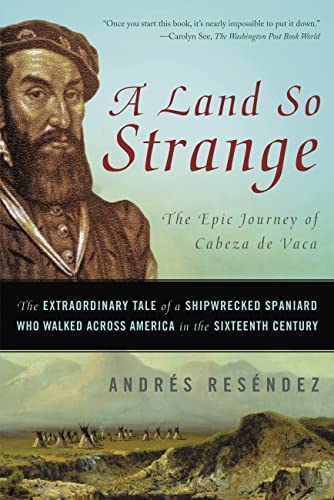
Recently while visiting Big Bend National Park, I stumbled upon the extraordinary story of Cabeza de Vaca, a 16th century Spanish explorer who was the first European to explore much of the American Southwest and northern Mexico on foot. I realized that throughout my outdoorsy travels, I’m always coming across incredible adventure stories from history that seem buried in ancient texts, rarely coming to light despite the thousands of entertainment production companies and podcasts that aim to highlight such stories. I can’t believe the lives of the following adventurous figures from history haven’t been adapted into Hollywood films yet. In case executives ever get lazy and Google “movies that should be made” or “historical figures who deserve a movie”, I hope my suggestions make it onto their radar.
Before anyone calls me out: a few do have very low budget or old film adaptations that don’t do the stories justice. And, there are plenty of other cool figures from history who deserve movies (what about the Tattooed Serpent war chief?), but this list is about “adventurers” specifically.
Estevanico, First African Explorer of North America

Only four men survived the Narváez expedition that landed in Florida in 1528, though it set sail from Spain six hundred strong. Three survivors were Spaniards, including Cabeza de Vaca whose personal accounts of the journey are a first-person source today, and Estevanico (sometimes Estebanico, Estevan, or Esteban), an enslaved man originally from the Portuguese-controlled Moroccan town of Azemmour.
Estevanico was sometimes referred to as a “Moor”. As a side note I recently learned about the relationship between the Portuguese and the “Moors” while visiting Sintra and Lisbon.
After a series of misfortunes including shipwrecks and capture by Native Americans on the Gulf Coast, the four survivors finally escaped and embarked on a epic walk across the southern United States and northern Mexico, ultimately rejoining other Spaniards in Mexico City in 1536. This likely makes Estevanico the first African to step foot in many modern day states such as Texas, Louisiana, and New Mexico. We know that Estevanico’s great gift with languages made him an asset throughout the journey, and Native Americans came to hail the party as medicine men or healers.
His story would already be incredible if it ended there, but records of Estevanico continue. After returning to Spanish civilization, the Viceroy of New Spain appointed Estevanico to guide a new expedition that would seek out the supposedly wealthy Seven Cities of Cibola, or “Seven Cities of Gold”, back in the American Southwest. He traveled ahead of the main party with a group of Native Americans, sending back evidence of discovered wealth as he reached the village of Hawikuh (Zuni land in New Mexico). But, it’s reported that he was killed here in 1539, and upon hearing this, the rest of the conquistadors turned back.
No one can know for sure what exactly happened to him, as there are no European eye witnesses. The natives had reported his death to the Spanish. Theories and legends abound, including various possible reasons the natives might have turned on him, and a suggestion that perhaps he was not killed at all, but faked his death to escape enslavement by the Spanish. Some folkloric interpretations of the Kachina figure “Chakwaina” say Estevanico was the inspiration.
>>> In a similar vain, a production about Ibn Battuta (“the Muslim Marco Polo”) would be awesome, but his journey of 75,000 miles and exploration of 44 modern countries might be too expansive for one movie. Maybe a TV series?
Lozen, Apache Joan of Arc

Lozen was a Chiricahua Apache woman from an area of Arizona/New Mexico known in the early half of the 1800s as Apacheria. She is often referred to as the “Apache Joan of Arc”.
Lozen fought in the Apache Wars alongside warriors like Geronimo and her brother Chief Victorio. She was celebrated for her bravery, military aptitude, horsemanship, raiding prowess, and purported ability to predict the movements of enemies through supernatural intuition. Stories of Lozen escorting women and children to safety across vast stretches of desert have been passed down through history.
By 1886, most bands of Apache had already been forced onto reservations. Geronimo’s cohort was the final holdout. According to Laura Jane Moore’s essay in Sifters: Native American Women’s Lives, Lozen facilitated negotiations between Geronimo and the American government as it became clear that peaceful surrender was the only way to ensure the safety of their people.
In August 1886 Lozen and Dahteste led Lieutenant Charles B. Gatewood into the mountains to meet with Geronimo and Naiche, who agreed to surrender to General Nelson A. Miles in person. This surrender occurred in September 1886, and, according to the monument that now stands roadside in San Simon, Arizona, this “forever ended Indian warfare in the United States”.
I visited this roadside monument while on a hiking trip to Chiricahua National Monument, the Dragoon Mountains, and Bisbee, Arizona. Read how to find it here.
This last group of Chiricahua were loaded onto trains bound for Florida. During a brief stop along this train ride, a photographer captured a photo of Geronimo, Naiche, and Lozen. Above is the only known photo of her. She is often thought to be the sixth woman from the right on the back row, although the Park Service posits that she is the third from the right.
Jeanne de Clisson, Lioness of Brittany

It seems like Hollywood can’t get enough of A) pirates, and B) pretending they know how to write a “strong, independent woman”, so I’m shocked they haven’t latched onto Jeanne de Clisson’s story yet.
When Jeanne’s husband was viciously murdered and decapitated by the French king in 1343, she swore vengeance against Philip VI and Charles de Blois. Her estates stripped from her, she sold her remaining belongings and turned to piracy, becoming known forevermore as the “Lioness of Brittany” (actually, “La Tigresse Bretagne”, the Tigress of Brittany). Legend says she painted three warships black and flew red sails, naming the flagship My Revenge (though I can’t find an original source for this name).
With support from the English king and some Bretons, she and her crew of 400 haunted the French coast and the English Channel for more than a decade, killing the entire crew (except one – leaving someone to tell the story) of any French commerce ship they encountered. When her flagship was downed by the French, she and her sons were set adrift for days, one of them dying of exposure. The other grew up to become quite the force himself, garnering the nickname “The Butcher”.
One of my favorite podcasts about France, the Land of Desire, has an episode about Jeanne de Clisson. Jeanne’s descendent Astrid de Belleville did a thesis on her as well, claiming Jeanne acted out of defense rather than revenge.
The stories of other interesting pirate women, such as pirate queen Grace O’Malley, are detailed in Women at the Helm: Rewriting Maritime History through Female Pirate Identity and Agency.
Thinking of visiting historic castles in France but don’t want to rent a car? Check out my Loire Valley via Public Transportation post (also a great place to read about brave women like Joan of Arc and Catherine de Medici, “The Black Queen”).
Yasuke, Legendary Black Samurai in Japan

To be fair, there is now an anime series about Yasuke, but I’d still like to see a live action version.
Yasuke was an African man who arrived in Japan by way of India in 1579 while working for an Italian priest in a bodyguard capacity. This is how he met powerful feudal lord Oda Nobunaga, who was at first confused and in disbelief over his skin color. They took a liking to each other, and Yasuke ultimately came under his service as a samurai.
Yasuke was with Nobunaga on their way to battle when the lord was betrayed by his general in the Honnō-ji ambush. Rather than be killed, Nobunaga performed a ritual suicide called seppuku that involves being decapitated by one of his own men. Legend says Yasuke then retrieved the head so it wouldn’t fall into enemy hands.
“There’s no record, but tradition holds it that [Yasuke] was the one who took Nobunaga’s head to save it from the enemy,” Lockley said. “If Akechi, the enemy, had gotten the head and he’d been able to hold up the head, he would have had a powerful symbol of legitimacy.” Lockley explained that an act like that would have given Akechi credibility as a ruler. After the attack on Nobunaga, Akechi did not get much support and was soon defeated in battle. “Yasuke, therefore, by escaping with the head, could have been seen and has been seen as changing Japanese history.”
TIME Magazine
The last record of Yasuke has him being escorted, wounded from battle, to a Christian mission house. He disappears from records after 1582.
Jesse Jefferson “Bear” Howard, Toughest Man in the West
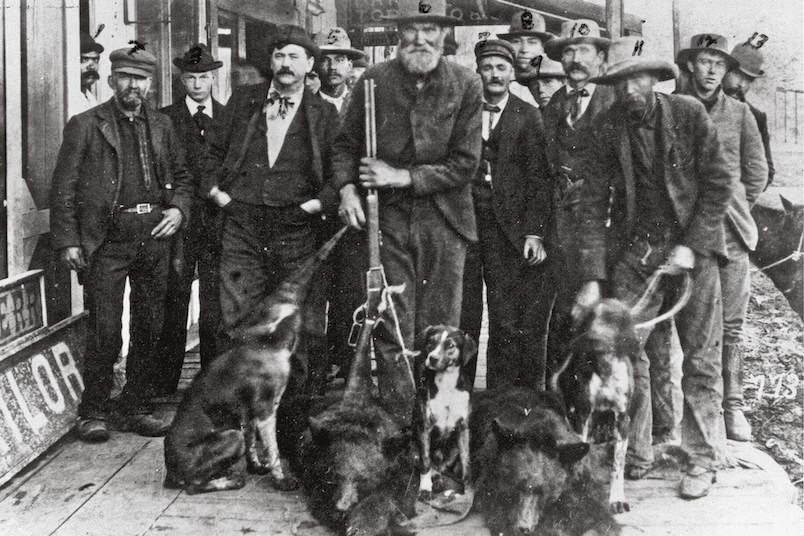
Bear was a trapper and San Quentin escapee who settled in Oak Creek Canyon in Sedona, Arizona from 1880-1910 via squatters’ rights. If you’ve hiked in Sedona, you’ve likely seen the ruins of his home at West Fork Trail. He made his living by hunting bears, took a bullet to the shoulder while fighting in the Mexican-American War, and let someone dig it out fifty four years later while drunk at a saloon in Flagstaff. He’s also one of the most intimidating looking people I’ve ever seen in an old black and white photograph. Read more about him and other Arizona characters in my Flagstaff history post here:
Folklore, Legends, and Mysteries of Flagstaff, Arizona
When the railroad arrived in Flagstaff, Arizona in 1882, a boomtown was born, complete with gunfights and saloon brawls. What collisions occurred? Who are the legendary outlaw figures of…
Bandit Queens of the Wild West

There are plenty of cool outlaw women from the Wild West days, yet their inclusion in big budget movies is usually just a passing cameo, or as the girlfriend of the main bad guy. There haven’t been many movies focusing entirely on the likes of Annie Oakley or Calamity Jane since the 1930s-1950s, and even those are flashy, traveling sideshow examples. Some personalities of the Wild West were more caricatures than actual people.
The real stories I’m thirsty for would feature women like Peart Hart, Belle Starr, Charley Parkhurst, Olive Oatman, Cynthia Ann Parker, or the Bassett Sisters.
Ann Bassett was known as the “Queen of the Cattle Rustlers” and it’s a great mystery whether she and Etta Place (of Butch Cassidy fame) might have been the same person. Pearl Hart committed one of the last stagecoach robberies in the United States in 1899 and subsequently escaped jail. Olive Oatman was the only family member to survive a Native American massacre and lived for several years among the Mohave, where she was given a distinctive face tattoo. Cynthia Ann Parker was abducted into the Comanche nation and lived among them for 25 years before being unwillingly returned to white society. Her son was Quanah Parker, the last free Comanche chief. Charley Parkhurst, a stagecoach driver in a dangerous era for stagecoach drivers, lived most of their life as a man and may have been the first biologically female person to cast a ballot in an election in the United States. Their gender was only discovered upon their death. It’s unclear whether this is a moment in trans history, or a case of a women disguising herself to seek more opportunities.
Why can’t these women get the same cinematic treatment as Wyatt Earp or Jesse James? I’ve enjoyed recent female-centered Wild West era shows like The English, but they’re not based on real people.
Bessie Coleman, First African American Woman and Native American Pilot

Bessie Coleman was the first African-American woman and first Native American to hold a pilot’s license, and the first black person to earn an international pilot’s license. She grew up working various jobs in Texas before moving to Chicago where her brothers told her stories about their time in France during WWI, where women were allowed to fly airplanes. This inspired her to apply to flight schools in the United States, but she couldn’t get accepted as a woman or as an African American. She started taking French language classes at night so she could write her application in French, and finally got accepted to a school abroad. She was awarded her pilot’s license in 1921, and later took advanced courses in Germany and the Netherlands.
“Brave Bessie” was known for her daring flight tricks. She became famous performing them around the United States to earn money, hoping to one day open a flight school and encourage black people and women to learn to fly. She toured the country giving speeches and flight lessons, but refused to speak at segregated venues. She also refused to move forward with starring in a Hollywood film about her life once she found out the first scene would have her arriving in Chicago in tattered clothes, looking destitute. She resented the stereotypical depiction based on her race. Even without this lucrative opportunity, she quickly saved enough money to purchase her own plane.
She died in a tragic airplane crash at the age of 34 in 1926, but her legacy lives on. Many aviation clubs are named after her, and her image has been printed on stamps and coins. Streets in Paris, Nice, Poitiers, Frankfurt, Chicago, Oakland, Texas, and Florida are named after her. There is an annual Bessie Coleman flyover to honor her gravesite in Chicago.
The air is the only place free from prejudices. I knew we had no aviators, neither men nor women, and I knew the Race needed to be represented along this most important line, so I thought it my duty to risk my life to learn aviation…
– Bessie Coleman
For more interesting stories about women explorers, check out Woman with Altitude. Elise Wortley is retracing the steps of women adventurers of the past – in the vintage clothes they would have achieved their feats in at the time. For example, she’s been inspired to recreate parts of Alexandra David-Neél’s journey to Lhasa and Freya Stark’s experience in the Valleys of the Assassins.
Giovanni Maria de Agostini, Mysterious Traveling Hermit

Perhaps I’m a bit biased towards stories of the Southwest, and of long walks; you’ll notice I keep returning to them. Agostini and Estevanico are essentially early examples of thru-hikers in my home territory.
I once visited a cave near Las Cruces, New Mexico that was utilized by the Jornada Mogollon around 5000 B.C. Thousands of years later, an ascetic hermit named Giovanni Maria de Agostini, born in Italy around 1799-1801, lived in it. According to the Smithsonian, “Agostini traveled all over Europe and South America, crossing the Andes twice and canoeing down the continent’s major rivers.” He attracted fanatic followings in many places he went, and was regarded with suspicion in others. In one case he was deported from Mexico, and was coldly received by Canadians in Montreal. By contrast, “Cuba recognized him as an extraordinary adventurer, publishing his photo and proclaiming him ‘The Wonder of Our Century’.”
He joined a wagon train in Kansas, always insisting on walking by foot and sleeping outside on the ground. In Las Vegas, New Mexico, each Sunday he walked from a cave to a peak for mass (today called “Hermit Peak”), impressing locals with his dedication. Before long people pilgrimaged to see him, later claiming he cured their ailments. People today still make this journey. Thousands of people celebrate annual events dedicated to him in Brazil and Argentina, as well.
He was murdered under mysterious circumstances while living in the cave near Las Cruces. He had told acquaintances in town that “I shall make a fire in front of my cave every Friday evening while I shall be alive. If the fire fails to appear, it will be because I have been killed.” When it failed to appear, he was found with a knife in his back.
There are many other interesting people who deserve their own movies, such as Vaslav Nijinsky, Johann Trollmann, Alfred Dreyfus, or Rasputin, who I wouldn’t categorize as “adventurers” per se. There are also plenty of extraordinary adventurers throughout history who achieved Everest climbs or Antarctic expeditions, but those stories don’t always grab me as particularly cinematic. They make great documentaries, to be sure, but the historical figures on my list have a little something extra; a bit of sass, mystery, or drama. They challenged the status quo and did not live their lives within the constricted bounds of typical society for their time. As I continue to travel and learn about history during my own adventures, I look forward to adding more people to this list.
Do you have any favorite adventurers throughout history who seem to have been forgotten by time – and Hollywood?
Related:






My dream is to write travel and hiking content full-time. All of my guides and itineraries are free and my travels are self-funded. If you enjoy my site and would like to support, you can donate any amount to my Ko-fi page. Thank you!!
Ernest Shackleton deserves a shot.
Also: great writing!!! Thanks.
That’s a great idea! He’s got a pretty badass look to him too