

Archaeology Travel: Ancient Mound City of Cahokia near St. Louis
Purchases made through some links on this page may provide The Detour Effect with commissions (at no extra cost to you). Thank you!
When you think of great pre-Columbian civilizations in the Americas, you likely imagine Mayan ruins at Chichén-Itzá or the Incan Machu Picchu in Peru. It would seem that history classes have forgotten about similar indigenous empires in the present-day United States, the greatest of which can still be visited on the Illinois side of the Mississippi River across from St. Louis, Missouri: Cahokia.

Cahokia: The largest pre-Columbian city north of Mexico

Cahokia was booming from 1050-1350 AD with a population of approximately 15,000-20,000 people at its peak, rivaling the size of London at the time. The people of the Mississippian culture were known for hauling millions of cubic feet of dirt and clay in order to construct platform, conical, or ridgetop mounds. Atop these mounds were thatched huts, or wattle and daub houses, most of which served ceremonial purposes. Residences also sprawled out from the city center, creating a vast “suburb” and dispersed farming communities.
Cahokia once featured 120 mounds, 80 of which can still be seen today at Cahokia Mounds State Historic Site. The largest earthwork, not just in Cahokia but also in North America, is called Monk’s Mound. The base of Monk’s Mound is about the same size as the Great Pyramid of Giza!


Monk’s Mound was likely the location of the chief’s residence, putting him high above the rest of the population. In modern times a paved stairway has been added to the mound so that visitors can climb to the top for a fantastic view of St. Louis in the distance; I’d wager this is perhaps one of the best views of the St. Louis skyline. From this vantage point, you can imagine what it was like for the Great Sun to look out over his domain.

Not all of the mounds were burial or mortuary mounds, but excavations have proven that at least a few of them were. The most significant example of a burial mound at Cahokia is Mound 72, where someone of great importance was laid to rest atop a bed of 20,000 shell beads arranged in the shape of a thunderbird or falcon. He was buried with precious grave goods like arrowheads and chunkey stones (game pieces), and a woman was buried beneath him (not another male, as previously believed). Approximately 270 other bodies, most of which were sacrificed women and girls, are also buried at the site. Some were probably buried at the same time as the death of the elite leader, but others were added years later in waves of sacrificial killings as well as violent, possibly war-like episodes. Some men were buried in a decapitated state or shot with arrow points.


The site is named for the Cahokia tribe, who were actually a completely different group of people who happened to live nearby during the time of French contact in the 1700s. We don’t know what the original mound builders would have called themselves.
The rise and fall of Cahokia

The rise of Cahokia seems to have coincided with the introduction of corn, which, together with the abundant water resources of the American Bottom floodplain, encouraged agricultural settlement. Students are often taught that Native American tribes were migratory, but this would mainly describe Plains tribes and clearly not those of the Mississippi Valley during the Woodland Period.
The fall of Cahokia is more difficult to explain. Some historians ascribe its collapse to climate change and drought affecting crop yields, or overpopulation causing disease and straining limited resources. Flooding was once a theory that’s been disproven. Others point to evidence of social and political strife as potential reasons for abandonment. Defensive walls began to be built around the central ceremonial precinct, suggesting conflicts with neighboring tribes; it was rebuilt multiple times between 1175-1275 AD. One suggestion is a “crisis in faith” where citizens of Cahokia began to turn on the rulers and resent belonging to a hierarchical society where mass sacrifice of the lower class was commonplace. Since there is no written history, nor an oral tradition passed down through descendants, all theories are speculative.
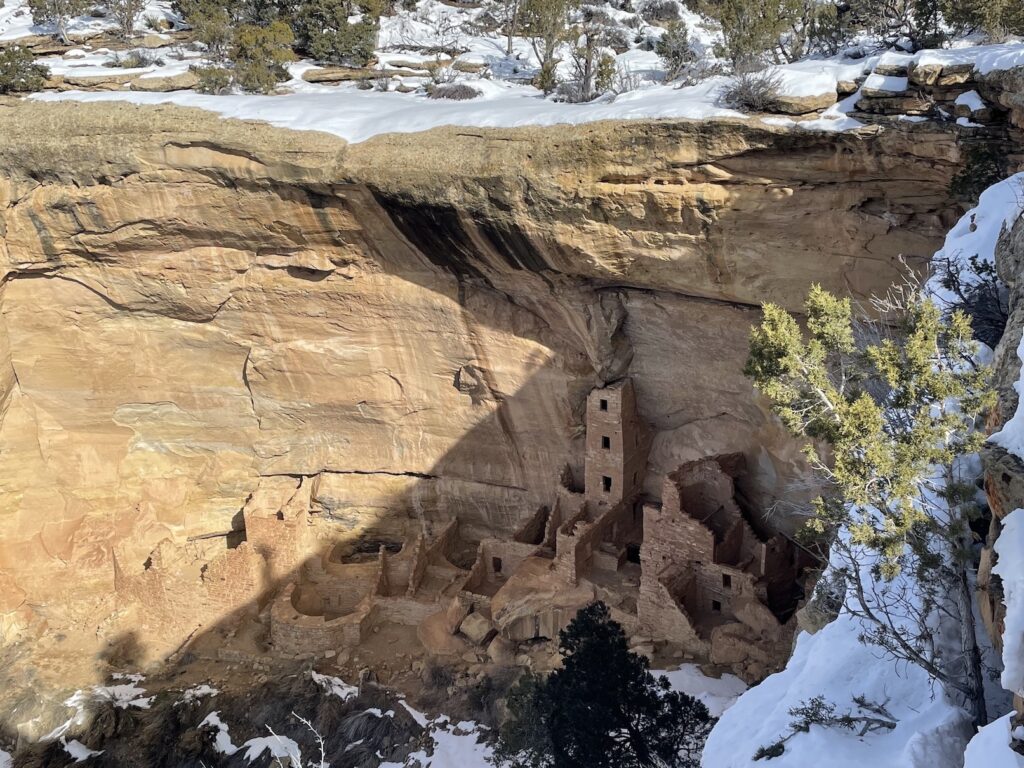
Personally I think it’s coincidental that the abandonment of Cahokia coincides with the mass depopulation of other great cities of the prehistoric Native American world. The Ancestral Puebloans also left their impressive cliff dwellings at Mesa Verde around 1300 AD, and Chaco Canyon went out of style around 1250 AD. These migratory changes in the Four Corners are often attributed to the Little Ice Age (or perhaps interference from Navajo and Apache raiding parties which had moved south from the northern Athabaskan territories by the 1300s, though it’s only the Little Ice Age that could have equally affected Cahokia).
What happened to Cahokians?


Family groups and other residents of Cahokia would have dispersed in many directions and in many waves over a period of years, rather than abruptly leaving in one traceable mass exodus.
I’m inclined to look southward for hints because of Emerald Mound in southern Mississippi. Emerald Mound is the second largest Mississippian Period mound after Monk’s Mound. It was built and used around ~1300-1600 AD (some sources list 1350-1750 AD) over a prior village that existed around 1200 AD. This timeline makes me wonder if perhaps Cahokians migrated south after their city’s collapse around 1350 and went on to build Emerald Mound. This is my own theory; I’m not an archaeologist.
Tangentially interesting is that in 1542-1543, Hernando de Soto’s expedition fought with a tribe led by a chief named Quigualtam, and some archaeologists posit that this tribe’s city center must have been at Emerald Mound. Disease brought by the Spaniards decimated local populations. Perhaps this is one reason Emerald Mound was ultimately abandoned too.
The National Park Service believes that those who built Emerald Mound then migrated further south to build the Grand Village of the Natchez, which was inhabited until their defeat by the French in 1730. Some of the Natchez people were sent to reservations in Oklahoma (and now closely associate with the Five Civilized Tribes) and others were sold into slavery in the United States and Haiti. Perhaps, then, this is the ultimate fate of some Cahokian descendants, but not all. Scholars say Cahokia had widespread cultural, religious, and artistic influence, hints of which can be seen in today’s Osage, Kansa, Ponca, Omaha, and Quapaw Nations.

The circumstances surrounding the death of the Tattooed Serpent potentially connect Natchez to Cahokia even further.
An ethnographer named Antoine-Simon Le Page du Pratz recorded events he witnessed among the Natchez during French colonization in the 1700s. His report about the funerary proceedings for the Tattooed Serpent, the Natchez war chief who died in 1725, bring to mind similarities at Mound 72 in Cahokia and could almost be presumed to shed light on the religious beliefs and burial rituals practiced there. Many of the Tattooed Serpent’s servants and family members, mostly women, were sacrificed in order to accompany him to the grave. They were strangled at a temple atop a platform mound. The Tattooed Serpent and his two brave wives were buried in a trench in the temple floor. His brother, the Great Sun or main chief, mourned for him and had to be convinced not to offer himself up as a sacrifice too.
Some articles refer to the Cahokian chiefdom as the “Great Sun” as well, though I’m not sure where this knowledge comes from. There was no du Pratz around in 1050-1350 to record and translate Cahokian vernacular or titles. Perhaps other writers are drawing the same conclusions that I am – that Natchez culture may provide clues about Cahokian culture.
The French accounts of the Natchez people are fascinating; I’d recommend reading du Pratz as well as this summary by Zoe Saadia about how nobility could only pass through the female line. If interested in a broader history of the Natchez, their own website is a great start and there are some books by James F. Barnett Jr (former director at the Mississippi Department of Archives and History).
Native American mounds that travelers can still visit throughout the Mississippi Valley
I will continue adding to this map over time; to make it conclusive is a big project.
Cahokia is not an isolated example of earthen architectural feats in pre-Columbian North America. The mound builders created earthworks and settlements throughout the Mississippi Valley, a region which encompasses states from Minnesota in the north all the way down to Louisiana in the south. Road trippers interested in archaeology can investigate multiple mound sites in the United States, including:
- Emerald Mound, Pharr Mounds, Bynum Mounds, Boyd Mound, Bear Creek Mound, Mangum Mound, and Grand Village of the Natchez are all along the Mississippi and Alabama sections of the Natchez Trace Parkway
- Hopewell Culture National Historic Park in Ohio
- Serpent Mound National Historic Landmark in Ohio
- Poverty Point World Heritage Site in Louisiana (Cahokia and Poverty Point are 2 of only 25 UNESCO World Heritage Sites in the United States)
- Moundville Archaeological Park in Alabama
- Pinson Mounds State Archaeological Park in Tennessee
- Spiro Mounds Archaeological Center in Oklahoma
- Effigy Mounds National Monument in Iowa
- Caddo Mounds State Historic Site in Texas
And scores of others as listed in this exhaustive roundup. Many of these mound sites had about the same lifespan as Cahokia, inhabited from ~800-1450 AD or so (with exceptions; Hopewell, Pinson, and Poverty Point predate Cahokia. Poverty Point was inhabited from 1700-1100 BC). There was likely an extensive trade network between many of these sites. Artifacts made in Cahokia ended up in far reaching places, and vice versa.
Watson Brake in Louisiana is a particularly significant site because it is the oldest earthwork on the continent, predating even the Egyptian pyramids and Stonehenge, but it is not open to the public. Thought to have been built around ~3500 BC, this means Watson Brake is a contemporary of the fantastic passage tombs of Ireland, such as Newgrange and Knowth (aka Brú na Bóinne, a UNESCO World Heritage Site), Loughcrew, and the Mound of Hostages at the Hill of Tara. I have been to these places and Knowth in particular really reminds me of Cahokia.


Some of the mound sites that travelers can visit in the United States are simply that – mounds in a field, perhaps with an interpretive sign. You can pull over on the side of the road to view them. Others offer walking trails, museums, and visitor centers featuring artifacts and interpretations of the Southeastern Ceremonial Complex.
The SECC, or “Southern Cult,” is “what archaeologists have called a broad regional similarity of artifacts, iconography, ceremonies, and mythology of the Mississippian period in North America between about 1000 and 1600 CE.” Repeated motifs throughout the SECC include the Forked Eye Surround Motif and the Bi-Lobed Arrow Motif (which I think would make awesome modern-day tattoos). Personally I’ve been fascinated by the significance of serpents in this culture; Tattooed Serpent seems like a fitting name for the war chief, considering birds were associated with the Above World and snakes with the Underworld – where I suppose the war chief sends his opponents.
Unique American tourism destinations: why prioritize Mississippian mound sites?

Travelers looking to understand the history of the American continent more deeply will be inspired by the evidence these sophisticated civilizations left behind. Landscape archaeology can tell us stories of the Americas that you won’t find in history books. As Digital History put it, “the Mississippians created a complex, stratified society, with a distinct leadership class, specialized artisans, an extensive system of trade, and priests.” Cahokia and the other mound sites in North America have changed the biased narratives put forth by historians of years past who could not conceive of indigenous people being capable of advanced achievement.
Representations of indigenous people were trivialized from the outset when it came to tourism in the United States. Dime novels romanticized Wild West history in America, creating an image of “cowboys and indians” that wormed its way into the global psyche. Early portrayals formed lasting impressions which persist today. As a result, people interested in Native American history often prioritize visiting once-rolicking pioneer towns like Tombstone or Dodge City with visions of Native vs. colonizer conflicts in mind (and there are plenty of great reasons to visit those places), but there were entire civilizations in North America that rose and fell over eons of time prior to European contact. It’s high time we divorce our conceptions of indigenous people from the context of colonization alone.
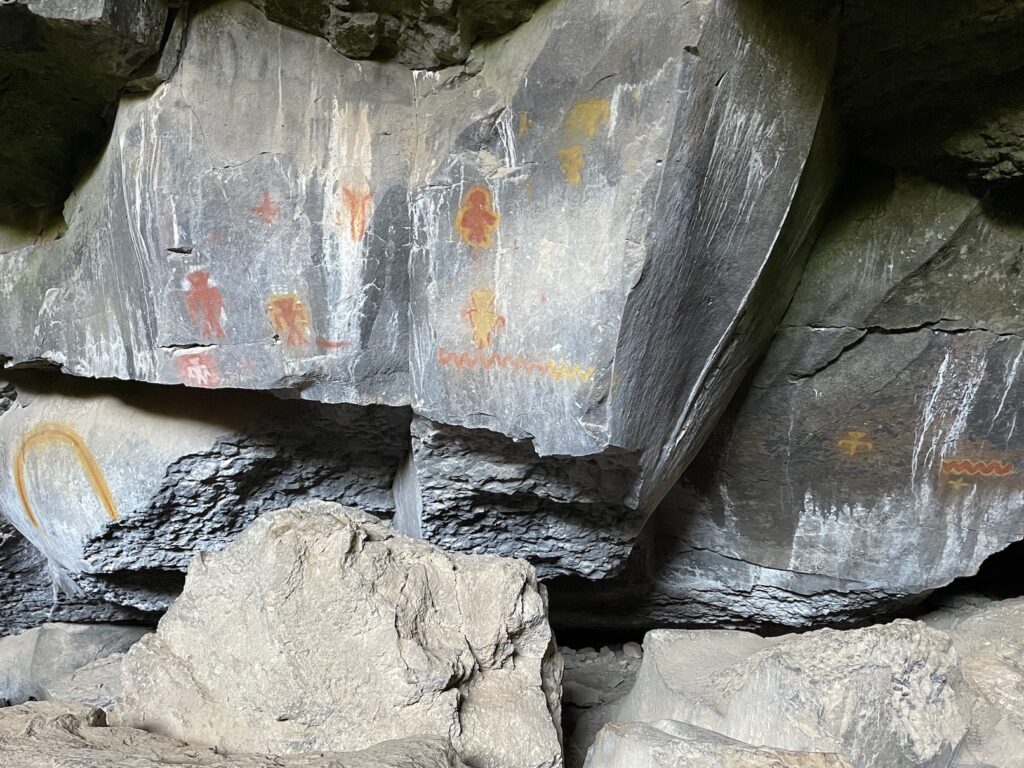
Additionally, American travel can become a game of visiting as many national parks as possible. While I’m a national parks enthusiast myself and our glorious wilderness areas are one reason I would find it difficult to live in another country, I believe the national park circuit keeps travelers on a predictable route that lacks creativity or personal conviction about one’s individual interests. Do most travelers go to Canyonlands because they have a particular interest in Barrier Canyon style pictographs, or do they go because everyone goes? The parks circuit will introduce travelers to some impressive examples of pre-Columbian Native American marvels like Chaco Canyon and Mesa Verde, but there is clearly a marketing vacuum when it comes to the spectacular yet relatively unknown eastern earthworks which are not designated as national park units. Somehow, places like Cahokia could be justifiably described as “off the beaten path” – perhaps a welcome descriptor for discerning tourists and fans of archaeology travel.
So much Native history has been lost to careless city planning and farming development in the last couple centuries, but some of the mounds throughout the Mississippi Valley have managed to survive. It’s important that we recognize their significance and give them the proper respect before it’s too late.
Note about visiting Cahokia: The Interpretive Center exhibits and gallery remain closed for most of 2024 for major mechanical renovations. The lobby (restrooms) and gift shop may be available during select guided tour times and special events. The walking trails are still accessible. Check the official Cahokia Mounds website for the latest updates.
Timeline of relevant events
Mississippian Culture:
- 800 BC-1000 AD: Woodland Period (Early 800–200 BC, Middle 200 BC–500 AD, and Late Woodland 500–1000 AD)
- 800-1600 AD: Mississippian Period
- ~800 AD: Settlement begins at Cahokia site near St. Louis
- 1050-1200: Cahokia’s population peaks
- 1030-1230: Burials at Mound 72 (I have seen sources saying they happened over either a 100 or 200 year period beginning around ~1030-1050)
- 1175-1275: Stockade walls built around Cahokia ceremonial center
- 1350: Cahokia is a ghost town
- 1300-1600: Emerald Mound built and used in southern Mississippi
- 1539-1543: Hernando de Soto Expedition looks for gold in the southern states; they cross the Mississippi River in Arkansas in 1541. They brought disease and decimated local populations.
- 1682-1730: Grand Village of the Natchez built and used in southern Mississippi
- 1716: Fort Rosalie in Natchez established by the French
- 1725: Death of the Tattooed Serpent in Natchez
- 1729-1731 French-Natchez War (though there had already been prior conflicts); Natchez tribe defeated by the French
- 1764: Founding of St. Louis by the French, who incorrectly named the mound city “Cahokia” after a tribe living nearby at the time
Southwest/Four Corners:
- 1000 AD: Athabascans split into northern and southern factions, the northern group staying in Canada and Alaska and the southern group beginning to migrate to the southwestern United States.
- 850-1250: Chaco Canyon settled by Ancestral Puebloans
- 550-1300: Mesa Verde settled by Ancestral Puebloans
- ~1300-1400s: Southern Athabascan group further splinters into Navajo and Apache, among other subgroups. Did they displace the pueblo cultures, or was it the Little Ice Age?
All of North America:
- 1300-1850: Little Ice Age. “The Little Ice Age was a period of widespread cooling from around 1300 to around 1850 CE when average global temperatures dropped by as much as 2°C (3.6°F), particularly in Europe and North America. Cooling happened in phases, with an initial drop around 1300 and an even colder climate starting around 1560 and lasting to 1850. North America experienced both cooler temperatures and a drier period.”
Related:





Pin It:


My dream is to write travel and hiking content full-time. All of my guides and itineraries are free and my travels are self-funded. If you enjoy my site and would like to support, you can donate any amount to my Ko-fi page. Thank you!!