

A Perfect Stargazing Spot Near Los Angeles
Purchases made through some links on this page may provide The Detour Effect with commissions (at no extra cost to you). Thank you!
One of my favorite things about Los Angeles is how easy it is to get out of Los Angeles. A quick Google search of “best places to camp outside of Los Angeles”, “best road trips from Los Angeles”, or “best hiking around Los Angeles” will turn up such an overwhelming amount of options that trying to pick one might almost stop you from making any decision at all, like the endless Netflix scroll. That said, one thing that’s trickier to find is a dark sky spot for astrophotography and stargazing near Los Angeles.
When I was living in California and working full time in the corporate music industry grind, photography provided great encouragement to get out and explore locally and not-so-locally. There is a culture in the city that keeps you absorbed within its paved boundaries, so it often takes a hobby like photography to rip you free from your habits and ruts. I signed up for a night class at a local community college to learn about my camera and was excited when we were assigned to do a night photography and astrophotography project with long exposure.
Considerations When Looking for an Astrophotography Spot Near Los Angeles
Obviously light pollution is an issue in any major city, let alone with the nearly 4 million people in Los Angeles. A dark enough location to practice astrophotography near the metropolis can be found, as long as you’re equipped with time, patience, camping equipment, and gallons of water.
Depending on time of year, another factor to consider is heat. Obviously nights are cool, but the trek to get to the perfect stargazing spot away from the impact of other people might require an afternoon journey.
Usually when I would search for weekend getaways in southern California, I would narrow the choices down according to how physically uncomfortable I’m willing to be. This particular weekend it was over 100 degrees every day. This was “can tires melt?” paranoia weather. This was stay-inside-at-all-costs weather akin to my old Nor’easter or tropical storm days on other coasts. But this was also the only Fourth of July weekend I was going to get this year, so I charged forth. In future years I would outfit my car to be prepared for adventuring in all kinds of weather and unforeseen conditions.
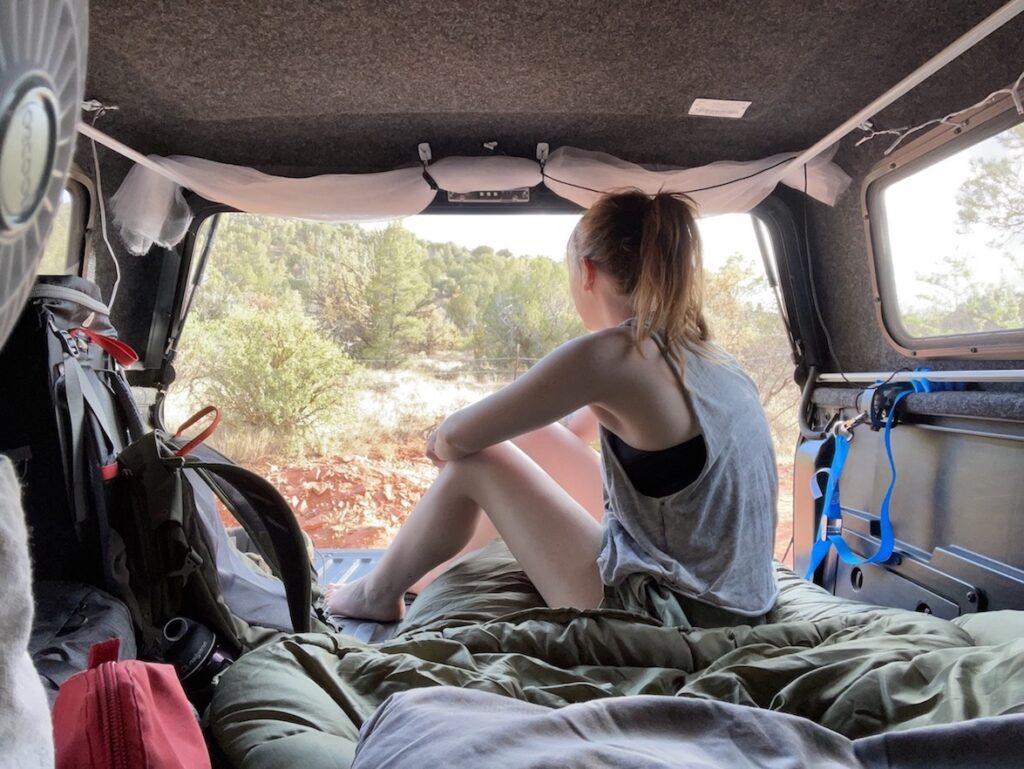
Car Camping: Toyota Tacoma Truck Bed Setup
For this photo project I also had extra criteria. I needed a spot that was secluded enough so other campers’ lights wouldn’t intrude on my scene (and so mine wouldn’t be a bother), and I needed to be able to park nearby the tent site so I could use my car as a prop.
How to Find Secluded Campsites Near Los Angeles
My favorite secluded campsites are usually Bureau of Land Management sites, where you’re allowed to camp for free up to 14 days. Check out this list of dispersed campsites over at The Dyrt, or search Recreation.gov or Freecampsites.net for the Cuyama area, which is only two hours north of Los Angeles.
Cuyama Valley is made up of two barely inhabited towns, including Cuyama and New Cuyama. Native Americans in the area, the Chumash, didn’t even come into contact with the Spanish until the early 1800s. There has not been much development since, except in the form of ranches and a brief period of oil production.
“The name Cuyama (pronounced “Kwee-ah-ma”) comes from the Chumash word “kuyam,” meaning clam. In fact, large deposits of fossilized marine sediment are found in the Cuyama Valley.” – Santa Maria Times
This time I found the perfect campground via HipCamp, called Songdog Ranch. Since I arrived at night and left before the sun got too high in the morning, the air felt cool. I took Templin Highway which is gorgeous within itself. Towards the end of the drive I came to the red dunes you see below on Maricopa Highway, then ended up high in the hills on CA-166. I could still see city lights stretching far into the distance over the horizon at night, but they were far enough not to interfere with my long exposures. The campsite was exactly what I needed – remote enough for dark skies, distant from neighboring campers, and equipped with a picnic area, a grill, a water spigot, and outhouses. Since you drive up a mesa to the campsites, which aren’t visible from the road, you’d never know they were there.
Use my referral code THEDETOUREFFECT to get $10 off your first camping trip! Or, if you are a landowner and want to host campers, HipCamp a great way to earn passive income and meet travelers – you can also use my referral code THEDETOUREFFECT when you sign up and we’ll both get $100 after you host your first camper.
I had a blast setting up these pictures and laughing at myself every time I had to stop an exposure early so I could turn on my flashlight and check what was rustling in the bushes, only to find tiny cute rodents of some kind (this?). Can you believe it, not one cougar? I was glad to have brought my bugout bag (everything is in there packed and ready for the apocalypse at a moment’s notice) because my new flashlight failed me almost immediately, but I had a headlamp in my bag which gave me some pretty cool effects for night photography.
It’s crazy how many different environments we have within California; I found lakes, hills, desert, and dunes all within a two hour radius of Los Angeles. Every time I step outside the city, I realize I’ve got so much more to see.


Pin It:


Related:


My dream is to write travel and hiking content full-time. All of my guides and itineraries are free and my travels are self-funded. If you enjoy my site and would like to support, you can donate any amount to my Ko-fi page. Thank you!!
Wow! Very informative and impressive lines. Stunning work showcased here. The innovative lighting installations truly enhance the vibrancy of Los Angeles’ landscape. Looking forward to more inspiring creations.