
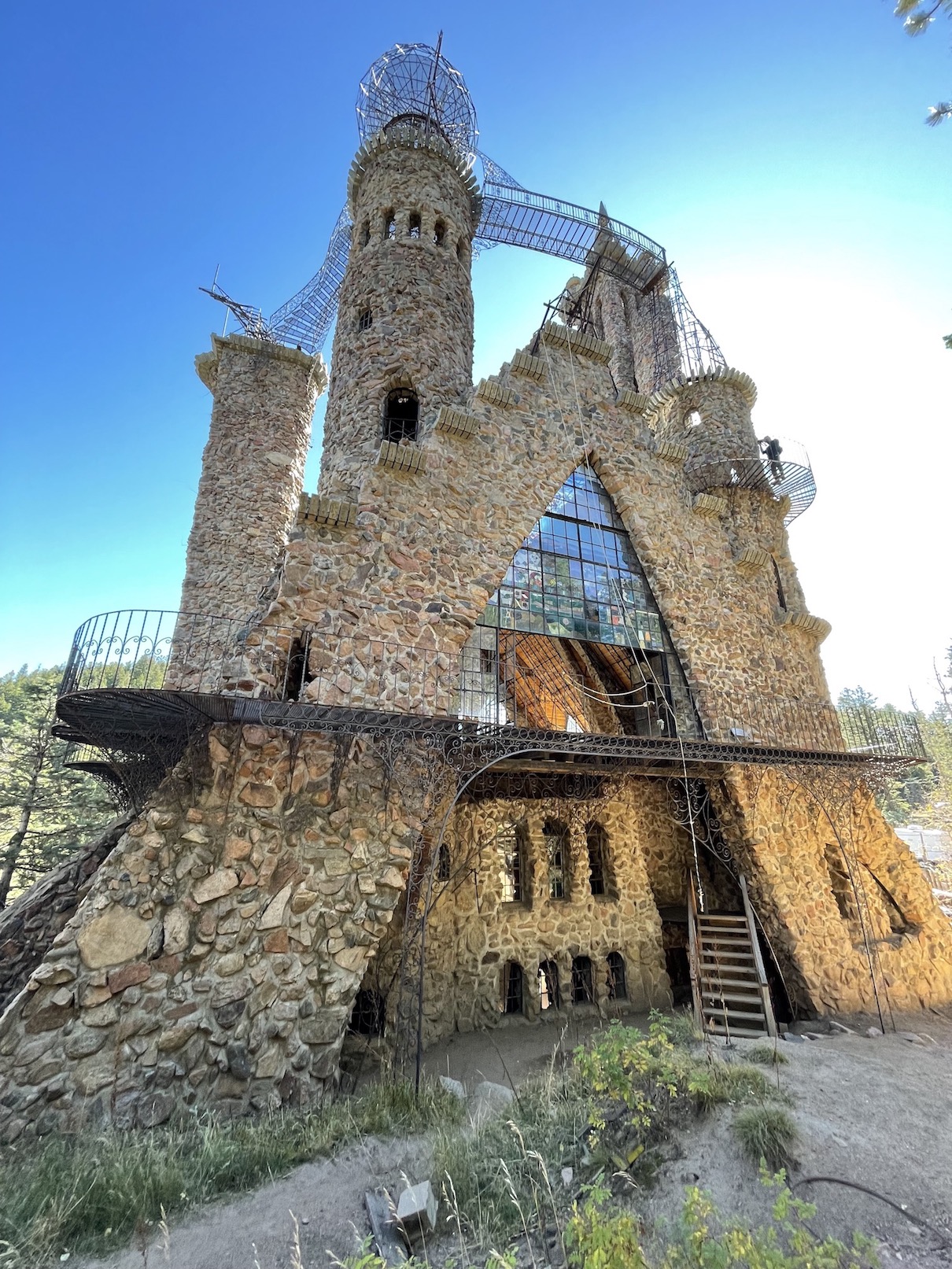
Found Object Palaces: A Uniquely American Roadside Oddity
Purchases made through some links on this page may provide The Detour Effect with commissions (at no extra cost to you). Thank you!
Roadside oddities exist worldwide, but it’s my (perhaps biased) impression that they’re especially prolific and unique in America. We’re a country that’s built around driving, and our Route 66 days spawned an inordinate amount of weird roadside attractions. Websites like Roadside America that aim to chronicle them have an overwhelming task.
In truth, many roadside oddities in America lack symbolic substance. It seems like every town has a random world’s-largest-whatever, made of concrete and used as a marketing ploy to draw tourists to a nearby business.
Yet every once in awhile, in the middle of nowhere and without context, an eccentric hermit-like artist has created an elaborate DIY art project that is open to exploration for curious passersby. It may be a found-object maze like Elmers Bottletree Ranch, or even a found-object home. Such projects seem to be making poetic statements that one man’s trash is another man’s treasure, or perhaps that you need not be rich to build a palace. It’s a very specific and yet recurring phenomenon throughout the States.
What do these creative junkyard palaces have in common, and why are they so common?
Case Studies: Twentieth Century Folk Art Environments
“There’s a human urge to create and to adorn your space in some way. Of course, somebody may not think that adornment is so fabulous…”
Jo Farb Hernandez, director of SPACES (Saving and Preserving Arts and Cultural Environments), for PBS SoCal
Nitt Witt Ridge in Cambria, California


Nitt Witt Ridge is a makeshift folk art manor built from found objects and junk that the reclusive Mr. Arthur Beal, aka “Tinkerpaws” or “Captain Nitt Witt”, collected in Cambria, California over 50-ish years until his death in 1992. Beal was constructing his own home from the ground up, complete with plumbing and a functioning electrical system fashioned from discarded wiring.
Hoards of empty beer cans and abalone shells are built into the residence for decoration, and sometimes even for structural integrity. Beal also used materials like driftwood washed in from the sea, toilet seats as picture frames, and a pillar allegedly original to Hearst Castle. He had an eye for beauty, especially in the form of his extensive gardens, and he seems to have had a great sense of humor, evidenced by the two his-and-hers toilets positioned side-by-side to facilitate conversation. When I took a tour of Nitt Witt Ridge, my guide Michael O’Malley posited that Beal may have stolen some items from local construction sites and through his job as the town garbage man.
“It was almost like he had the imagination of a 15-year-old kid his entire life. He was like a real Peter Pan.”
Mike O’Malley, Mustang News
The O’Malleys purchased Nitt Witt Ridge in 1999 and were enthusiastic stewards of the quirky property until June of 2022, when it was sold and closed to tours. They never lived on the site, which has no running water, but if you emailed them in advance to schedule a 40 minute private tour in exchange for a suggested $10 donation, Mike would meet you there to show you the grounds. These donations helped take care of the place; Nitt Witt Ridge is a historical California State Landmark but there’s no upkeep from the government, so it all fell on Mike and Stacey. They had hoped to lead larger tour groups and add a gift shop, but were barred from running a commercial operation since the home is on residential property. Since the sale, its fate is now unclear.
Mike’s tour of Nitt Witt Ridge was fascinating. It was informative but left me with more questions about Who Exactly Was Art Beal? Apparently after Beal’s mother died, he spent time in an orphanage and went on to work in vaudeville, the steel industry, and as an abalone diver.
Some remember him as cantankerous while others remember him fondly; Cambria resident Meredith Coe said, “When I was a kid, everyone loved him. He was very involved with the community.” They lament that the opportunity to meet Beal has been lost from the experience of visiting Nitt Witt Ridge, although neighbor Charlotte MacLean’s attestation that “Michael is a soul mate of Capt. Nitt Witt” sounds like consolation. If it helps you make your own conclusions, you can watch a video of Art Beal at Nitt Witt Ridge from 1980.
“O’Malley found a letter on the property in which Beal asked the U.S. Patent Office to patent his ‘human torch’ act, in which Beal would set his skin on fire.”
LA Times
Many tourists prefer Beal’s castle to the one it took millions of dollars for William Randolph Hearst to erect nearby. Admirable in both is their audacity and commitment to their visions. These are the sights worth seeing; these are the characters of California.
Bishop Castle in Rye, Colorado

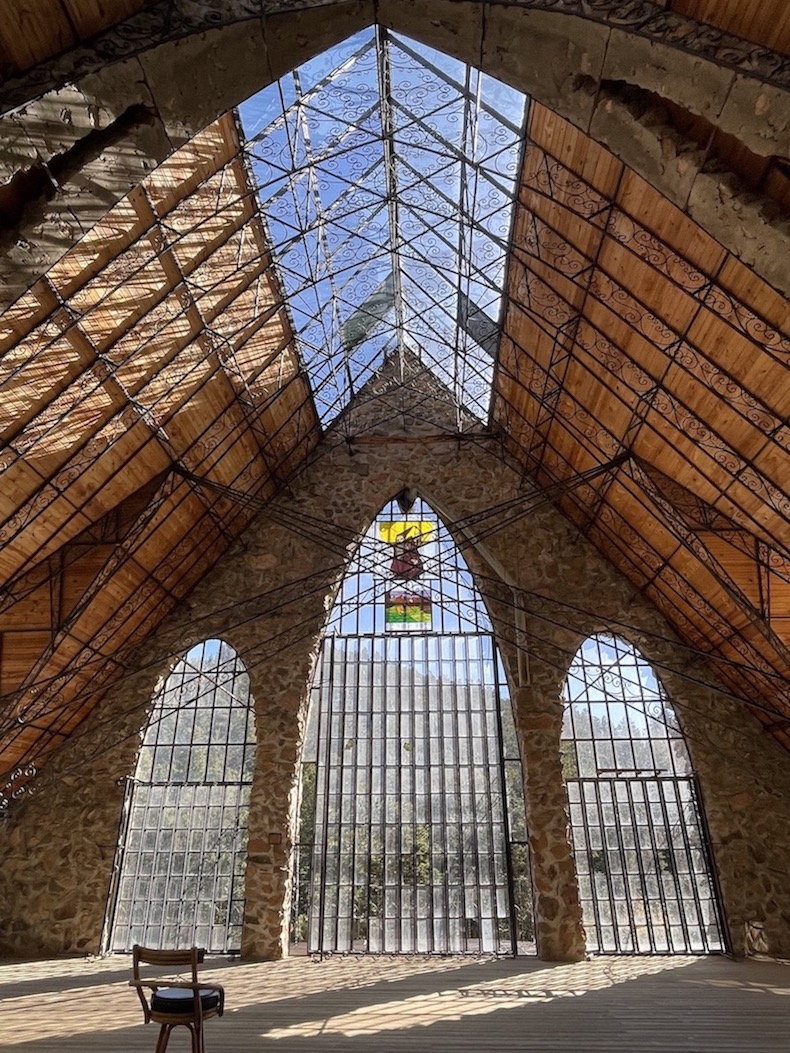

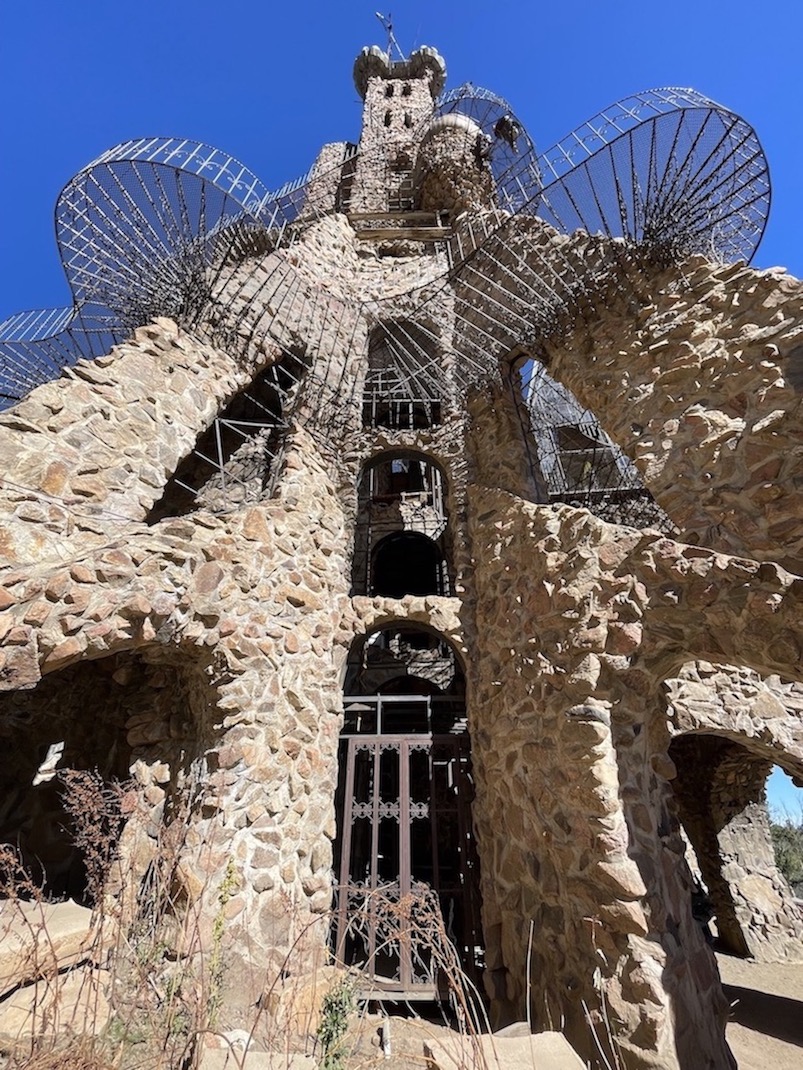
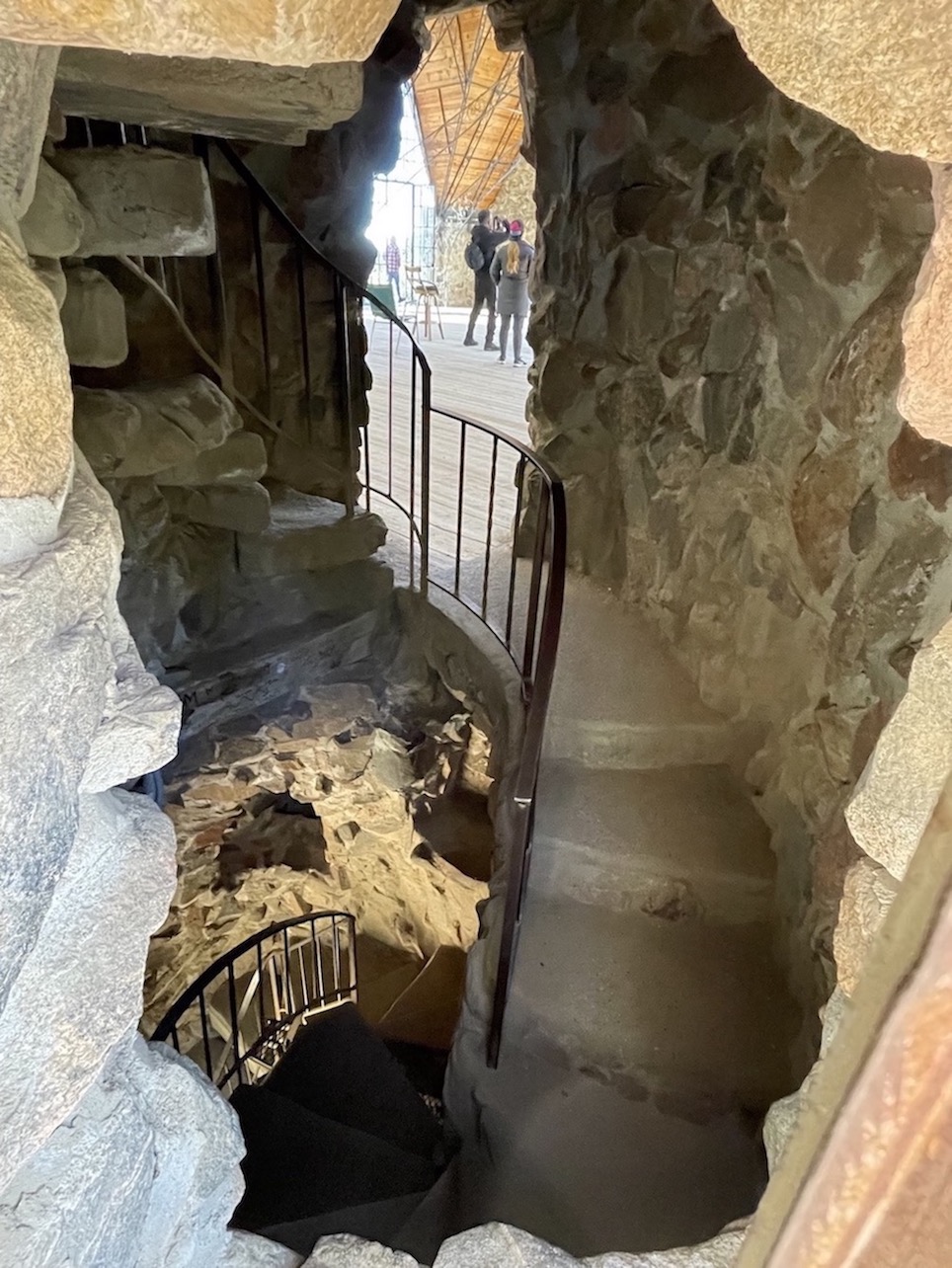

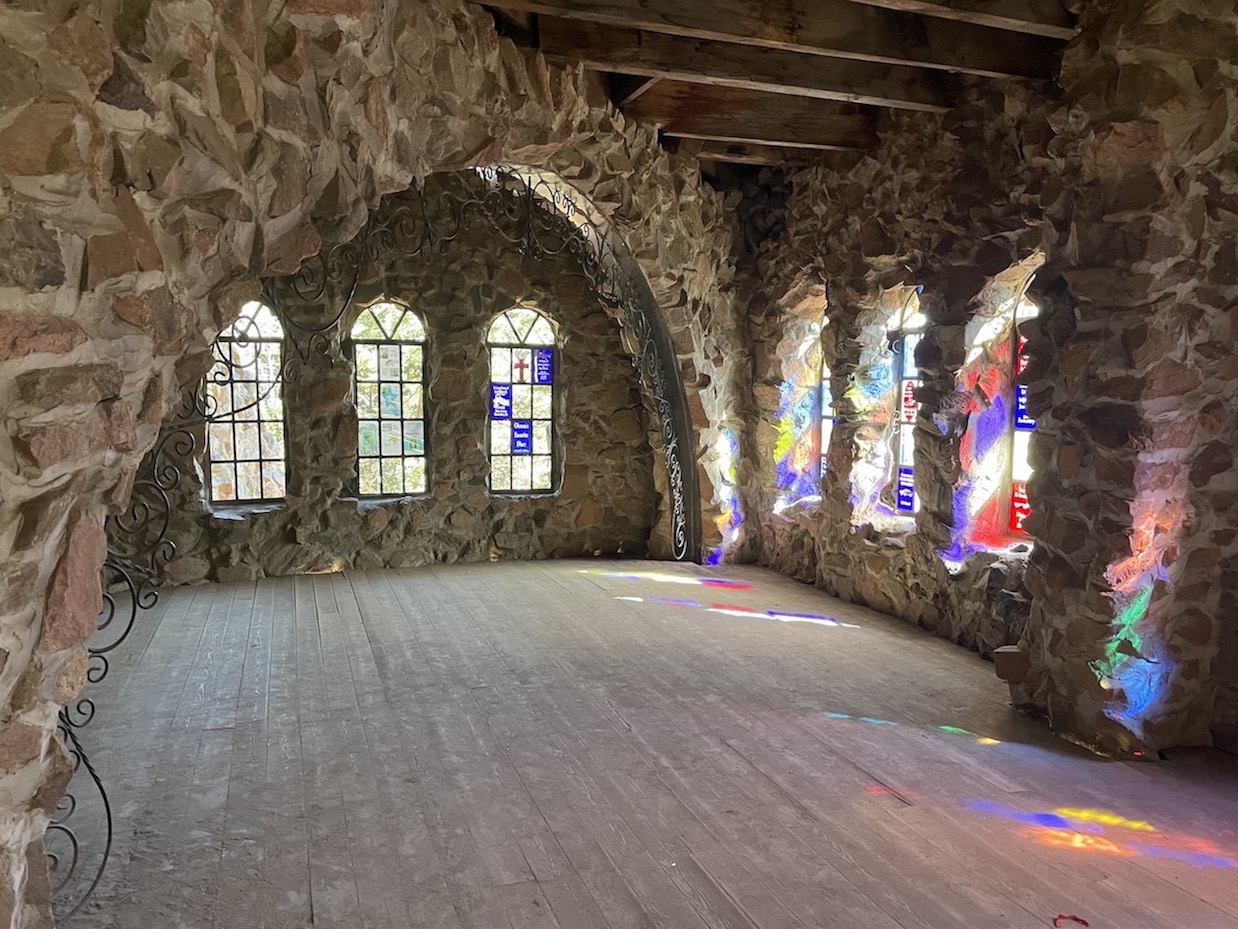
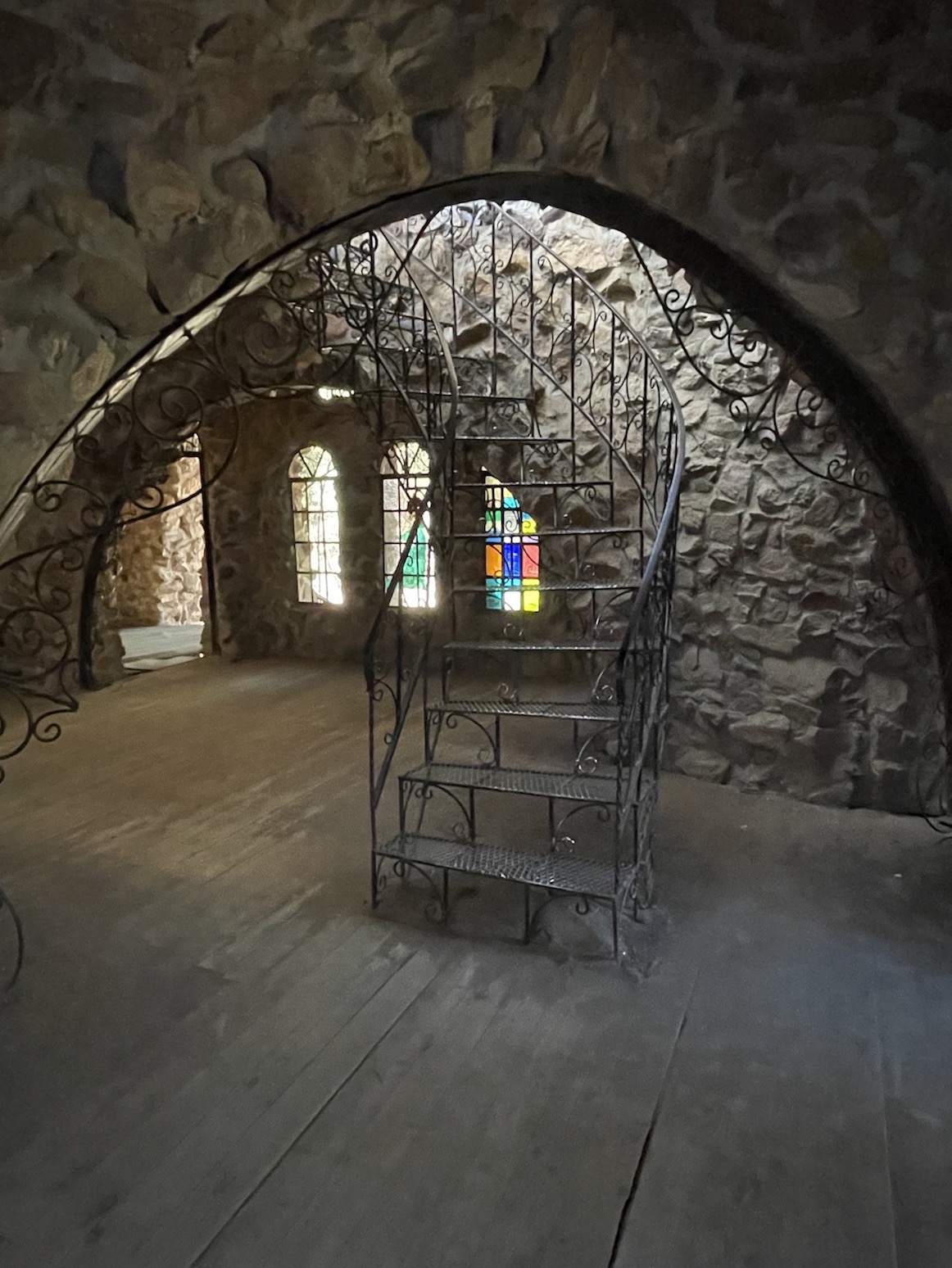
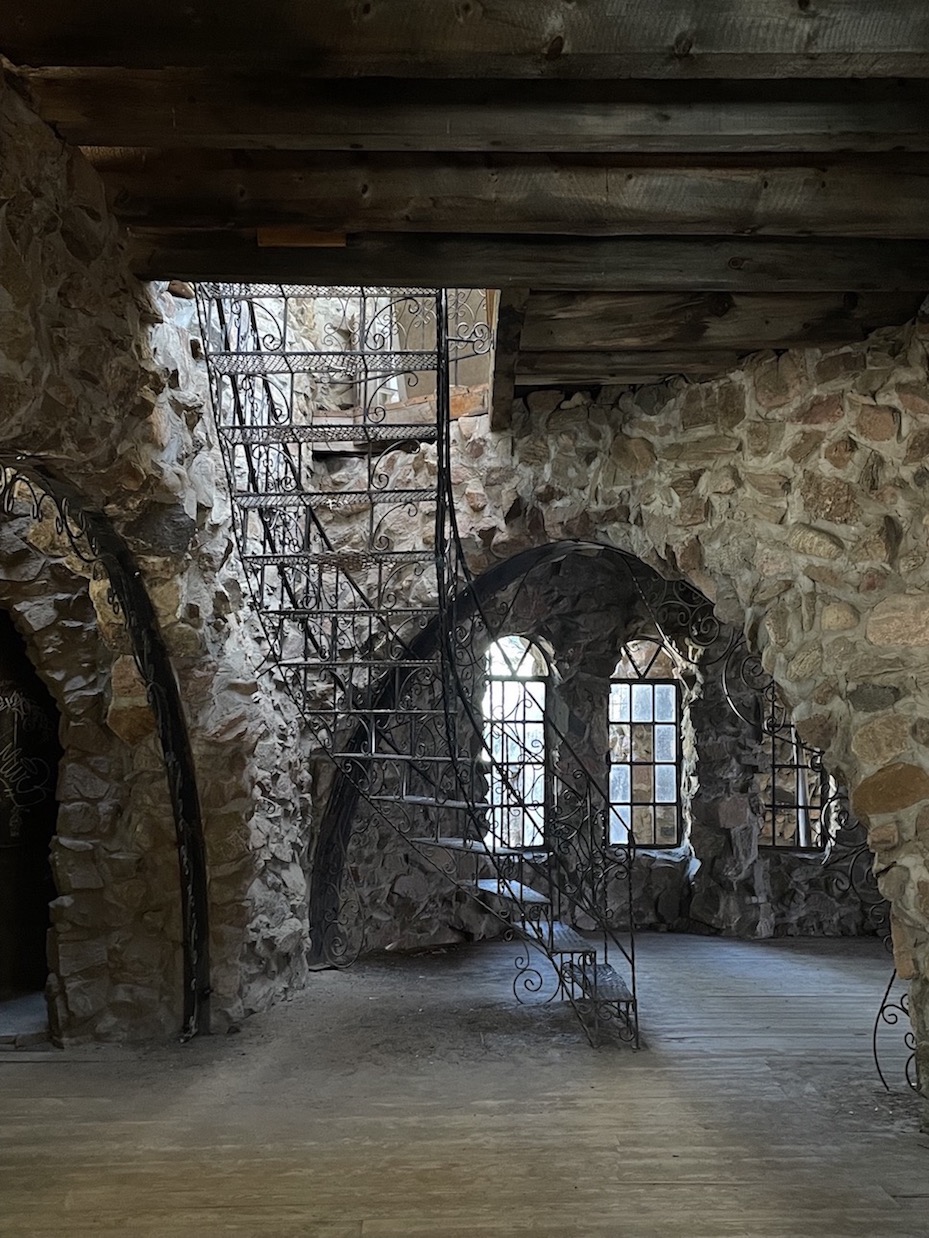

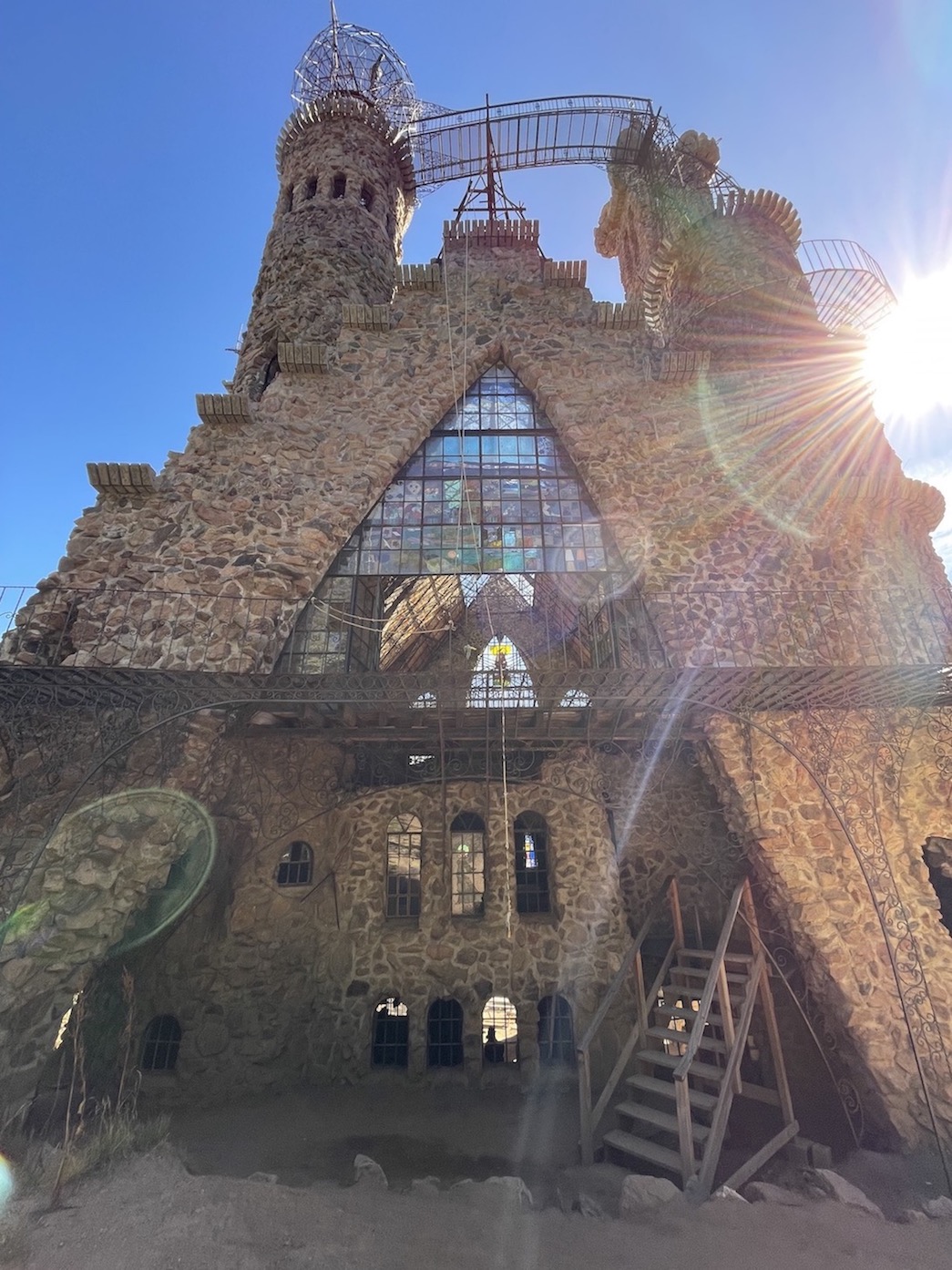
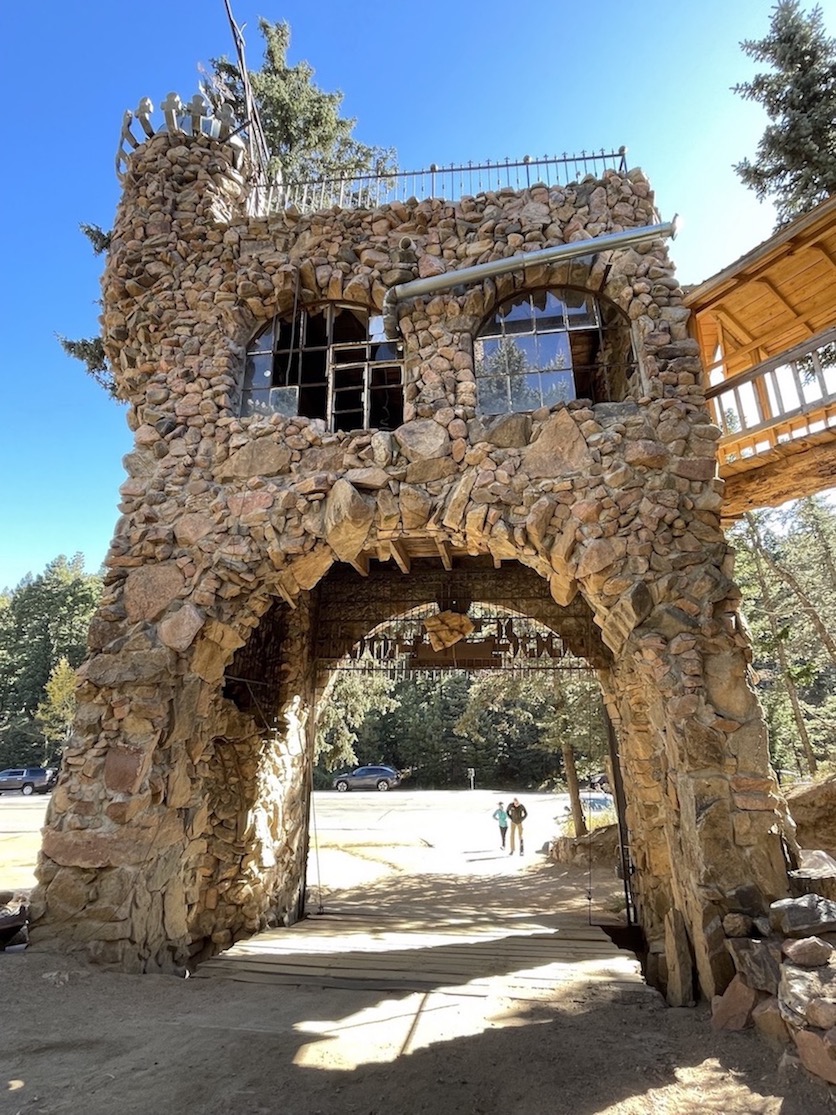
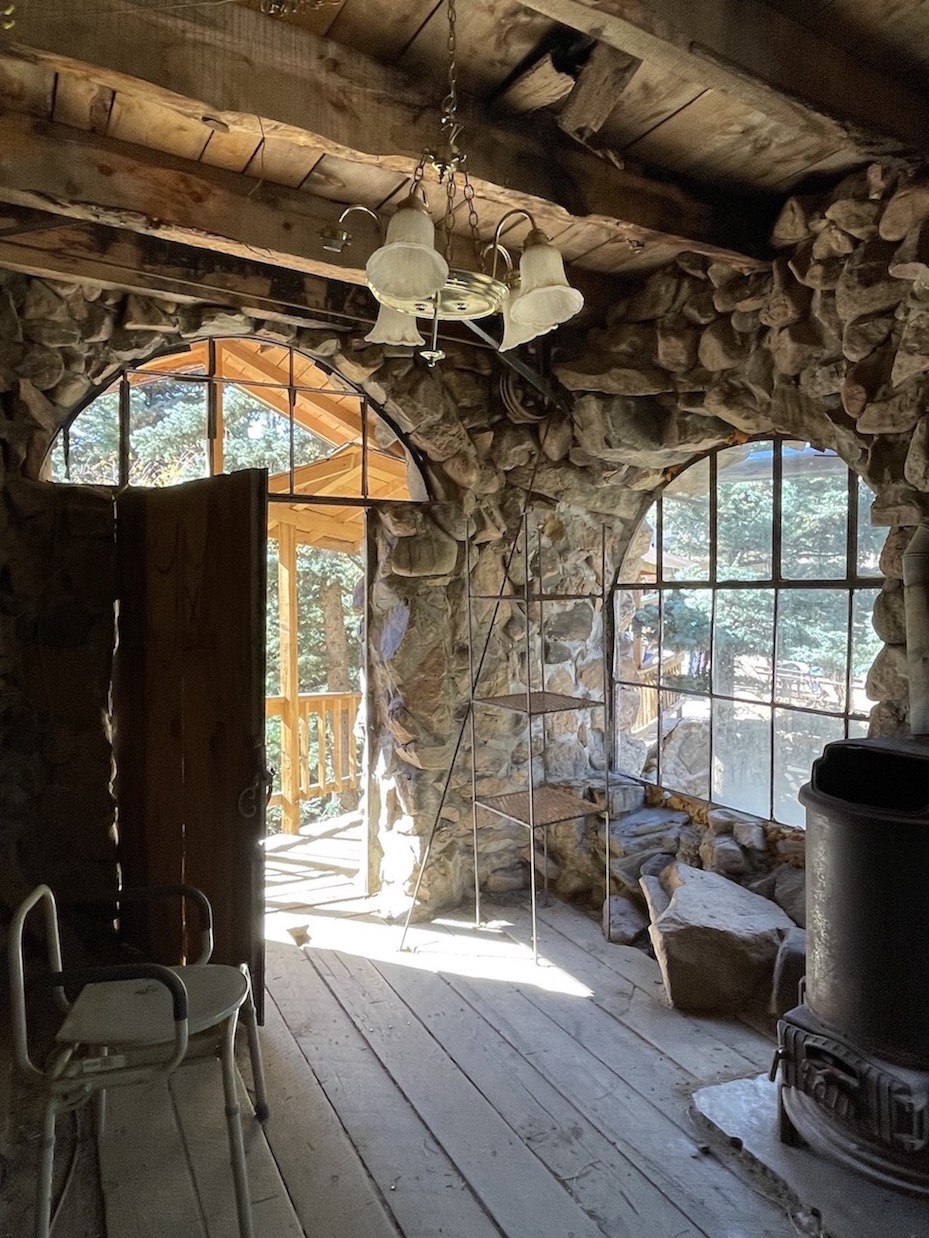

Art Beal may have had a kindred spirit in Jim Bishop, halfway across the country and about an hour and a half from Colorado Springs. Over a span of 60 years, Bishop created his own castle out of found objects, even affixing a fire breathing dragon made from recycled hospital trays and a hot air balloon burner. My favorite room is the massive and high-ceilinged Grand Ballroom with its gorgeous tapestry of stained glass windows.
Bishop Castle is free and open to the public, though folks are warned to visit at their own risk as it’s not up to official building codes. A lot of people chicken out when it comes to climbing the stairs up to the tallest turrets.
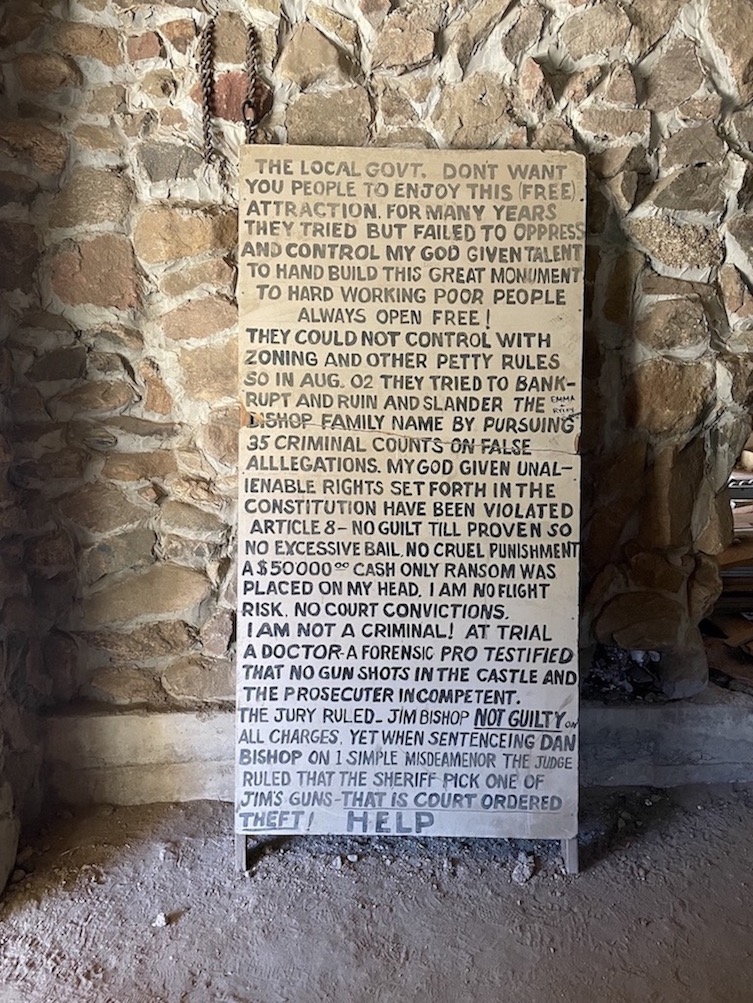
There were multiple philosophies at play during the construction and subsequent public access to Bishop Castle. The principle of not allowing the government to interfere with what individuals do on their private property is clearly one of them, evidenced by a handwritten sign inside the castle that begins, “The local govt. don’t want you people to enjoy this free attraction. For many years they tried but failed to oppress and control my God-given talent to hand build this great monument. To hard working poor people – always open free!”
“He remembered his own childhood frustrations of being unable to afford visits to the zoo or ballpark due to high admission costs for a working-class family…Jim decided to welcome visitors for free. He placed a donation box on the property, allowing people to contribute whatever amount they felt comfortable with. This honor system became the project’s financier, reinforcing Jim’s belief that the castle was a symbol of American freedom…He felt so strongly about maintaining the integrity of his dream that he legally documented that Bishop Castle would always remain free to the public. This commitment to the ideals of a free country, composed of free individuals, fueled his passion for building the castle as a tangible, awe-inspiring representation of the American Dream.”
Bishop Castle website
Googling whether it’s still possible to build with whatever materials you want on your own land in America is a fun exercise. One Redditor swears that, “If you live in a rural enough area, the permits aren’t really even an issue. The local township will have some rules, but enforcement will be sparse at best.” Like Jim Bishop, and like the pioneers of yore, I can’t think of anything more American.
Is this a common ethos among the builders of this type of roadside attraction? Do they aim to demonstrate that a sense of wonder should not be bound by elitism, that self-reliance and imagination are greater tools than wealth?
It seems that Bishop also enjoys the idea of ongoing improvement. In his youth, he was interested in weightlifting and built his body simultaneously as he built the castle. He views the work as a healthy fixation, somewhere to put his energy and creativity. The castle feels like an ongoing testament or shrine to something philosophical and abstract – or perhaps his motivation to keep building is more tangible than that. After his son Roy, who loved the castle, died at the age of four in 1988, “Bishop finished the castle’s glass roof – ‘to catch his tears,’ his wife says.”
Salvation Mountain in Niland, California


I’ve written at length about the anarchist off-grid community at Slab City, California, often touted as the “last free place in America,” an ungovernable desert oasis where squatters don’t pay taxes.
People build their own shelters at Slab City, which also has an entertainment venue, a hostel, and a library. Some people live there full-time, but most snowbirds seek cooler climes in the summer. Tourists visit Slab City mostly to explore Salvation Mountain, a giant painted monument constructed by artist Leonard Knight over the course of 28 years, and East Jesus, a found-object outdoor art display.
While East Jesus is a collaborative art gallery with many pieces that are up to different interpretations, Salvation Mountain and the road signs throughout Slab City provide more obvious hints at the residents’ philosophies on life.
I took special note of signs that read, “Slab City: Where Freedom Lives”, “Center for the Harmonious Enlightenment of Man,” “Welcome To All,” “Fallout Shelter Eco Village,” “None are more hopelessly enslaved than those who falsely believe they are free,” and “It is no measure of health to be well adjusted to a profoundly sick society!”
Knight initially built Salvation Mountain with cement mixed with dirt, but after it collapsed, he turned to adobe mixed with straw and covered in paint. He coated the paint on thick to protect the structure from weather, and estimated over 100,000 gallons of paint had been used over time, some of which were donated by curious tourists. The government attempted to condemn the construction in 1994 during a crusade to start collecting fees from campers, but this was put to a halt thanks to hundreds of petition signatures and an independent toxic waste specialist whose tests deemed the monument safe from contaminants. Though Knight died in 2014, Salvation Mountain lives to be Instagrammed another day.
“It is Leonard’s hope that his message of LOVE will be seen all over the world and that all people everywhere will show more love and compassion for their fellow man. He truly believes that love is the answer to a peaceful and harmonious existence.”
Salvation Mountain website
Knight was an Army veteran who had worked a variety of jobs in Vermont, Nebraska, and Arizona in between road tripping back and forth to California to visit family. For many years he nursed a goal of creating a homemade hot air balloon with a message about God’s love emblazoned on the side for onlookers to read, but when this project failed, he once again followed where the road and his faith took him. It ultimately took him to the Slabs and Salvation Mountain was born.
Mystery Castle in Phoenix, Arizona


The DIY found object Mystery Castle in Phoenix, Arizona has a special desert touch, featuring Native American artifacts, petroglyphs, cactus skeletons, wagon wheels, and a wagon itself used as a bar. The chapel has snake motifs embossed on the floor.
Boyce Luther Gulley sought dry air in Arizona when he was diagnosed with tuberculosis, leaving his family in Seattle. Remembering his daughter Mary Lou’s fondness for sandcastles and her vexation that they always wash away, he used the little time he thought he had left to build her a life-size castle on the edge of South Mountain Park Preserve. He ended up living 15 more years after his diagnosis and the project became more and more elaborate. Among the many recycled materials he used for construction were old railroad ties, car parts, telegraph poles, siding from a boxcar, and local stones.
Boyce had kept the project a secret, so when he passed, Mary Lou and her mother Frances were completely surprised by their inheritance. They moved in immediately and continued to find hidden treasures and quirky details throughout the castle.
“One particularly intriguing find was a hidden trap door, discovered under a metal statue of an alligator that sat near the entrance of the dwelling. Beneath it, they found money, letters from Gulley, and other trinkets.”
Roadtrippers
They began to add their own creative touches. Mary Lou was a character herself; she wore all denim all the time, ended up becoming friends with John Wayne, and was known as a great storyteller who suspiciously embellished her tales. She wrote little quips on the walls of the Mystery Castle, including “Here’s a good rule of thumb: too clever is dumb. – Ogden Nash.”
Public interest was ignited in the castle in 1948 when Life magazine published a story called “Life Visits a Mystery Castle: A Young Girl Rules Over the Strange Secrets of a Fairy Tale Dream House in the Arizona Desert.” Mary Lou began offering tours and did so until her death in 2010, after which the Mystery Castle Foundation took over. In 2022 the castle was tragically vandalized, but after restoration it was reopened to the public. In fall of 2023 it closed again due to vandalism and summer storm damage.
The Mystery Castle is listed in the Arizona Historic Register and is a Pride of Phoenix Award winner. Unlike many of the Cambria locals, people in Phoenix seem to have an appreciation and a place in their hearts for their weird and unusual tourist attraction.
Reappraisal of the Discarded
What Commonalities Do We See?
At first glance, Knight’s motivation for Salvation Mountain was different from the other artists on this list because he wanted to spread a religious message that “God is love.” Jim Bishop forms a sharp contrast; the Denver Post reported that “Bishop is not a religious man – he doesn’t believe in it, much like his feelings on the White House – but he talks about God often. ‘I’m God just by doing this. We’re all gods.'”
Still, similarities abound between Knight, Bishop, Beal, and Gulley.
In describing a day in the life of Knight, Bob who curates the Salvation Mountain website wrote, “Leonard’s ‘house’ of 26 years is built on the back of an old 1939 White fire truck decorated as ornately as his mountain. He has no electricity, gas, running water, phone, heating, air conditioning, or any of the other things that so many of us take for granted. He is also one of the happiest men I know.”
Mike O’Malley at Nitt Witt Ridge once said of Beal, “This man was content and happy. Even though he didn’t have any family or anything, I feel like he loved himself. Like he could, you know, like he could live with himself. He was Art Beal!”
Like Bishop, who is still around and who continued to work on his castle into his 70s even after beating cancer, Knight was “always working on something,” up at 5am to prepare for another day of painting. Before he died, the monument’s website predicted that “Leonard will probably never be finished with Salvation Mountain. His imagination is limited only by his own perception of the capabilities and powers bestowed upon him by God.”
We have very little firsthand information about how Gulley saw the world, but we can make assumptions from the immense amount of dedication and attention to detail he put into the Mystery Castle over his last 15 years. Perhaps we may define the Mystery Castle as a love letter from a father to his daughter, much like Bishop Castle in some respects became an homage to Jim Bishop’s son Roy, or Knight’s Salvation Mountain a protestation of love for God.
Knight and Bishop were both high school dropouts. Bishop left in defiance after a teacher told him, “you’ll never amount to anything,” and when Knight switched from a one-room schoolhouse to a larger high school, his new classmates teased him. Bishop remembers an alcoholic father, and Knight remembers a childhood of “too much work and not enough play.”
Gulley skipped out on the prospect of being confined to a sanitarium in order to live out his final days as a free man in Arizona. Beal once escaped his nursing home and hitchhiked back to Nitt Witt Ridge. After Bishop kicked cancer, his son Daniel urged him to rest instead of hauling stones around at the castle, to little avail. Knight only expected to be in Slab City for a week and ended up spending the rest of his life there, in the last free place in America.
Journalists constantly use words like “outlaw” and “outsider” to describe these men, and it seems they would likely welcome it.
Found Objects and Art Therapy
By turning the ordinary into the extraordinary, the artists who created our favorite found object palaces also made themselves extraordinary. Perhaps these folk art architects – art-chitects – were tapping into something that art therapists are only now beginning to understand.
“By using found objects as an artistic way, the artist has the opportunity to take something seemingly mundane and turn it into a unique aesthetic entity. Found object creations are very valuable in art therapy because they allow the participant to attach their own unique meaning to items that may commonly hold a completely different significance to others. Making ‘found object art’ can also metaphorically describe a transformation process by turning something from ‘trash to treasure’.”
Ally Root, Touch a Life
“The found objects helped improve emotional and mental wellbeing, enhanced self expression and self esteem. In addition the found objects offered a cognitive process in thinking outside of self and helped with issues such as isolation, motivation, physical exercise and social inclusion.”
Julie Brooker, International Journal of Art Therapy
“In contemporary art practice, the discarded, unwanted, broken pieces or junk are often transformed by artists into assemblages with personal meanings, and value through a process involving aesthetic judgment, cognitive reappraisal of the discarded, emotional arousal and creative action.”
Daniel Wong, LASALLE College of the Arts
“The art object may attempt to restore broken connections between the traumatized individual
Michal Bat Or and Orna Megides, University of Haifa
and social structures and people by imposing ‘form onto the destruction if only by representing it within new structure: the structure of art’ (Knafo 2004, p. 539). In the therapeutic setting, this process of creating found object/readymade art encompasses looking for lost memories, some of them fragmented, split, and dissociative; placing them as present objects; and finally, connecting them and re-locating them into a narrative. Recovery from trauma and loss requires the reconstruction of meaning, the rebuilding of hope and sense of agency.”
In Contrast: Compounds of the Nouveau Riche
It’s not just folk artists who decide to create their own oases from the ground up. Some eccentric-estates-turned-road-trip-destinations were designed by successful businessmen who gained the means to make their wildest dreams come true.
Hearst Castle in San Simeon, California


Newspaper tycoon William Randolph Hearst hired architect Julia Morgan to create his dream palace in San Simeon, California. In juxtaposition to Nitt Witt Ridge just a ten minute drive away, Hearst Castle represents luxury, though it is still built and decorated from an unusual amalgamation of materials that could only be dreamt up by an atypical individual.
“Hearst was most interesting to meet, and I got [to] like him – a grave simple child – with no doubt a nasty temper – playing with the most costly toys. A vast income always overspent: Ceaseless building and collecting not very discriminatingly works of art.”
Hearst’s wealth may have started out as too generational to truly be considered “nouveau riche,” but this letter written by Winston Churchill describes him as a man delighted by a windfall of new money.
Tourists check in at the Hearst Castle Visitors Center and board a bus to go up the winding mountain path to the castle. The road makes switchbacks across the hills, alternating to provide snapshots of the ocean. The castle peeks in and out of view while gradually growing in size. The voice through the overhead speaker encourages visitors to keep an eye out for deer and goats, and maybe even zebras – a few still roam the countryside even though most of Hearst’s exotic pets were sold or donated elsewhere in years past.
The bus pulls up to the grand staircase in the front of the estate so riders may be received by National Park Service employees. A guide emerges from the group to explain that we’ll follow her for the first half of the tour and then be set loose to explore more on our own.
The grounds are truly impressive, the view stunning, and the scent calmingly, intoxicatingly sweet (apparently Hearst specifically picked his plants with this effect in mind), but a disconnect lingers in my gut. Hearst took inspiration from different cultures throughout the world, bringing back sphinxes from Egypt, Roman columns and a sarcophagus, an Irish king’s mace, and mosaic patterns from Spain, all to be displayed alongside modern materials and “revival”-style re-creations. He was stirred and energized by his travels, something I can easily relate to.
This mish-mash is cool in theory, but in practice it struck me as Hollywood kitsch. Everything there is being cared for and cherished by the Park Service, so why did it feel…wrong? Is it because intermingling the real artifacts with the “fake” bastardizes the real? Is it because these precious pieces of history were originally intended to entertain Hearst’s famous friends, when they should have been available to researchers and the public in some kind of museum? Is it that he didn’t have a hand in creating any of the art, and merely procured it? Is it simply the pageantry of it all, the show of wealth, that bothers me? Is money the only difference between this and the DIY folk art castles, or is it also a matter of intention? It feels presumptuous and pompous to style your personal abode after the palaces of kings. Do I care?
In contrast you could say the grandeur of the estate actually serves to enhance and highlight the importance of its artifacts. It keeps them living. I do appreciate that Hearst found a way to integrate the past with the present. Maybe old things shouldn’t be locked away behind glass enclosures, unable to continue interacting with the world. Maybe new things aren’t inherently dismissible simply by nature of being younger than their counterparts. It’s not necessary to settle on any one perspective; both can coexist. What is undeniably true is that visiting Hearst Castle is a singular, thought-provoking experience. He created something that, on the whole, is unlike anywhere else on earth, and yet is a lot like many places in part.
Past the tennis courts and through the Roman Pool, tourists re-board buses to the Visitors Center. As we descend the mountain, the old lion enclosures to our left, I think about the amount of work it must have taken the construction workers to haul all of the artifacts, building materials, and trees up and over that landscape, especially considering Hearst often changed his mind and decided to redesign and rebuild nearly-completed projects (which reminds me of employers I’ve had). Hearst Castle truly represents a feat of human tenacity (that of the laborers), dedication, and, however showy it may be, real reverence and appreciation for the artistic accomplishments of mankind. I left in awe of our species, and with confusion as to why we bother.
Neverland Ranch in Los Olivos, California


At one point in my life I was a diehard Michael Jackson obsessive. I studied his life, his psychology, and his effect on culture to the point that I could have written a scholarly dissertation. When I lived in California I knew I had to make a pilgrimage to honor the King of Pop at his Los Olivos compound. It was on the way back to Los Angeles from Hearst Castle.
In the final twenty minutes of the drive to Neverland Ranch, the route feels off-grid. It’s obvious which gate is Jackson’s based on all the tributes left by fans, but there are no hints of the theme-park-esque estate in the distance. If you didn’t know any better, you’d assume there was nothing but flat farmland for miles around.
You can pull over to admire the fan tributes, but it’s not possible to enter the gate (though these guys found a way to trespass) and there was a surprising amount of active security still onsite all those years after MJ’s death. Otherwise the property was quiet and still, besides distant reverberations from the farm on the adjacent side of the road, the footsteps of a lone dog trotting by, and the cawing of black crows perched in the trees at Neverland’s entrance who serve as de facto guardians of the estate. It all combined to make me feel paranoid and on edge – probably how MJ felt every moment of his life. As the sun went down, what initially felt like a sweet and idyllic homage to a man “Gone Too Soon” suddenly took on a more sinister vibe.
I don’t think Jackson would have wanted this landmark, maintained and celebrated in his name, to feel creepy. He desperately valued privacy, but I don’t think he intended to repel people. I left feeling surprised that my short time on the outside looking in was able to make that struggle tangible. I’d gotten a small taste of the fortress-like forces keeping him separated from the rest of the world.
Darkness had fallen as I left Los Olivos, so maybe I just couldn’t see the beauty all around me, but as far as I could tell Jackson hadn’t chosen an environment akin to the relaxing, majestic central coast respite of William Randolph Hearst, or even like the hole-in-the-wall slice-of-mountainside hideaway where Art Beal found self-actualization in Nitt Witt Ridge. There was nothing out here. At all. Not in a calming, back-to-nature kind of way, just nothing.
Perhaps he chose a landscape that represents nothingness on purpose, to counteract the overwhelming environments he spent most of his life in, but if that was the idea, he quickly bulldozed it with everything he built on the grounds. Neverland wasn’t exactly Walden Pond. Maybe, like an artist (and gentrifier), he saw this land as a blank canvas. It was easy to make this space his own. It was also an easy place to be a hermit.
Uniquely American Roadside Oddities
In the building of their odd palaces, Hearst and Jackson may have repurposed the land, but they didn’t convert found objects into anything new. They simply accepted what was already considered good, reputable, or enjoyable by public opinion (classic art, fairground rides) and collected those things to feather their decadent nests, perhaps in part to guide others’ perceptions of their identities. With all the money in the world, they could not have re-created what Beal, Knight, Gulley, and Bishop achieved alone and by hand.
Yet Hearst, Jackson, Beal, Knight, Gulley, and Bishop all succeeded in one similar goal – they created physical manifestations of the ideal worlds they imagined in their heads, and lived in them every day. Their palaces were a statement of their absolute freedom, either through wealth or through a combination of ingenuity and resourcefulness. In this sense, all of them represent the American Dream, and all of their properties make fascinating roadside oddities.
As a traveler and road tripper, I don’t have much interest in creating an ideal enclave for myself. There’s a world out there waiting for me in too many places at once; it doesn’t need to be drawn out of my imagination or accumulated around me like a shrine. I’d rather go to it than bring it to me. The kicker is wondering whether I have enough time to see it all.
That said, perhaps this blog, this space on the internet that I’ve carved out for myself, is my own version of a found object palace. I collect the world that I find out there on my travels and I organize it all here, synthesizing the information according to my own takeaways and perspectives, posting pictures like talismans. I post it free for whoever may find value in it, though some may view my work as an eyesore in comparison to more officially sanctioned publications. So be it – I’m proud to be a nitwit.
🏨 Looking to save money on your road trip? Find budget hostels here and free or paid campsites via The Dyrt.
✈️ Coming to the United States from further afield? Use an Airalo eSIM for affordable international cell data and don’t forget to protect your investment with travel insurance.
Related:





Pin It:

My dream is to write travel and hiking content full-time. All of my guides and itineraries are free and my travels are self-funded. If you enjoy my site and would like to support, you can donate any amount to my Ko-fi page. Thank you!!
Very interesting post! I went to Bishop’s castle in 2022. What an experience. If you know, you know.
That one really stands out among the group, it’s objectively gorgeous
Cool comparison. I’ve only been to Hearst Castle from this list and have heard of Neverland and Salvation Mountain in Niland.
Thanks! If only we could actually go inside Neverland, would be the coolest experience. I hope it’s not renovated at all and has an urbex look these days.
I haven’t had the opportunity to do any road trips on the west coast yet (East coast based girlie here) – I’m going to save this so when the opportunity comes I can visit some of these places! Or even better find the east coast versions!
I’d love to learn about any similar East Coast stops, there’s got to be some!
What an interesting look at roadside oddities. We often don’t go seeking them. But are often intrigued enough when we see one to stop and explore. It is amazing how creative that people can get with “junk” and “found objects”. Great to give everything a second life! The Hearst Castle is indeed in a different class. And well worth a stop in San Simeon.
I hadn’t heard of Bishop Castle before. Looks really interesting. I live just down the coast from Nitt Witt Ridge.
That’s awesome you live so close! Do you agree with the locals who think it’s an eyesore, or do you like having it in your community?