

How to Pack Light for a Trip That Combines Trekking, Cities, Work
Purchases made through some links on this page may provide The Detour Effect with commissions (at no extra cost to you). Thank you!
Packing light for a multi-country journey that will visit various climate zones is already tricky enough, but when your travel style includes long-distance wilderness trekking and camping, city tourism, and needing access to a computer to work remotely? That’s a whole new level of challenge – though not impossible. As a nomadic solo hiker who travels for months at a time, I’ve really had to hone my packing skills.
This is a packing list breakdown of how I tackle the conundrum of an all-purpose trip.


How many pieces of luggage to bring for multi-activity long-term travel?

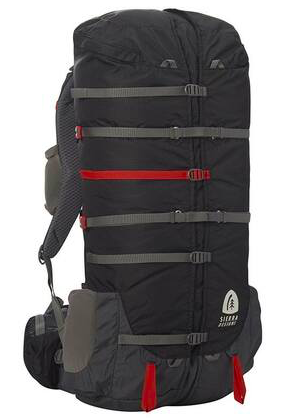
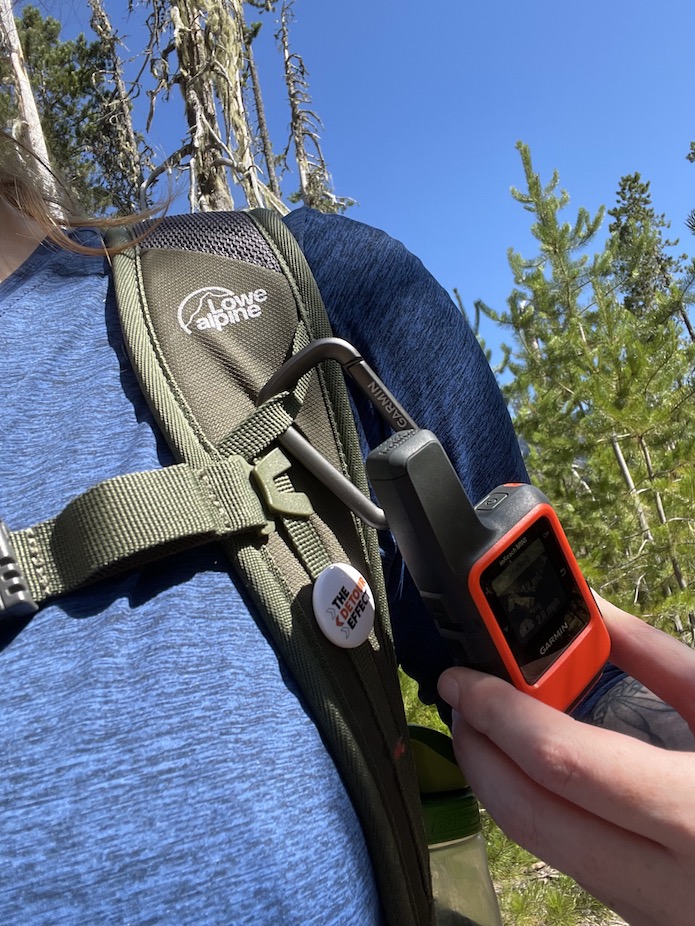
I carry one piece of checked luggage, which is my 40-60L Sierra Designs Flex Capacitor backpack. This houses my camping gear and clothes. I also have a 22L Lowe Alpine Edge carry-on backpack which doubles as a day pack for short hikes or as a “purse” for day-to-day exploring in cities. This fits under the seat in front of me on the plane and is counted as the free “personal item.”
The Flex Capacitor can be cinched down to 40L after I remove camping gear, or can be expanded all the way for 60L when I need as much room as possible.
The 22L pack really isn’t my favorite for day hiking because it has no hip belt support, but my 28L Deuter that I like to use in the States is just too big to function as a travel pack.
Can you run into problems checking hiking gear onto planes?
Hikers who venture around the world always worry about their trekking poles getting damaged or not being allowed on planes. I secure my trekking poles to the outside of the Flex Capacitor by putting one end of each pole in the outer water bottle pockets (I transfer my water thermoses to the bottle pockets of my 22L carry-on). I tighten down the upper part of each pole with the backpack’s compression straps.
Nine times out of ten, the agents at the airport don’t say anything or have any issue checking the bag. A couple times, though, an agent has deemed it “odd-sized baggage,” which is fair. They may ask you to check it in at the oversized baggage area in a separate part of the airport, or they may have you wrap a big garbage bag over the entire thing as a way of keeping it all contained. I’ve seen other hikers prepare for this by wrapping their whole backpack in plastic wrap or stowing it in a large IKEA bag.
To give yourself the best chance of avoiding issues, make sure that before arriving at the airport, you’ve removed any dangling pieces that are hanging off of your trekking pack – carabiners, whistles, compass, bandana, whatever. Zip them up somewhere inside the pack. When you place your backpack on the weighing station at check-in, you should also buckle the hip belt together, as well as the sternum strap. They don’t want rogue buckles flying everywhere and getting caught on things. If yours are cinched tight and therefore the ends of the straps are hanging down, it’d be nice to loop the excess around a few times or tie some kind of knot to keep them from dangling.
I have never had a ticket agent refuse to allow my trekking poles or my backpacking pack onto the plane altogether. Of course, I’ve never tried bringing trekking poles as a carry-on item.
What hiking gear cannot be brought on planes?
Fuel for your backpacking stove cannot be brought onto a plane and will need to be purchased at your destination. It’s also possible your lighter could be confiscated (one time I accidentally got away with bringing a lighter, though).
You cannot bring bear spray on a plane either.
If you have lithium or lithium-ion batteries in your laptop or portable cell phone charger, like in some GoalZero, Anker, or Nitecore power banks, these need to be kept in your carry-on and should not be checked. If they explode mid-flight, a flight attendant can help extinguish the fire if it was in the carry-on.
Trekking poles should be checked rather than carried on, as should any kind of knife or multi-tool.
How to balance hiking clothes vs. city clothes?


Even on multi-month trips abroad (my longest are usually about seven months), most of the clothes I pack are hiking clothes.
On the “normal clothes” front, I bring one pair of jeans and maybe a second “nicer” pair of pants, two or three shirts, and some third item depending on my plans. If I know I will be swimming, it could be a swimsuit. If I know I will be going out for dinners, it might be a lightweight dress. Whatever this third item is always ends up frustrating me by the end of the trip because I haul it around the world only to wear it a couple of times. You might find it easier to buy something like that after you arrive, just before the special occasion. Then you only have to carry it around for part of the trip.
A lot of hiking clothes can double for city wear, such as a puffy midlayer jacket or fleece, a rain jacket, and socks. Sometimes I do bring another light jacket that’s more fashionable for streetwear, but I know it’s unnecessary.
I end up going to the laundromat a lot, or trying to book accommodations that have laundry machines in-house. This is especially important after a long hike, but also after a few days in the city wearing the same clothes.
How many shoes should I bring if I’m trying to pack light?

Shoes are the most annoying part of packing for a long multi-purpose trip because it’s very difficult to stick to a less-is-more mentality. I bring three pairs.
For multi-day trekking adventures through rough terrain, I really need my heavy, full-on hiking boots. Especially because a lot of the hikes I do are through boggy, wet terrain, I really don’t enjoy trail runners, which get waterlogged quickly (I know they dry quickly too, but some trails never give them an opportunity to dry).
Hiking boots can double as city-walking shoes sometimes, especially if you end up doing a lot of walking as a tourist, but for me, there are too many situations where wearing hiking boots makes me feel silly and out of place. My boots are also constrictive and I like to let my feet recover from being suited up for hiking whenever possible. The boots are expensive too, and I really only want to put miles on them when necessary so they’ll last longer for real hikes. For these reasons I bring a pair of canvas shoes as my “city shoes.”
I also bring Chacos sandals. I change into these at camp during a trek, and I can also slip into them easily as a tourist if I have, for instance, a beach day. If I had no plans to do an overnight wilderness trek and was only going to do day hikes, maybe I could leave the Chacos behind, but so far I’ve always had at least one long hike involved in all of my travels.
If you do like to hike in trail runners, you may be able to treat these are your everyday shoe, hiking shoe, and/or your gym shoe. They could be really multi-functional. I’m jealous of people who prefer trail runners because I do like to run and go to the gym back home, but since I don’t pack gym clothes for trips, I don’t get to keep up with that habit abroad.
Since I am always wearing one pair of shoes, then I only have to figure out how to pack the other two pairs. Sometimes I can fit the Chacos inside the 60L backpack, but other times I secure them to the outside by threading the backpack’s compression straps through the shoe straps.
For the remaining pair of shoes (either the hiking shoes or canvas shoes, whichever ones I’m not currently wearing), my strategy depends on whether I’m about to board a plane or ground transportation. For a plane, I usually tie the shoelaces together and use a carabiner to hook them to my day pack. They come along as part of my carry-on. If I’m taking ground transportation, then I can put the shoes in the outer water bottle pockets of the 60L pack and use either carabiners or the compression straps for support. I don’t do this for planes because the whole contraption just becomes too bulky and ridiculous, and big shoes are apt to fall out of the water bottle pockets and swing around.
How can you pack what you need to work remotely amongst all this camping gear?


Thankfully, all I need to work remotely is my laptop. I pack this in my 22L carry-on backpack for plane or train rides. Once I arrive at the hostel or AirBnB I’ve booked, I can leave the laptop and the big 60L pack there while I’m out and about.
Private rooms or AirBnBs are best, but hostel dorms are often too cheap to ignore and I do still stay in them sometimes. I book hostels that have some sort of secure, lockable cubby for valuables so that if I go out to explore the city, I feel ok about leaving things behind.

When it’s time to do a long-distance trek with the 60L pack, then I need to leave a lot of things behind in my 22L day pack for an extended duration, including the laptop and my city clothes. AirBnBs are not as conducive to this, so I will usually book a hostel for the timeframes immediately pre- and post-hike. I email them in advance to find out if it’s ok for me to leave the day pack while I’m gone and pick it back up when I return. Most hostels these days do have a secure luggage room for this exact purpose, though some may charge a fee. Another idea is to use the Bounce luggage storage service which has locations all around the world.
That carry-on bag does get very bulky during transition periods when I’m traveling from one destination to the next, when I’m carrying all of my belongings in the two backpacks and nothing has been left behind anywhere in storage. In addition to the laptop, the day pack will have items I want quick access to, like headphones, wallet, passport, medications, glasses, snacks, water, sunscreen, electronic device chargers, power outlet adaptors, warm hat, and usually a few things that simply overflowed and couldn’t fit in my 60L pack.
Luxury items I travel without
There is no way I can travel with a hairdryer. Once or twice I have traveled with a hair straightener because I had a bad haircut at the time and needed all the help I could get, but my preference is not to bring any kind of hair styling product at all. I just let it air dry and fall as it may.
I don’t bring a comfortable fluffy towel, opting instead for an absorbent, lightweight quick-drying hiking towel. I can use this after showering at regular accommodations when I’m off-trail too. Sadly, most hostels don’t offer towels for free as part of your booking. AirBnBs and hotels do, though, so it always feels luxurious to arrive at one and use a real towel.
I don’t bring gym clothes which really sucks, although if I can get my hands on an affordable gym shoe abroad, a T-shirt and hiking leggings work well enough for workouts.
Final two-bag packing list for a multi-month multi-purpose multi-climate trip
This list shows how I pack things for the transit portions of my trips, but obviously items get rearranged between the two bags once I arrive at an accommodation, or when I set off for a long-distance hike and leave some items behind in hostel storage.
My hiking and camping gear kit has been honed over the years to be able to handle multiple climates. For reference, I cut my teeth hiking in the desert Southwest in the United States, particularly when I worked at the Grand Canyon, but during my back-to-back trek of five long-distance trails in Europe, including in rainy destinations like Scotland and Ireland, I learned the importance of synthetic and quick-drying materials. I’ve since hiked in Yellowstone, Grand Teton, North Cascades, Big Bend, Chaco Canyon, Zion, Capitol Reef, Canyonlands, Smoky Mountains, the Alps, Snowdonia, Peak District, Saxon Switzerland National Park, Wicklow Mountains, South Downs, and more. I will be using this kit soon in Kyrgyzstan and Greenland.
40-60L Sierra Designs Flex Capacitor
- Nemo Hornet 2P tent
- Nemo Azura synthetic sleeping bag
- REI Flash sleeping pad
- Sleeping bag liner – sometimes. I don’t like liners.
- Headlamp and flashlight
- MSR PocketRocket backpacking stove
- Camp cup and spork utensil
- One or two pairs of hiking pants (I can get away with one pair if I wear these tri-color zip-off pants, which are like three pants in one, but I do like my Patagonia leggings, and these fit underneath rain pants)
- Rain pants
- Two long sleeve base layer hiking shirts (one Smartwool and one lighter material such as polyester, nylon, or polypropylene)
- Patagonia Nano Puff synthetic midlayer
- Rain Jacket (used to be Mountain Warehouse Glacial Women’s raincoat but it’s so massive I often had to tie it around my waist during travel because it wouldn’t fit in a pack; I’m replacing it with the much lighter Patagonia Torrentshell 3L)
- Tons of pairs of socks, I don’t skimp on this – my favorite is Wrightsock Coolmesh II Double Layer quarter socks
- Two sports bras and a regular bra, lots of underwear
- A big T-shirt and lightweight shorts to sleep in
- Brimmed cap
- Bug Net
- Knife
- Jeans
- Two or three shirts for city wear
- Wildcard clothing item depending on itinerary – maybe a swimsuit, lightweight sundress, “nice” pants
- Bag of hiking smellables and first aid – sunscreen, bug spray, bandaids, wet wipes, chapstick, Nuun electrolyte tablets
- Sawyer mini water filter
- Trowel and biodegradable toilet paper
- Ziplock for packing out trash
- Reusable bags to store food in, such as Stasher or Smelly Proof, or sometimes just Ziplocks (I don’t buy food until I’m in the destination, just prior to a hike)
- Lightweight quick-drying hiking towel
- Pack cover for rain
- Kahtoola microspikes if I expect to encounter snow/ice on trail
- Leki Journey Lite trekking poles
- Chacos Z/1 Classic sandals
- Oboz Sawtooth hiking boots, or canvas shoes (I pack one and wear the other)
22L Lowe Alpine Day Pack
- Laptop
- Wallet
- Passport
- Headphones
- Electronic device charging chords
- Portable charging power banks (I have two GoalZero Flip 36s which are about 10,000 mAh each, or one 20,000 mAh Anker or Nitecore would give the equivalent number of recharges)
- Travel outlet adaptors
- Bag of travel-sized toiletries and medications, including contact lens case, solution, and extra contacts
- Garmin InReach Mini
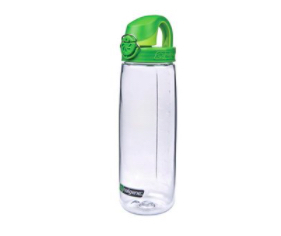
- Two Nalgene water bottles
- Warm beanie hat
- Selfie stick
- Glasses
- Packable, reusable grocery tote (when I stay at AirBnB’s for extended periods, I get my own groceries, but I also find myself using this during travel for all sorts of random reasons)
- Anything that I’m having trouble shoving into the 60L pack (each time my success rate at getting everything in there is different than the last)
If you’re a backpacker in both senses of the word – wilderness trekking and country-hopping – does your kit look pretty similar to mine? I suppose everyone has contrasting priorities when it comes to packing for different climates and destinations. One traveler may want to be more beach-ready, another may want to attend a few dressy events, and another may plan on only hut-to-hut trekking instead of needing to carry a tent (you lucky dog; imagine all the room I would have without the tent and sleeping bag!). Obviously readers will take different things from my list according to their interests, but I hope it’s given you a general idea of how you can successfully limit your pack weight and number of luggage items for long-term multi-activity adventure travel.
Related:







Pin It:


My dream is to write travel and hiking content full-time. All of my guides and itineraries are free and my travels are self-funded. If you enjoy my site and would like to support, you can donate any amount to my Ko-fi page. Thank you!!
Thank you for this! I could not find another article that was so specific for what I’m looking for. It’s hard to balance packing for city adventures and hiking. Even harder when you’re switching climates. I appreciate the guidance 🙂
Thanks for saying so, I’m glad it helped a like-minded traveler! And right?? A lot of “how to pack light” or “carry-on only” posts have it so easy because they’re not doing multi-purpose trips. It’s all fun and games until you throw a tent in the mix!
Very comprehensive. I would not ever try taking hiking poles on a plane as carryon. Although I have seen people succeed. If you fail, your checked bag is already checked and gone.
https://www.tsa.gov/travel/security-screening/whatcanibring/items/hiking-poles
And if I’m carrying trekking poles that were expensive or that I have an emotional attachment to (which I do, lol I love mine), it would be so sad to have them confiscated! I guess they’d probably mail them home for you but you’d have to pay for it. One time I didn’t travel with poles because only 25% of my trip involved hiking. I bought some cheap ones a couple months into the trip, just before the first big hike. I guess that’s another solution but I really missed my go-to poles.