

Day Trip from Stockholm to Birka, Sweden’s First Viking City
Purchases made through some links on this page may provide The Detour Effect with commissions (at no extra cost to you). Thank you!
If you have limited time in Sweden’s capital city of Stockholm and can only pick one day trip, the many excellent options present a difficult choice. Should you visit charming Uppsala for a comparison of Stockholm to one of Sweden’s other major cities, admire Mariefred’s idyllic castle, or explore Sigtuna, a town founded by Vikings and still populated today?
For those interested in archaeology and Viking history, or who want to kill two birds with one stone by also experiencing a boat trip around the archipelago, I would recommend prioritizing Birka on the island of Björkö.
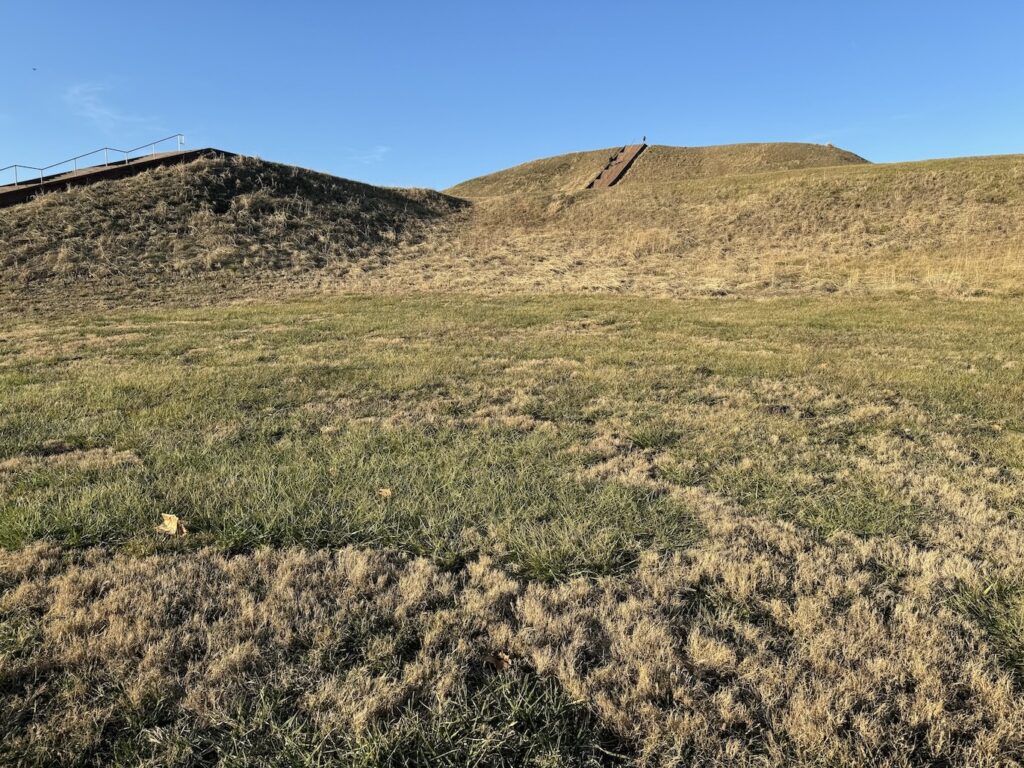
Birka was settled around 750 or 790 AD, making it older than Sigtuna and probably Sweden’s first town. For around 200 years until it was abandoned circa 975 AD, it was one of the most important trading centers in the Viking world. It was also significant for funerary purposes. There are around 4500-5000 graves at Birka, making this UNESCO World Heritage Site an important research location for archaeologists who want to understand more about Viking history and culture. Visitors can walk amongst the burial mounds, which artificially rise above the natural landscape in a way that reminds me of the great Irish passage tombs at Newgrange, Knowth, Loughcrew, and Hill of Tara, or the Native American mounds at ancient Cahokia and along the Natchez Trace Parkway.
How to reach Birka on a day trip from Stockholm


Birka is reachable by taking a ferry across Lake Mälaren. While the SL smartphone app allows you to take public transportation around Stockholm via train, metro, tram, bus, and commuter ferry, the boat to Birka is a longer trip and not included as part of any SL transit pass.
The easiest way to book a day trip from Stockholm to Birka is via the sailing company Stromma. Their day trip excursion titled “Birka – The Viking City” lasts a total of 7 hours and 45 minutes and includes round trip boat transportation to/from Birka, access to the Birka Viking Museum, and a guided tour of the ancient burial fields and hillfort. The tour on the island and the information shared by a guide on the boat trip are provided in both Swedish and English.
This tour also makes pick-up stops at Hovgården, Vårby, Rastaholm, Jungfrusund, Nya Kungshatt, Mariefred, Härjarö, and Södertälje if you are staying in one of these locales instead of in Stockholm.
Stromma did not invite me on any sort of discounted press trip nor ask me to write this article.
What is the typical schedule for a day trip to Birka?
The boat trip is about 2 hours one-way, or 4 hours round-trip. This leaves 3.5 hours to explore the island. The exact schedule varies by season, but when I visited in early August, it looked like this:
- 10:00am: Board the Mälar Victoria boat at Klara Mälarstrand dock in Stockholm, berth number 3. This was about a 15 minute walk from my hostel at City Backpackers.
- 12:00pm: Arrive on the island of Björkö.
- 12:00pm-1:30pm: Time to explore the museum and the reconstructed Viking settlement, plus grab lunch at the restaurant or snacks/ice cream at the cafe. The Swedish meatballs, mashed potatoes, pickled cucumbers, and lingonberries at the restaurant were great!
- 1:30pm: English-speaking guided walking tour of the burial mounds and hillfort.
- 2:30pm-3:30pm: Extra time, maybe grab a bite if you didn’t eat before.
- 3:30pm: Board the boat for the return trip to Stockholm.
- 5:45pm: Arrive in Stockholm.
I thought this was the perfect amount of time to explore Birka, and I even had extra time left over after the tour concluded that I wasn’t sure what to do with. The main brochure for Birka visitors, which you can grab on the boat, makes it look like the sites listed above are pretty much all there is to see.


However, once I arrived on the island, I picked up a free and more detailed map at the museum. This map showed that there are walking trails to additional points of interest such as the Chapel of Saint Ansgar, which was built in the 1930s. It commemorates 1100 years since Ansgar, a missionary and monk, arrived at Birka. Birka was the site of the first known Christian congregation in Sweden in 831, though it failed due to conflict with the pagan population.
Since I didn’t follow the extra walking trails from this map, I can’t say for sure if you will have time to include them, but based on the scale of the map I think you could probably fit one or two additional sights into your trip.
Alternatively, you could visit Birka via water taxi if you want to explore on your own schedule. The problem is most water taxis depart from pick-up points that are not in Stockholm, unless you are willing to book a private charter.
Another option is to stay overnight at Birka in one of their glamping tents. Breakfast and dinner are included in this package.
Tips: On the boat, it can be difficult to hear the guide’s interpretation through the loudspeaker over the sound of the waves and of everyone chatting. If you sit inside on the lower deck and near the bow, you’ll be close to where the guide is standing and able to hear better. However, the best views would come from sitting at the stern of the boat where the windows wrap around for multiple vantage points, or maybe outside on the upper deck. The Mälar Victoria upper deck doesn’t have any shade, though, so you’ll have full sun and wind exposure up there. You are not stuck with your first choice seat and can move about during the trip, but if you want your ideal spot, you should try to get in line early to board first.
When is the best time to visit Birka?
There is regular ferry service from Stockholm to Birka from May – October. June, July, and August are all pretty hot, but not prohibitively so. You’ll want to bring a water bottle, sunscreen, a hat, and dress in lightweight clothes during these months. There is a water spigot to fill up a thermos near the recreated Viking town in Birka. You could also plan on swimming at the cove across from the museum!
It could be fun to time your Birka visit with a special event, such as the Birka Historical Tattoo Fest, Midsommar celebration, Álfablót Halloween of the Vikings, National Archaeology Day, Strong Viking competition, or the Vikings at Birka living history reenactments.
What are the coolest things to see at Birka?
Birka Viking Museum


The museum at Birka is rather small and not packed with ancient artifacts like the Swedish History Museum in Stockholm. I would really recommend visiting the Swedish History Museum sometime after your Birka day trip since grave goods excavated from Birka are on display.
However, the museum at Birka provides an idea of what the Viking settlement would have looked like in its heyday thanks to various models and dioramas. It also features fascinating insight on Birka’s most significant graves.
Bj 581 was one of the most prominent chamber graves on the island. A 35-40 year old individual had been buried in the 10th century in a seated position, perhaps on a throne or in a saddle. Two horses had also been placed in the grave on a platform, a mare and a stallion. This person was buried with many grave gifts, especially weapons, leading researchers to initially believe it was the grave of a man. Osteological and DNA analysis later revealed that this warrior was in fact a woman.
In another grave, a man referred to as “The Youngling” was buried alongside an older man, “The Elk Man,” under curious circumstances. The Youngling was decapitated, his head placed next to his chest, and one of his feet was missing. His teeth had horizontal lines filed into them with a metal tool, a body modification also found in other graves throughout Sweden, Denmark, and England. The meaning of these teeth markings is unknown.
Viking Village Reconstruction


A recreation of a Viking settlement has been built across from the museum to give visitors an idea of what Birka may have looked like from the 8th-10th centuries. It is not built on top of the location of the original settlement.
Not that I’m any kind of expert on Viking history, but I thought the reconstruction had an authentic vibe to it, built with wood and mud in a wattle and daub style and decorated sparingly with wooden furniture and fur textiles. My favorite part was a pair of beautiful boats tied to a small dock behind the houses.
Like the museum, this is something you’ll explore on your own and is not part of the guided tour.
Burial Mounds


After the guided tour begins in front of the museum, the first stop is to investigate some of the burial tumuli. I was surprised that the tour brings groups right up on top of the mounds – you will walk on and between them, and even if you actively try not to, you’ll probably end up stepping on someone’s grave. Our guide was doing her Masters dissertation on Birka and expressed genuine awe and admiration for the graves, but didn’t seem to mind or hesitate about our trampling of them, so perhaps it’s not a concern.
The mounds were likely much higher hundreds of years ago prior to weathering. More than half of the graves are cremations, with piles of stones and soil covering the ashes. Other burials contain intact skeletal remains.
According to UNESCO, “Less than one percent of the property has been archaeologically excavated, and approximately one-third of Birka’s more than 3,000 graves have been investigated” (we now know there are many more than 3,000 graves). I’ve seen the one-third/1,000 number mentioned elsewhere too, but my tour guide (and the brochure) estimated that only 600 graves had been excavated. She lamented that potential finds in other graves remain undiscovered, citing funding as a barrier to further digs.
Later in the tour, the guide points to another field of burial mounds in the distance near the original settlement location, but the tour will not walk to those mounds.
Original Viking Settlement

Halfway between the first burial field and the hillfort, the guide will explain that an open field that looks rather innocuous is in fact the site of the original Viking settlement at Birka. Earthworks marking the location of ramparts are the only visible hint that something once inhabited this space. Archaeological imaging has been able to show the outlines of small building foundations.
Hillfort


Next, the tour will climb a large hill which was fortified in the Viking era to create a place of refuge in times of crisis. At the top of the hill is the Ansgar Monument, a cross erected in 1834 in honor of Saint Ansgar. This is a fantastic 360° lookout point from which you can see the Birka settlement, incoming boats on the shoreline, plus Hovgården on the island of Adelsö across the bay. Hovgården was the royal estate of several Viking-Age kings.
What can you see from Birka at the Swedish History Museum?


The Swedish History Museum in Stockholm traces the country’s past from Stone Age prehistory to medieval and baroque eras, with a special wing on the Viking Age.
I was particularly drawn to the grave and settlement finds from Birka, including ice skates made of animal bone, silver pendants, a necklace, pearls and glass beads, and a belt purse made of squirrel skin.
The skeleton of a child known as the “Birka girl” is on display, a rare burial suggesting high status considering most children were not buried with as many fine grave goods as this individual.
Items recovered with the Viking warrior woman from grave Bj 581 are reportedly on view as well, but if I saw them, I didn’t linger or grasp their importance at the time (for this reason I would recommend visiting the Swedish History Museum after your day trip to Birka).
I was overwhelmed by the sheer number of artifacts and had a hard time deciphering the significance of each piece. Relics from all around Sweden are displayed side-by-side, so there is not a specific Birka wing or display case – you’ll need to read each information plaque to parse out which items are from Birka.
Apparently Birka’s controversial “Allah” ring made of pink glass is also on display at the museum, though I missed it during my visit.
As a trading port, items from throughout Europe and the Orient found their way to Birka:
“Merchants and tradesmen came to Birka with goods from all over Europe and other parts of the world. We know this through archaeological excavations, where they found Arabic silver, beads from Eastern Europe, beautiful glass goblet, ceramics and exclusive fabrics. These goods were traded for exclusive goods that we have here, for example, iron, skins, horns and fur. In the city worked many different kinds of craftsmen like comb makers, blacksmiths, weavers and others.”
Birka Vikingastaden/Strömma Turism & Sjöfart AB
Why was Birka abandoned?
No-one knows for sure why Birka was abandoned, but theories abound regarding political or religious strife, or perhaps economic competition from other trading centers.
With its ramparts and garrison, the town layout was clearly designed to ward off expected external threats, and archaeological evidence shows there were multiple burnings of the town during its lifetime.
My tour guide proposed an interesting theory based on Saint Ansgar’s failure to convert the Birka community to Christianity. The local king had been welcoming to Ansgar and gave approval for him to build a church, and we know that the king’s seat at Hovgården continued to thrive past Birka’s demise. Did the king convert to Christianity or have some stake in his people doing so, ultimately taking up arms against the factions of his kingdom that failed to comply?
Other day trip ideas from Stockholm + more Viking history and burial sites
Back in Stockholm, in addition to the Swedish History Museum’s exhibitions about Vikings, you can also check out the separate Viking Museum and grab a bite to eat at Aifur, a Viking-themed restaurant. Did you know there is a Viking runestone on a street corner in Gamla stan (Stockholm’s Old Town), and another at Arlanda Airport?
If you’re hunting for interesting archaeological sites in Sweden, you must prioritize Falbygden, which is home to 260 megalithic passage tombs far pre-dating the Viking period. Don’t forget the Falbygdens Museum while you’re there. Or, the Bronze Age rock carving petroglyphs in Tanum make up another UNESCO World Heritage Site.
If you’re looking for other guided day trip ideas from Stockholm, start here:
From Stockholm: Viking History Tour to Sigtuna and Uppsala
From Stockholm: Uppsala and Sigtuna Viking Sites Tour
Stockholm: Nature Reserve Hiking Tour with Campfire Lunch
Stockholm: Full Day Archipelago Sailing Tour with Lunch
Stockholm: Full-Day Archipelago Kayaking Adventure
Vaxholm & Stockholm Archipelago: Guided Excursion, Day Trip
Wolf and Wildlife Tracking in Sweden
🏨 Find budget hostels in Stockholm or standard hotel options in Stockholm.
✈️ Coming to Sweden from further afield? Use an Airalo eSIM for affordable international cell data and don’t forget to protect your investment with travel insurance.
Related:




Pin It:


My dream is to write travel and hiking content full-time. All of my guides and itineraries are free and my travels are self-funded. If you enjoy my site and would like to support, you can donate any amount to my Ko-fi page. Thank you!!
This is such a great guide for a day trip from Stockholm to Birka, especially with how it brings Viking history to life through the boat journey, museum visit, and guided walking tours. I really like how it highlights the mix of archaeology, scenic lake views, and immersive storytelling that makes the experience feel both educational and adventurous. It’s a perfect reminder that just outside Stockholm there are incredible historical gems waiting to be explored.
Such an inspiring guide — your detailed breakdown of the day trip to Birka, Sweden’s first Viking city on Lake Mälaren, makes history feel alive and shows how rewarding this UNESCO-listed archaeological site is to explore! I especially loved how you included the boat logistics, museum highlights, and burial mound walk so visitors know exactly what to expect.