
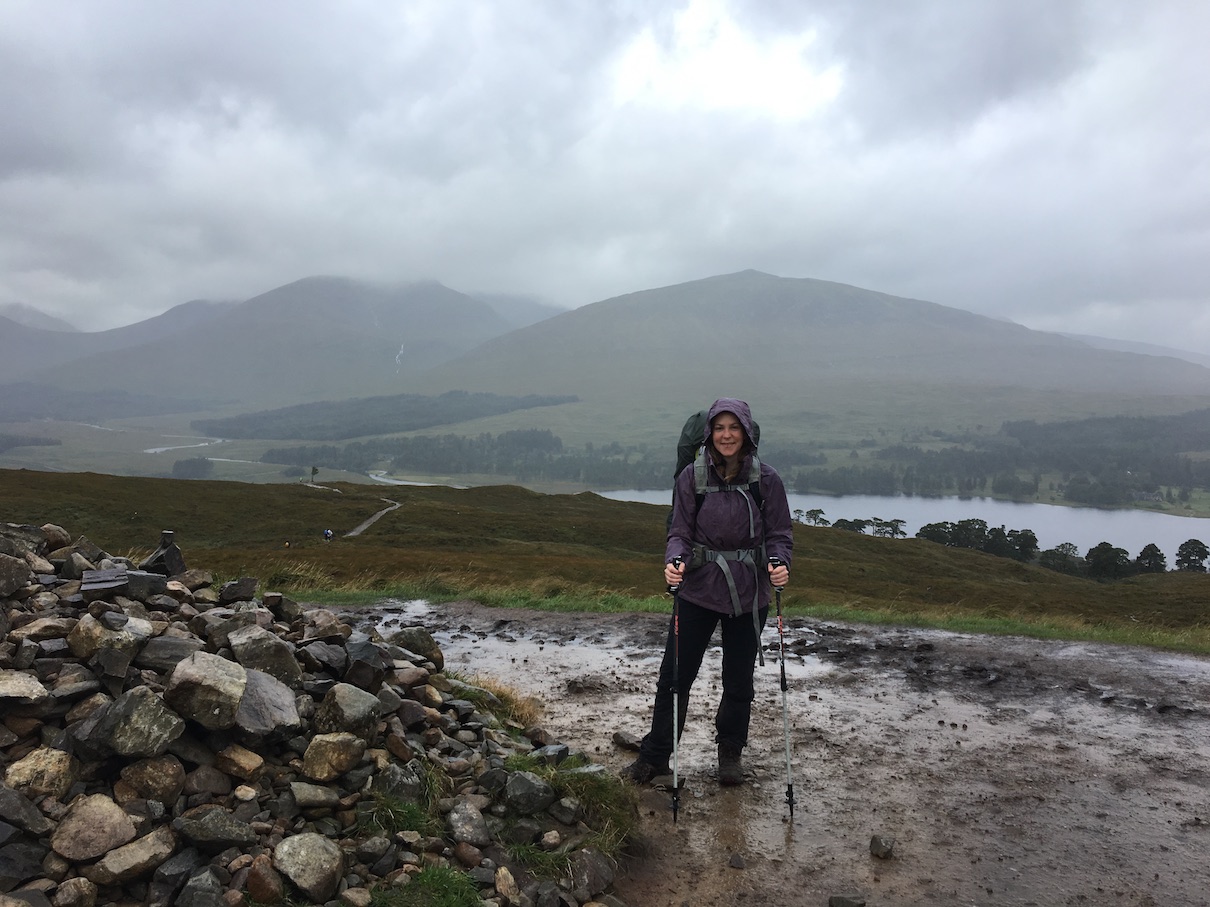
How My American Hiking Gear Handled Solo Trekking Europe
Purchases made through some links on this page may provide The Detour Effect with commissions (at no extra cost to you). Thank you!
When hiking in other countries, it’s always fun to check out the hiking and camping gear other trekkers are using. I learn about brands that are new to me but appear to be ubiquitous elsewhere. Very quickly, Americans always learn that our great overlord REI does not have stores outside of the USA!
All of the hiking gear I brought the first time I went solo trekking in Europe was purchased from brands that are popular in the United States. I had only previously tested them in the desert Southwest. You can likely guess that I learned a lot during Project Multi-Trek – the name I gave my back-to-back solo trek of the West Highland Way in Scotland, Hadrian’s Wall in England, The Kerry Way in Ireland, Tour Du Mont Blanc in France, Switzerland, and Italy, and the Slovenian portion of the Alpe-Adria Trail.
When planning my trip, I knew water resistance would be vital in most of these countries and this would be a major departure from what I’m used to in the deserts of Arizona. With this in mind, I did research and purchase some new gear prior to the trip, though I couldn’t know until I arrived if I made adequate choices. In some cases, I had to change strategies almost immediately upon arrival.
Plan your own self-guided treks on The Kerry Way and the Alpe-Adria with my free how-to guides! *Update – in 2024 I’ve added new guides to the Malerweg in Germany and Wicklow Way in Ireland.

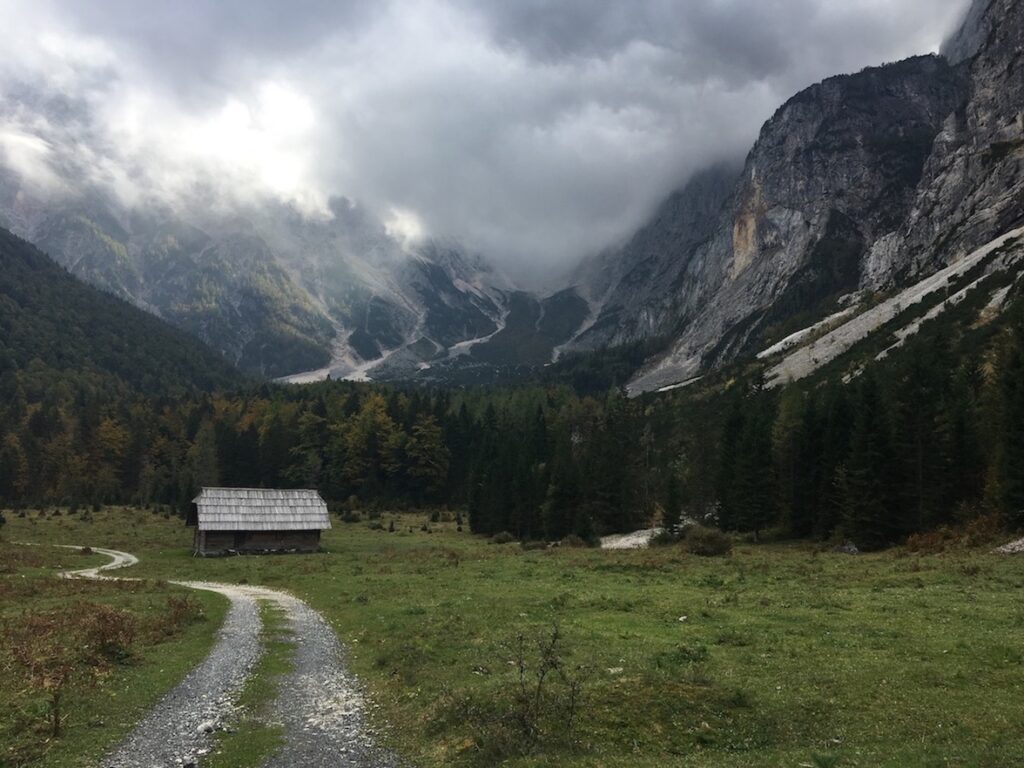


Best Hiking Gear for Scotland, Ireland, England
When it comes to trail conditions that require special consideration beyond what my usual kit is meant for, the Tour du Mont Blanc and the Alpe-Adria didn’t give me as hard a time as the UK and Republic of Ireland trails.
Mountain Warehouse Glacial Women’s Long Waterproof Jacket


I arrived in Scotland with an incredibly thin “waterproof” shell for my rain jacket, a decision made with weight in mind. It became immediately clear as I walked around Glasgow in torrential rain that this was not going to cut it. It soaked through almost immediately as I wandered the Necropolis, and when I took shelter exploring in the Cathedral I couldn’t stop shivering. I Googled nearby outdoor stores and, ignoring the expensive North Face, found a Mountain Warehouse that happened to be having a sale on Extreme Waterproof jackets. The Mountain Warehouse Glacial Waterproof jacket was recommended by the clerk, which claims to “withstand 10,000mm of rain in a 24 hour period, suitable for extremely heavy rain”.
20,000mm would be an even better rating if you’re worried about pressure, meaning being directly pummeled by a waterfall or something, but 10,000mm-15,000mm is good for sustained rain over long periods of time. If you see a rating system with the letter ‘D’ (for fabric denier), such as 40D or 80D, the higher the number the better for waterproofing, although a lower number will be more lightweight.
This jacket is absolutely not lightweight, which is my biggest gripe with it, but it protected me brilliantly through days upon days of horrible conditions on both the West Highland Way and Kerry Way and from that perspective it is probably the best purchase I made for the entire trip.
Only a couple times did I start to feel the moisture permeate to my base layers, but that was partially from rain dripping down inevitable gaps in the wrist or neck area. That said, the jacket does have reliable cinch mechanisms at the wrists and neck which prevent this the majority of the time; it’s just not possible to ensure complete impenetrability. I like that this jacket is a longer length and doesn’t stop at the waist so my rain pants don’t have to do as much work, or sometimes I don’t need to change into rain pants at all. The jacket also dries incredibly fast, so breaks in the rain can translate to respite and a clean slate. It has inside pockets which help protect belongings such as my phone.
I wasn’t looking for warmth because I had layers to wear underneath, so I didn’t need any of the rain jacket models that come with a fleece lining, but this jacket is actually quite insulating. In the end, I didn’t bother wearing other layers a lot of the time, although there is room to.
The Mountain Warehouse Glacial Long Waterproof Jacket is not very packable. I often tied it to my waist or to the outside of my backpack.
*2024 Update – I have used this jacket as my main rain jacket for backpacking and hiking for almost five years now, and the weight of it is truly ridiculous at 1.76 lbs lol. I still love it dearly for keeping me dry, warm, and safe, and it’s still a great recommendation if your alternative is a crappy lightweight shell, but I am looking at lighter alternatives such as the Torrentshell 3L from Patagonia. This seems like the more affordable option compared to the Arc’teryx Beta.
Smartwool Merino 250 Base Layer Quarter-Zip Top


The Smartwool Merino Base Layer Quarter Zip Top is a piece I already owned at home and that came through for me in all different weather conditions in Europe. I wore this shirt nearly every single day on all five trails. Smartwool is incredibly breathable. I didn’t realize how successful it really was at sweat-wicking until I would change into something else and suddenly be drenched. It kept me warm on the cooler and rainier days, but I didn’t overheat on the sunny ones. It felt soft and comfortable and in general I never had to think about it. It became like a second skin. You can get Smartwool base layers in a variety of colors or patterned designs if you’re not as goth as me. Both the solid and patterned versions come in plus sizes too.
Merrell Moab Mid Waterproof Hiking Boots

Merrell Moab hiking shoes take zero break-in time, which is a major benefit for most people. They feel soft and flexible, which is actually not my personal preference. I generally prefer the sturdy, heavy, anchored feeling of my Oboz Sawtooths (which I didn’t own yet during this trip), which is also why I can’t get into trail runners. I’m glad I didn’t listen to people who recommended trail runners for this particular trip because they would have been sopping wet immediately. I know they are supposed to dry quicker too, but they would have had no opportunity to dry.
Regardless of my preference for a heavier, taller shoe, I kept an open mind and researched many brands for this excursion. I went with the Merrell Moabs because they are so frequently recommended; I suppose it was peer pressure.
“Waterproof” shoes are successful at keeping water out up to a point, but the inner lining that is supposed to make them waterproof can actually retain and trap water inside once it’s gotten in there. This is a problem with GoreTex too. In an environment where you’re submerging your foot entirely, water is definitely getting in. Could the Merrell Moabs hold up in the level of bogginess I was about to put them through?
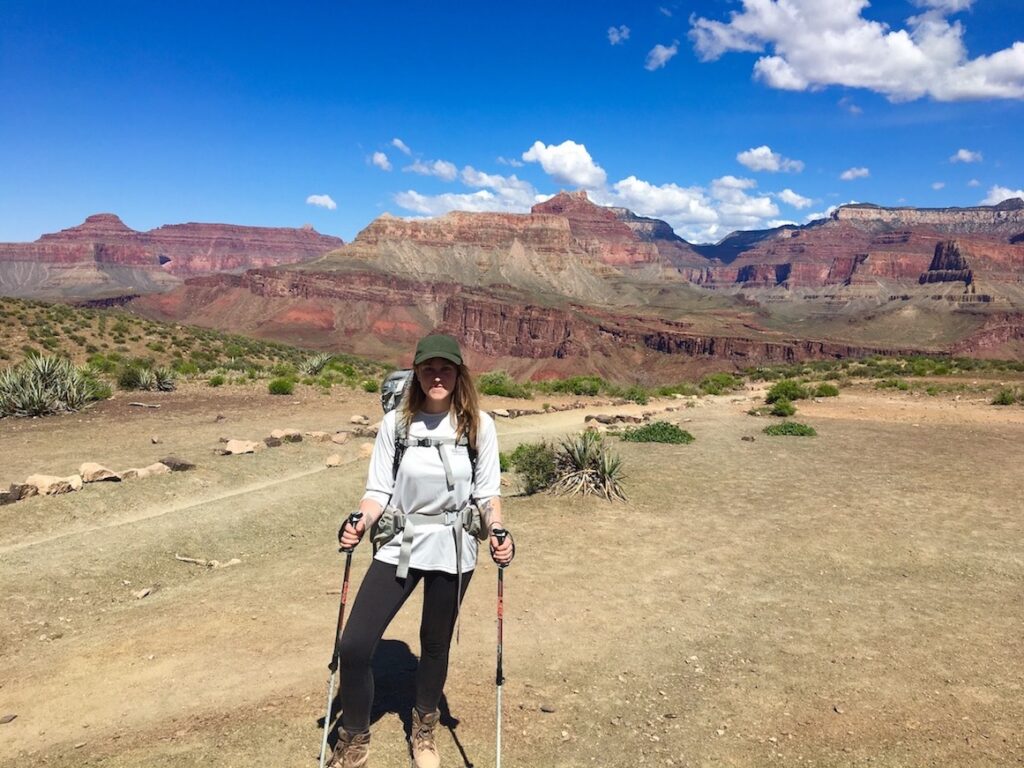
Thankfully, yes. I encountered so much endless mud and runoff that eventually I just gave up on trying to go around the watery obstacles and committed to sloshing right through. The shoes held up so well that this strategy became my modus operandi. Of course with that much of an assault, I can’t say my feet remained dry the whole trip. On the really wet days, the Moabs put up a fight for a few hours before finally succumbing, and my socks and feet would surrender to become one with the bogs. But the amount of times this didn’t happen was more surprising than the amount of times it inevitably did. Traction on rocky or slick terrain was never a concern, which I already knew from testing them out in the Grand Canyon. Today, 400+ miles later, they still feel sturdy and have no holes or damage. Like the Smartwool, I was rarely aware of my shoes while hiking, which is the mark of successful gear.
I will advise that when solo hiking in wet environments like Scotland and Ireland, letting your feet linger in wet shoes for hours upon hours is a bad idea. If you’re not comfortable hiking in something creative like Chacos sandals or water shoes or going barefoot like The Barefoot Backpacker, then even with the best shoe brand, you’ll need to take a lot of precautions to keep your feet healthy. Change into dry socks as often as possible (I know it’s easier said than done when the new pair will just immediately soak through anyway) and change into camp shoes once you set up your tent or get to town.
Leki Journey Lite Trekking Poles

I bought Leki trekking poles when I worked at the Grand Canyon and have always loved them, so I was confident they would be good on this trip as well. They’re a good weight in my hands, are retractable, and (knock on wood) virtually bulletproof. I slam them around with no remorse and I’ve never had a breakage of any kind. My fear that they might come to harm while strapped to my backpack and being thrown about airport baggage claims was unfounded, too. They’ve been all around reliable and I can only imagine the degree of trauma they must be saving my knees from.
You can get the regular or the anti-shock poles from the Leki Journey Lite series, or check out the full Leki store for other models.
Years later when I returned to the United Kingdom to hike in Snowdonia in Wales and the Peak District in England, I didn’t bring my trekking poles with me since hiking wasn’t the sole focus of this trip. A local shop in Llandudno sold Leki poles, but I bought the cheaper EuroHike poles since I wasn’t looking to invest; I knew I’d go back to my tried-and-true poles when I got home. The EuroHike ones were fine but I prefer the Leki.
Nemo Hornet 2P Tent


My top criteria for a tent included that it must be lightweight and rain- and wind-resistant. I knew camping in the deserts of Arizona and California could not have prepared me for conditions in the Scottish Highlands, Julian Alps, or MacGillycuddy’s Reeks, so I wanted as much extra help against the elements as possible. I wasn’t keen on spending too much money, so options like the Zpacks were out.
I was a little concerned that it’s only semi-free-standing, but I finally settled on the Nemo Hornet (if you have similar criteria as me, you might also consider the REI Quarter Dome and Big Agnes Tiger Wall). The Nemo tent ended up making me proud. It packs down small and light. It’s a speedy, easy setup, which was great when I saw storms approaching and wanted to throw camp together quickly. Most importantly, it protected brilliantly against rain. I slept like a baby during rainy nights, knowing everything inside was safe. It even held up during a nasty, terrifying thunderstorm in Les Chapieux on the Tour Du Mont Blanc.
The only problem I had with the Nemo Hornet tent was one extremely windy night in the Reeks near Carrauntoohil on the Kerry Way. I was pitched in the backyard of a B&B that was situated like a platform between the Lough Acoose valley and the mountains. The ground was rocky and unsuitable to hold all the stakes, so I tried tying it down to rocks, but the wind blustered so violently that the tent threatened to collapse on me multiple times. I only had to push on the walls to make the poles snap back into proper alignment, but with the next gust it would bend onto me again. I finally gave up, packed it up in the middle of the night, and slept in the camper’s bathroom. So I can’t fully recommend this tent for extreme wind conditions, but is any “lightweight” tent made with that in mind if you are on a budget?
Update: It looks like the cost of the Nemo Hornet has since increased, which now puts it in a similar price bracket as other tents that are rated better for wind resistance, such as the Big Agnes Copper Spur HV UL2.
Nemo Synthetic Sleeping Bag

The Nemo Azura 20 degree sleeping bag is now discontinued for some reason. The Nemo Forte replaced it, and then that got discontinued too. Now Nemo only sells synthetic 20 degree bags that weigh almost 4 lbs, which really sucks. At 2 lbs 5 oz, there was not a lighter weight synthetic 20 degree sleeping bag on the market, except the Marmot Ultra Elite 20 which reviewers consistently say does not have an accurate temperature rating.
I chose synthetic because it recovers better than down if it gets wet, and in Scotland and Ireland I was cognizant of moisture. I was also worried about getting cold at night camping in the Alps in October, and simultaneously wanted a bag as lightweight as possible. It’s hard to check all those boxes in one affordable product. The warmer and more water resistant a bag is, the heavier and less compressible it’s likely to be.
The Nemo Azura sleeping bag is voluminous and packs down bulkier than some ultralight options might, which is to be expected from a synthetic bag, but it’s still quite lightweight and I was incredibly satisfied with performance – warm and cozy! Being cold at night never played out to be the obstacle I imagined it to be. I was extra diligent to make sure my gear didn’t come into direct contact with rain, so the bag never got soaked anyway, but there were plenty of times when condensation hung in the air or on my pack. Fortunately the Nemo synthetic sleeping bag never retained moisture.
REI Co-Op Insulated Air Pad
I have a Thermarest that is ultimately just too bulky and hard to pack. I wasn’t planning on purchasing a replacement, but right before I left I made a quick trip to REI and couldn’t pass up their tiny, weighs-nothing sleeping pad. At the time the model was called the Flash 2; now the closest thing is the Helix. It was a revelation for me because I was so used to fighting with my Thermarest. Using the Flash lacks drama. I can blow it up in about 10 seconds, it stays inflated all through the night, keeps me off the cold ground, and in the morning deflates in an instant and packs back up super tight.
SanDisk 128GB iXpand Flash Drive

My phone is constantly doing that annoying “Storage is Full” error message when I try to take pictures and I knew I’d be taking thousands while hiking in the United Kingdom and Europe. I uploaded all my old pictures and videos to this SanDisk thumb drive, then deleted everything off my phone to have a totally clean slate and tons of space. I brought the drive along so that periodically I could repeat this process if I started to need more storage again, and so that I could back up all my pictures in the terrible case that something happened to my phone. Queue nightmares of dropping it in Loch Lomond.
REI Lightweight Merino Wool Hiking Socks
I brought a few pairs of socks and the REI merino socks were the best; the others stopped serving any sort of purpose once wet. They are soft and cozy, but I preferred to wear them over thin liner socks to prevent blisters. My one mistake was bringing tall crew length socks. Tall, warm socks and tight layers can cause vasculitis. I usually defaulted instead to the quarter length REI merino socks I also brought. These days, I prefer my new favorite Wrightsock CoolMesh II quarter socks which are already double-layered so you don’t need a liner.
Chaco Z/Volv Sandals

The Chaco Z/Volv sandals are a cheaper basic Chaco model, but they did what I needed them to. I wore them around camp so I could get my wet shoes off and air my pruning feet before blisters could form. I also switched into the Chacos a couple times to do water crossings if my regular shoes weren’t soaked yet, so as to save them the submersion (ultimately fruitless). I was so grateful I had them when my feet were aching and I couldn’t stand to have them suited up in layers of fabric any longer. I only hiked in the Chacos one time, with socks underneath (sockos!), which was fine but I probably won’t make it a habit like some hikers prefer.
Nalgene Water Thermos
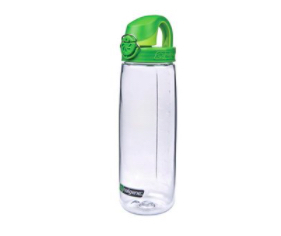
My mom got the Nalgene OTF (On The Fly) Water Bottle for me because she also has one that she loves, and I’m a convert for life. I usually have this thermos on one outside pocket of my backpack, another Nalgene-brand thermos on the opposite side, and then a third or even fourth liter inside the pack itself. Every Nalgene product I’ve ever owned is completely leak-proof. I like the On The Fly one best because it has the locking snap-top spigot for ease of use (I don’t want to screw and unscrew the entire lid). I always favor this one.
Travel Insurance

Travel Insurance might not qualify as “gear”, but it was one of the most useful things I purchased for solo hiking in Europe. When Adria Airways went bankrupt and my flights into and out of Slovenia got cancelled at the last minute, stranding me in France and forcing me to repurchase all my flights out of pocket, I filed a claim with World Nomads and they got me $660 back! Having insurance also gave me peace of mind because I was hiking by myself in foreign countries where I don’t have health insurance and, worst case scenario, an evacuation situation could emerge.
If you like to compare different companies and plans before choosing, check out Travel Insurance Master. You enter your criteria (Road trip? Adventure sports trip? Budget?) and it presents you with side-by-side comparisons of different providers.
✈️ These days I would also use an Airalo eSIM for affordable international cell data. I don’t think it existed when I did this particular trip, but I’ve used an eSIM on all of my international trips since. It enables me to access maps, use a browser to search bus schedules, etc.
Useful But Not Ideal
North Face FlashDry Glove Liners
I pretty much never bring or wear gloves for any hiking trip, but this was my first time solo hiking abroad for an extended period in potentially chillier conditions and I thought maybe I should consider it.
I bought these North Face glove liners for the warmth but I didn’t have waterproof gloves to wear over them, so they soaked through fast in the rain. They were warm-ish, but not enough that I relied on them, and they were hard to get on (maybe I should have gone with a different size). I do remember one day in Scotland where my hands were truly freezing, so the right gloves could still be a good idea for a trip like this, but since I had the wrong gloves I might as well have foregone gloves altogether.
REI Rain Pants


I bought these rain pants so long ago that I’m sure they don’t make them anymore, but they’re just a simple pair of black, lightweight rain pants with deep pockets on either side. They tend to fall down as my hip belt on my backpack pushes on the waistline and as they get heavier with rain and mud, so I tied a paracord through the belt loops to hold them up. That’s one element that could be improved upon if I were to replace them with a new pair. They also limit my range of motion.
I wore them with leggings underneath, and they were largely effective at keeping the inner layer dry from the rain. They also took the biggest hit from mud splashing up my leg, so they guarded my shoes, socks, and leggings from the worst assaults.
I am sure that European brands make better versions of rain pants.
Title Nine Herringbone Distance Running Tight
These Title Nine leggings had been my go-to hiking and running pants for a couple years prior (find them in the Grand Canyon here, here, and here). They’re supportive and comfortable. The only drawback I knew of already was no pockets, but that’s par for the course with leggings.
On this trip I discovered a strange new issue, which is that on the Kerry Way, suddenly the zippers down the sides of my calf started irritating my skin and causing red bumps. It was almost like a razor burn rash. To create a barrier, from then on out I always wore my tallest socks so I could pull them up under the pant. This solved it but created a new problem where I had blotchy redness around the circumference of my calf where the sock ended. I believe it was exercise-induced vasculitis.
The idea of a heat rash seems strange considering I never had it in the canyon, but I must have been suffocating my legs with all the tight clothing over the course of many back-to-back soggy hikes with the constantly changing weather conditions these countries are known for (I wrote further about this revelation here). Nowadays I hike in looser-fitting clothing, short socks, and I will not buy pants with zippers going up the ankle and calf.
If I’m going to wear leggings for hiking, I now prefer the Patagonia Pack Out Tights which have pockets and no zippers.
Title Nine Cold Killer Pants
I brought the Title Nine Cold Killer Pants because I thought it might be extra cold in the Alps. I was so naive. Another pair of pants really wasn’t necessary weight, but it did feel nice to change into them to sleep in or to walk around town, and a couple nights were chilly enough that they were a nice luxury. I had a few issues with them though.
Firstly, the same zipper problem on the calf again. It was slicing into my skin and I had to wear tall socks with them. Secondly, and this is odd – only the front half of the pants is insulated. The back doesn’t share the same material as the whole front of the pant. So I’d be laying there at night wondering why my ass was freezing but the rest of me was warm. Really weird design. Thirdly, there is a seam that goes into the knee that was scratchy. So, they were made from a cozy material and had a flattering fit, but I still can’t call them “comfortable” and there’s got to be a better lightweight pant out there designed for keeping hikers warm in chilly conditions in the United Kingdom and Europe.
Osprey Aura 65L Backpack
Osprey is often touted as the best backpack brand and is therefore everyone’s first-ever pack purchase, but I’ve always had issues with the Osprey Aura 65L pack. I had a lot to say about this here. I sold the Osprey and I’ve since upgraded to the Sierra Designs Flex Capacitor which I love, and wish I’d had on this trip.
Unnecessary Weight
Too-Thin REI Rain Jacket
They don’t make this paper-thin rain jacket anymore, which we don’t need to grieve. I don’t know what level of rain this would be sufficient for, maybe the light mist of a lawn sprinkler. I’m glad I figured this out in Glasgow before starting the West Highland Way, can you imagine?
UV Shirt
I had to ditch my beloved Rim to Rim UV sweat-wicking shirt. It was ideal in the Canyon but just didn’t make any sense in these environments. I needed insulation and the Smartwool base layer worked for sun protection.
Shorts
A don doesn’t wear shorts. I keep trying to get into them because I see other hikers wearing shorts all the time and they’re lighter weight than long pants, but it doesn’t do it for me. I get scraped up by branches and brush, bitten by bugs, burned by the sun (I’ve had skin cancer issues on my legs), and on this trip the mud situation would have been awful. I trashed the pair I brought pretty early on. These days I have Outdoor Voices tri-color zip-off pants which can turn into capris or shorts if I want them to, like for a water crossing. They’re also loose-fitting instead of tight like leggings, a great all-around hiking and trekking pant.
Gaiters
On these trails, you’re going to get wet. And once you’re wet, you’re wet. If your shoe, sock, and pant strategies can’t handle the rain, it’s time to accept it. No use in having 25 different products all attempting the same futile cause. I mailed these home.
Down Jacket
This was painful. I brought it for Tour Du Mont Blanc, but on the West Highland Way it kept getting repeatedly soaked through with rain. Wearing it under my rain jacket made me sweaty, and it added weight when inside my pack. It especially felt like a ton of bricks when trying to carry it around while it was sopping wet. I tried everything I could to dry it out, but nothing worked, or if it started to, the next day it would get wet again. It would have cost a fortune to mail it home and there were no post offices around anyway, so I left it behind. This was not economical but I learned a few lessons.
First of all, a super-warm jacket never became necessary on any of the trails I did, so I can save myself the hassle of bringing one so extra in the future if I’m not hiking in winter or in Siberia. Secondly, when I get a replacement jacket I’ll choose a more easily packable option like the European Mac in a Sac. (2021 update: I’ve gone with a Patagonia Nano Puff which is appropriately insulating, synthetic rather than down, and so much easier to pack tightly!)
Bug Net
I brought a Sea to Summit Head Net in case of midges on the West Highland Way but fortunately never needed it! I chose to do this hike in September because apparently that’s when the midges start to die off. I did use my Smidge insect repellent, but they never swarmed badly enough to need a physical shield. The bug net really doesn’t weigh anything though, so it’s still a “might as well bring it” item.
Crampons
Microspikes were another item I dragged along for the Tour Du Mont Blanc that never needed to be put to use. There was not a lot of snow still lingering, but it might be something you need on the TMB depending on the season. I had the Yaktrax ICEtrekkers Diamond Grips which were awesome in the Grand Canyon during blizzardy winters (2021 update: I’ve since upgraded to Kahtoola MICROspikes which I like even more).
Is there any gear you’ve found particularly useful in these climates that you might not use elsewhere? I’d love to hear about it!
Related:




Latest REI Outdoor Gear Discounts
Discounts based on original prices. While supplies last. Selection varies by location.
REI Co-op Member Days | March 13-23
-REI Co-op Members save 20% on one full-price item and 20% on one REI Outlet item thru 3/23. Use code MEMBER26 at checkout.
–Member-Only Product Offers: Up to 40% off handpicked gear, clothing and more, including 40% Off REI Co-op Campwell Tents & Footprints, 40% Off REI Co-op Wonderland Tents & Footprints, 25% Off All COCOON Liners, Sheets & Pillows
–Member-Only REI Outlet Deals: Limited Time Offers throughout the Event! Starting 3/13: save 50% off an exclusive collection at REI Outlet. Save big on these deals now before a new collection drops on 3/18!
Discounted past-season styles from Patagonia, Athleta, prAna and more
Patagonia / Arc’teryx / The North Face / Athleta / prAna / Smartwool / Outdoor Research
Pin It:


My dream is to write travel and hiking content full-time. All of my guides and itineraries are free and my travels are self-funded. If you enjoy my site and would like to support, you can donate any amount to my Ko-fi page. Thank you!!
Love these recs, it is so important to have the right gear when trekking like you do! You would do well in my turf (check out Rago National Park or Møysalen National Park if you haven’t been there yet)
I’m an avid hiker as well and love these recommendations especially the hiking poles – game changer!
Awesome, if you need some new ones Leki is definitely top notch! They have more expensive and less expensive options, the ones I have are kind of middle ground.
I’m not much of a trekker, but it looks like you got some great gear! I love the purple raincoat. Merano Wool is always a must for me when in colder weather.
I’ve really grown addicted to the Merino as well! I want it in every form – socks, leggings, hat, everything!
That’s crazy that you never wore shorts the whole time! And I’m going to need to check out that tent, mine is so old that it is no longer waterproof and I would love to be lighter in that category as well, plus I love Nemo!
Lol I definitely wished I had the shorts a few times just for comfort, like at night. I don’t tend to wear them very often anyway though, in any climate, so it wasn’t a huge departure for me. I’ve really grown fond of Nemo too! I was able to get this tent on sale at REI, hopefully they have another one soon. Can you get that brand in Mexico or would you order online?
Such a good informative post!! And you are such a bad ass for doing all of these trekkings on your own!!!
Haha thanks Charlotte! The better the gear the less I worry about being solo.
Helpful post! I would love to do a long trail in Europe. Haven’t done yet, even though I live in Europe!
You guys have so many wonderful options to choose from in so many different climates, I bet the perfect trail for you is out there!
Super helpful post Claire!
I have only done a few longer trails s I am pretty sure I would have made similar packing errors. I am sooo glad you found Mountain Warehouse when you needed a rain jacket too – that shop is awesome! Plus your jacket really suits you (even if you were going for practicality more than looking like a cute hiker!!) Your poor coat that got left behind though. 🙁
Aw thanks Josy!! I did end up liking how you can cinch it at the waist, when conditions are rough it helps to at least feel a bit less like a potato in your clothes lol. I’m really glad to have discovered Mountain Warehouse too! I wasn’t aware of the brand but apparently some stores do carry it in the States, so now I can be on the lookout for it.
Brilliant post, Claire!! I would have totally made the same mistakes as you with packing things like shorts. I would always pack a first aid kit even if I don’t end up using it – you just know as soon as you don’t have it, you’ll need it! This is a really useful post, I could do with some of this stuff for the next hiking season. 🙂
Ha yeah that was my concern every time I was trying to decide what to leave behind – is this something I might end up needing 2 days from now that only seems useless at the moment?
Thanks, I hope most of it is available in the UK! Definitely the rain jacket is. If you end up going with any of this stuff I’d love to hear!
What a useful post!! I’ve never done any multi-day treks in Europe, but the WHW is definitely on my list. Figuring out gear for any trek can be such a struggle. So I’m definitely saving this for future reference! (Sorry about your down jacket!! 🙁 )
Ha thanks about the jacket 🙁 So bummed. Guess it’s time to research again for a new one!
You’re so right, it’d be easy if we could just buy all our gear in one fell swoop and use the same stuff every time, but I’m really learning how different every trail is and how specific my needs are for every climate. Luckily a lot of this is multi-functional for 3 seasons, but it all still has it’s ideal uses. I hope you’re able to mark the WHW off your list! It’s a great trail for many experience levels, as is Hadrian’s Wall.
Wow, this is a seriously field-tested equipment list for hiking Europe! I’m needing a new sleeping bag so it’s great to read your review on that, love that it’s a lighter weight one too. That rain jacket sounds really great for wet-weather hiking.
I definitely beat a lot of this stuff up and it stood the test! Finding the right bag was confusing for me, it seems like they’re either way too ridiculously big and bulky that I don’t understand how they’re being marketed towards hikers, or they’re so light that it seems like they’d only be comfortable in deserts. This one (and probably the one Simon mentions below) was a good middle ground.
You’ve certainly done your research. For a newby at hiking, this is really great.
Thanks – PS I love your guide on Tulum! If I ever go there I might bring some of this same hiking gear haha, I imagine it can be humid and wet there? Except I’ll reinstitute the warm weather items like the shorts
As a Brit I fully understand the need for rain gear. Glad to see you made it to Hadrian’s Wall which is near where I’m from in the UK. Great tips and ideas for gear that would be really helpful on travels
Thanks, hope it’s helpful!
Your home country really taught me a lot that I think will be useful in my hiking future; even here in the States we have some area with climates like that, which I’m now way more prepared for.
So helpful! I am trying to find a portable charger for my phone that is also light. The one I have now feels like it weighs 5 pounds haha! That jacket that you purchased looks amazing!!
I think the larger Goal Zero ones are still pretty light, hopefully that’ll work out for me because yeah a lot of the ones I see other people carrying are like bricks!
Really happy the synthetic sleeping bag worked out for you. It’s tough to choose something a bit heavier at times but I think the durability and the fact it’s not such a worry if it gets wet is worth the sacrifice
Hey Simon – thanks! Agreed, a lot of folks tried to talk me out of it saying down is so much warmer and lighter, but I’m happy with the one I chose. It was just as warm, in fact any warmer and some nights I might have been sweating, plus yeah the peace of mind was valuable. I don’t like worrying and having to take so much extra precaution to prevent gear from getting messed up, it should be able to take a little beating. What brand do you use?
I use a Mountain Hardwear Lamina… It has been great for the camping that I was doing in the UK. Since being in China, its been in a bag at home in the UK… but I know when I get back it will still be in good condition as don’t need to worry about the feathers!
Nice, yeah I think we can both rest assured that our bags are going to last a long time!
I may have climbed some mountains, but I’m not sure if I’m a trekker, especially around Europe! This sounds like a great experience for those not so faint of heart–maybe that’ll be me one day, so great post!
Thanks Natasha! Ah if you can climb a mountain you can walk a long trail – we’re meant for it!
So great to meet you on your hike on The Kerry Way! I enjoyed our chat – and really found this article interesting!
I’m heading to the USA for Thanksgiving so will check out some of these stores. Here in Ireland it hard to find SUPER waterproof clothes because (as they believe) it. Ever gets really cold. But for my wimpy body it’s really cold! That rain jacket sounds ideal.
I had good luck buying camping clothes/gear in Bratislava of all places. A regular mall had THREE different stores! Hiking is big there. I’m y’all but thin: there women are, too – so all the sleeves are LONG! Not like America where a jacket sleeve isn’t long enough for me in the small size.
Rambling on in case other hikers read this!
Anyhow- great to meet you and perhaps we’ll meet again, someday!
Susan
TodayInIreland on social media
Yay hi Susan, so great to meet you too! Thanks for the great cafe recommendation, loved the brown bread! That seems crazy to me that it’s hard to find good waterproof clothes in Ireland, you’d think that’d be top priority. But come to think of it, the outdoor gear stores I found in Killarney didn’t have too much selection. That’s interesting about Bratislava, I need to look up if they have any cool long distance trails. I never thought about that area much, but I follow Girl Astray who does some hiking there and now with your comment my curiosity is solidified. Maybe another 5 Treks in my future.
Where are you coming in the USA???