

Niche Hiking Advice That Turned Out to Be True (Part 2)
Purchases made through some links on this page may provide The Detour Effect with commissions (at no extra cost to you). Thank you!
This is Part Two of my “Niche Hiking Advice That Turned Out to Be True” series; you can find Part One here. I started hiking regularly around 2016 but have been traveling the world for the main purpose of hiking since 2019. I also work remotely for a hiking tour operator. The longer I enjoy this hobby and lifestyle, the more I am able to appreciate the hiking advice and tips that were passed on to me by more experienced hikers in the early days. As a beginner, at first it can be hard to parse out which advice is really just coming from a place of personal preference and bias, and/or if experienced hikers are just trying to sound cool. In this series I’m describing advice that I originally took with a grain of salt, but over the years have come around to understanding more deeply and agreeing with – or not.
You Don’t Have to Hike in Bad Weather
“No bad weather, only bad clothes” is an oft-repeated statement in the outdoors community. It’s something I say myself and believe to be true, but this phrase can also be weaponized to make you feel inadequate. It’s the outdoor equivalent of a music hipster’s “you can’t appreciate the true sound unless you hear it on vinyl.” (In a similar vein – get ready for the oldheads who will side-eye you for using a digital offline map instead of a paper one. If I used a paper map everywhere I went they’d have to raze the entire Amazon to produce them all).
When I hiked five long-distance trails back-to-back in Europe, including in Scotland and Ireland, I’d say at least 75% of my time was spent hiking in the rain. It was Type 2 Fun and I enjoyed the experience, but I would have preferred it not to rain. I had moments of low morale, fog-filled views, and I had to fight a nasty toenail fungus after slopping around in the bogs for so long.
On that trip and a few others, I’ve already proven to myself that I can handle adverse weather conditions. I don’t need to take on bad weather in the future as a matter of choice. I’ll deal with it if I’m already out on the trail and some rain blows in, but if I haven’t embarked yet, the upcoming forecast looks miserable, and I’m able to choose to hike on a different day when I don’t have to encounter bad weather, I’m happy to have that option.
Anytime I utter out loud to another adventurer that I’m thinking about rescheduling a hiking trip to avoid bad weather, a few people give me a “what’s a little rain?”, “no bad weather, only bad clothes,” “it builds character,” or “never turn back!” Look – my character has been built. I’ve paid my dues. The trip does not sound as fun to me if there’s going to be severe thunderstorms and potential flooding, and I hike for fun. If I’m already staring down the barrel of 3+ days of non-stop rain before I’ve even started hiking, that’s not setting a good tone for the trip, and I don’t want to start off on the wrong foot from the get-go.
If you have purchased flights and gotten time off work to do a hiking trip, then yes, consider pushing forward despite adverse weather conditions as long as it’s just intermittent rain and nothing dangerous is predicted. Hiking in different weather conditions can be fun and it’s the name of the game, nature will do what she does! You become a more well-rounded hiker from it, to be sure. If you can do the trip any old week, though, postponing it does not make you lame. A good challenging hike takes a lot of time and effort already, what’s bad about wanting to be rewarded with views you can actually see?

Travel Fails: When Weather Obscures Famous Viewpoints
Bears Don’t Care
The only thing that’s held me back from tackling every hiking trail in the world solo is my fear of large predatory animals, particularly bears and mountain lions. Since mountain lions are so elusive and I’ve never seen one, it’s easier to turn that fear off in my brain. That’s one reason why I solo hike in the Southwestern desert more often than any other type of terrain; bears are rare in the desert (though we do have them in Arizona and places like Big Bend in Texas).
Contrastingly, I have seen black bears plenty of times while solo hiking in Washington, North Carolina, and Wyoming. I know firsthand that they’re out there on the same trails that I enjoy.
When I have expressed paranoia about wildlife, other outdoor enthusiasts reassure me that animals want nothing to do with humans and as long as I’m following Leave No Trace principles, I’ll be fine. I’ve greeted this with skepticism in case they’re just trying to make me feel better. I especially hate the sentiment, “don’t worry, bears aren’t aggressive unless you accidentally stumble onto a mother and cubs,” because I could easily do exactly that. That’s why the word “accidentally” exists.
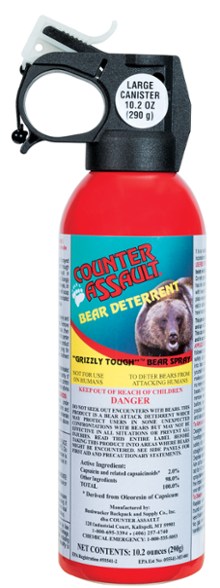
Now that I’ve had enough of my own bear sightings, though, it turns out those calming voices were on the money. Every bear I’ve ever encountered just scurried away when they heard me coming; they were totally uninterested in interacting with me whatsoever. I sing to myself, clap, and shout “hey bear” every once in awhile to warn them that I’m approaching, and that seems to do the trick. Of course I also carry bear spray for peace of mind.
I do still drag a fear and healthy respect of grizzly bears around with me and doubt that will ever fully go away, but experience has made me feel so much more confident about black bears. I regret the hesitance I had about potentially encountering black bears out in Flagstaff, Arizona and other locations that grizzlies don’t inhabit, because it held me back from taking on more remote wilderness trails.
Expert Advice Can Sound Stupid to Beginners
When I started my seasonal job at the Grand Canyon, we had to do a few training sessions that were more about tourism and outdoor recreation in general, and were not specific to my position at the Activities Desk. One “class” we did involved an exercise where the speaker dressed in different hiking outfits and carried props. She asked us to guess which characters were experienced hikers and which ones might be unprepared.
When she donned sandals instead of hiking shoes, a massive floppy hat, and carried an umbrella, most people guessed she was a newbie tourist. It turned out this particular character was supposed to be an expert hiker.
The Grand Canyon is hot as hell in the summertime, and year-around the trails are mostly exposed to the sun and do not have much shade. The umbrella, while it may look goofy, makes a lot of sense in the canyon to prevent sun exposure. The sandals were Chacos, a popular choice among thru-hikers.
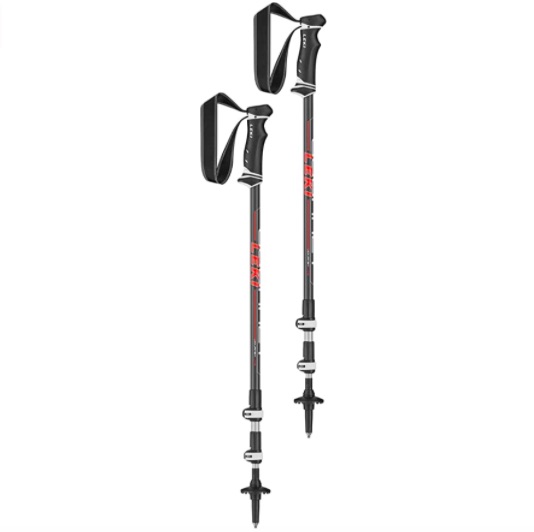
In the years since that class, I’ve seen the same point proved again and again. I have heard newbie hikers giggle at the idea of carrying trekking poles as if it’s a show of weakness, but frequent hikers don’t feel the need to have conversations about their utility and it’s often expert hikers who carry them. Nowadays if I hear someone scoff or snicker at trekking poles, my immediate Pavlovian thought is that the person being judgmental is in fact the unwise beginner.
Recently when I was car camping in Grand Teton, another camper pulled up next to me and struck up an excited conversation. He had taken the week off work and driven up to Yellowstone and Grand Teton for a quick trip. He asked me if I planned on setting up my tent, but I didn’t. I live in my car for months at a time and I have it all set up to sleep in the truck bed, so pitching my tent every night and then breaking it down again is kind of a waste of time to me at this point. My tent is more for backpacking trips. To make it simple and not bore him with details of my lifestyle, when he asked why I wasn’t going to set up the tent, I responded “bugs?” because mosquitos were swarming. He smirked as if I am too prissy for camping, but I’m the one living nomadically full-time while hiking and camping around the world.
New recruits to any hobby are not going to have the context necessary to be able to accurately judge whether someone’s way of doing things is gained from years of trial and error. If something you do sounds goofy or lame to another hiker, remember that it’s being filtered through their own perspective, and their perspective may not be as informed as they think it is. Take no shit.
I think of artists who get hired to create a graphic and people think it should be cheap because it only takes them twenty minutes to put it together, but their response is that “it took a lot of years of study and practice to be able to do this in twenty minutes.” The untrained eye is not always great at discerning worth and competence.
The Best Training for Hiking is Hiking
I have often researched what type of strength training is best to prepare my body for hiking trips. Carrying a heavy backpack over steep elevation change is different from walking flat distances with a day pack. It’s not just about having the cardio endurance for ascending uphill. Hiking can also involve twisting and turning your body in contorted ways to scramble on boulders, and it can put a lot of pressure on the joints when hiking downhill, particularly the knees. Strength training is supposed to stabilize the affected joints and help with balance.
A lot of experienced hikers suggest that “the best way to train for hiking is to hike.” In my early days, I wondered if this contributes to why some thru-hikers destroy their bodies on long-distance trails. Maybe they didn’t properly prepare their bodies in advance for the hardship they were about to put it through.
Nowadays I tend to agree with them. Weightlifting at the gym has really done nothing for my trail performance. Running on the treadmill helps, but becoming more muscley is high maintenance. There is no way I can feed extra vanity muscle on a long hike; I don’t want to carry more food than is necessary. When hiking long distances, your body becomes efficient at optimizing calories for endurance purposes and is unconcerned with maintaining muscles that are not functional for the activity at hand. There’s a reason most thru-hikers look more sinewy than bulky, and are often downright underweight. This study even shows that heavy strength training has absolutely zero effect on long distance endurance athletic performance in females.
When I try to exercise glutes, hamstrings, and quads at the gym, I quite literally feel nothing. It doesn’t matter how much I try to increase the weight or how many reps I do, I will never feel any hint of DOMS in those muscles. I might feel an issue in my knees or spine or have trouble breathing, but during my hiking seasons when I’ve been able to get a lot of miles under my belt, besides the stairclimber there is not one single leg exercise at the gym that makes me feel like I’m sufficiently working out my legs. It takes a good old fashioned mountain ascent to get those muscles firing, and a relatively steep one at that.
People who hike frequently might be out there exercising legs for 8+ hours a day in rough terrain. It makes sense to me that doing 3×5 sets of leg exercises at the gym could not possibly come anywhere close to comparing to this type of exercise. If there is some broscience that says weightlifting for a couple hours is just as good as hiking for leg day, I’d really need to see the receipts on that.
For folks who are not able to do practice hikes as frequently as they’d like, supplementing with training at the gym is going to be very important if you’re trying to prepare for a big backpacking trip. Weighted squats, lunges, stairclimbers, and putting the treadmill on an incline can all be extremely beneficial to help simulate the trail experience. However, I’d wager those folks are still going to feel the burn in a whole new way when they hit the trail, because the only way to properly prepare for a hike is to hike.
Are there any popularly held hiking tips that you think are bogus? How about hiking advice that you didn’t jump on board with immediately, but that you came to appreciate over time? I’m looking forward to one day publishing a Part Three; I wonder what I still have left to learn.
Related:






Pin It:

My dream is to write travel and hiking content full-time. All of my guides and itineraries are free and my travels are self-funded. If you enjoy my site and would like to support, you can donate any amount to my Ko-fi page. Thank you!!