

Dark Tourism Isn’t About Rubbernecking
Purchases made through some links on this page may provide The Detour Effect with commissions (at no extra cost to you). Thank you!
When the Netflix documentary series Dark Tourist premiered, I was immediately on board. Many of my road trip stops over the years have been of the strange and unusual variety, inspired by events from history and aided by resources like Roadside America and Atlas Obscura. I have followed my muse to cemeteries, catacombs, outlaw hideouts, abandoned ruins, and haunted places both at home and abroad. The term “dark tourism” was coined in 1996 by academics J. John Lennon and Malcolm Foley, but in the years since the 2018 Netflix show, I’ve noticed an incessant onslaught of articles attempting to psychoanalyze and diagnose all travelers interested in the unsavory parts of history as rubbernecking, disrespectful voyeurs. This is an overly simplistic, reductive, uninspired conclusion.
Dark tourism is an education
When I visited the Etruscan tombs in Tarquinia, I had no prior context at all about who the Etruscans were. It turns out scholars have very little to go on either, since written history about the Etruscans hasn’t survived. The painted frescoes in the tombs are the only major example of pre-Roman artwork in the Mediterranean, and thus are a precious resource we can use to make interpretations about their lives. I would use words like “enlightening” and “miracle” to describe the tombs long before I would call them “morbid.”
The ways in which we bury our dead can say quite a lot about how we live and view the world. The earliest painted tombs at Tarquinia from the 7th century BC are colorful celebrations of life, but in later years you can see them start to change with Roman influence. The more recent paintings depict funerary processions provided over by demons of the underworld.


Dark tourism is about synthesizing abstract ideas with reality

When I was trying to learn to speak French, I listened to podcasts like the Land of Desire French history podcast and played Edith Piaf songs on repeat. I became independently fascinated by the Paris Catacombs and Père Lachaise Cemetery not for their morbidity, though that does add to the intrigue, but because of the multifaceted narratives contained therein. These sites are distant chronicles of a foreign land, and making a pilgrimage to see them in person was rewarding in several ways.
In the Catacombs, visitors come face to face with centuries of French history all in one small space. The bones you are looking at may have belonged to people who actually lived during the French Revolution or the Merovingian era. It’s a healthy reminder that my home country is not the center of the world; entire empires and cultures have risen and fallen over the centuries, having nothing to do with me. Here are their subjects, tangible proof that what I’ve read in the history books wasn’t just fantasy. In a somber way, visitors are also reminded that people are not so different despite vast chasms between them in time and space; “ils furent ce que nous sommes.”
I think visiting the site of Piaf’s grave at Père Lachaise had a similar effect; indeed, she was not a character written for Marion Cotillard to play in La Vie en Rose. The voice in my headphones is not entirely disembodied. There is somewhere I can go to pay my respects to her directly, and to feel a connection with the past and a person I never got to know.
Dark tourists glean new insights by experiencing the atmosphere in person

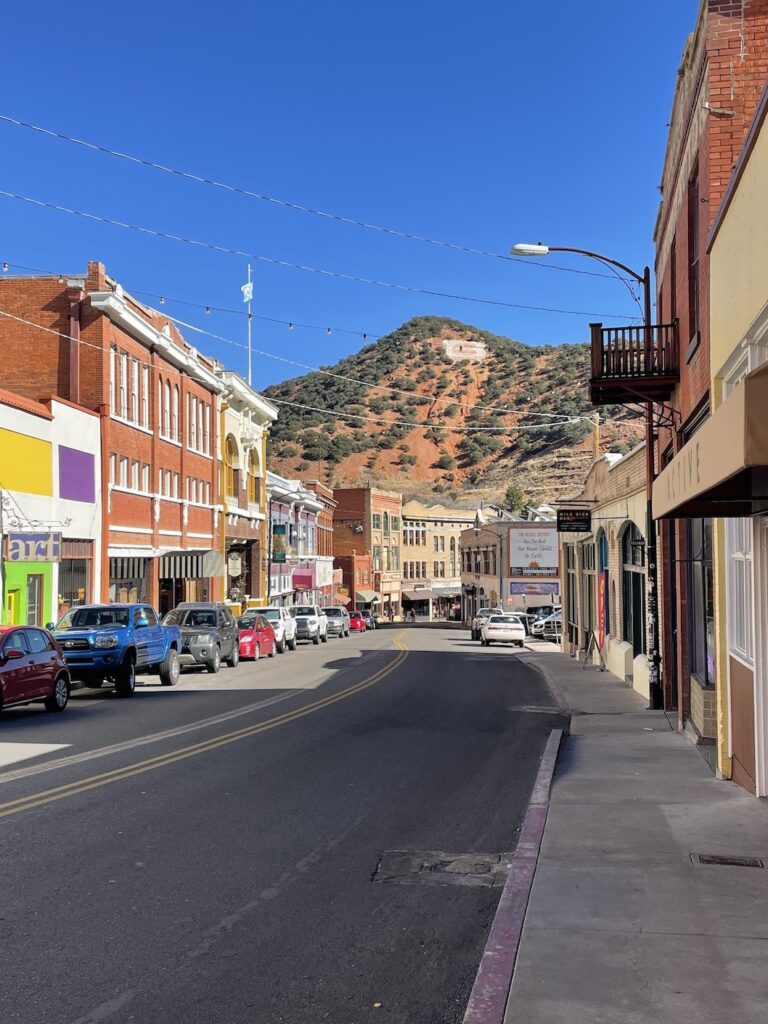
While growing up in Southeast Texas, I somehow developed an interest in Wild West and Depression-era outlaws like Butch Cassidy, Billy the Kid, and Bonnie and Clyde. I have visited the site of Bonnie and Clyde’s ambush and assassination in Louisiana, seen their bullet-ridden car on display in Nevada, visited the site of Butch Cassidy’s childhood home in Utah and one of his hideout cabins in Wyoming, seen the jailhouse in New Mexico where Billy the Kid was held before he made his famous escape, and made a trip out to Tombstone where the OK Corral shootout took place.

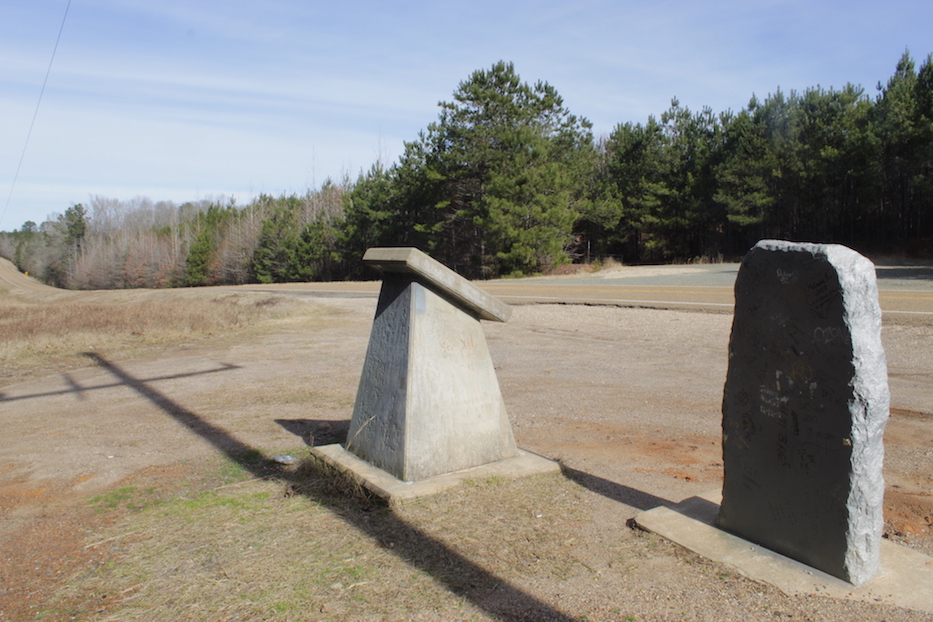
I have no illusions that any of these outlaws were upstanding citizens or ethical people, but they are mythic, folkloric figures of American history and they represent something. These are people driven to extremes to carve out a life for themselves in a country founded on “every man for himself.” Bonnie and Clyde in particular were raised in the same backwater Gulf Coast environment that I was, so I had some insight into the desperation and hopelessness they may have felt. By experiencing the environments in which they lived and died, and comparing that with the choices they made, perhaps I hope to learn something about America or human nature. What can driving the Bonnie and Clyde ambush route tell us about the experience of living on the road in the southern Bible Belt? Can visiting Tombstone show us how the dry desert dust can influence men to gamble with their lives? Who would I have been and what choices would I have made in those circumstances?
Dark tourism is honest
When I lived in Los Angeles, I joined a few different Esotouric bus tours, one of which visited serial killer murder locations like the field where the Black Dahlia was found. The experience of living in Los Angeles is an odd one, because you’re surrounded by the synthetic glamor of Hollywood as well as the tragedy of Skid Row; the metropolis of the city and the natural landscapes of the beach and nearby national parks like Yosemite and Death Valley. The region is really a land of extremes.
Those unfamiliar with the music industry might be surprised to learn that there is a healthy post-metal and alternative rock contingent in Southern California, which brilliantly reconciles these extremes by creating new genres like “beach goth” (see: The Growlers). I was interning for Hydra Head Records at the time, an alternative metal record label (one of my favorite artists they represented, Prurient, has a song called “Time’s Arrow” about the Black Dahlia, Elizabeth Short). An LA-based label and management company called Sargent House was managing a black metal band called Deafheaven, who had just released an album called Sunbather with a pastel pink cover. We goths are not always wearing corpse paint and avoiding the sun, it turns out. But we still can’t turn away from the truth and ignore the seedy underbelly that betrays the alibi insisted upon by glossy billboards and awards shows. Perhaps an argument can be made that dark music and dark tourism are noble in their honesty. Perhaps Esotouric is needed to counterbalance the celebrity homes bus tours in Los Angeles.

I have visited multiple prison museums such as the Brushy Mountain State Penitentiary in Tennessee, which was a somber look at the harsh realities of racism and subhuman conditions in the prison system. To be honest, my initial motivation for visiting this museum was its relation to the unhinged Barkley Marathons, but I came away from the tour having learned a few lessons about America’s sordid past and present. Other prisons and dungeons around the world, such as the Tower of London, Palacio de la Inquisición in Colombia, or Uzbekistan’s Bug Pit are shocking reminders of how far humanity can fall. It’s important for us to get outside of our own bubbles and look these things in the face so that we as a society can do better in the future. Travelers who use their free time to learn, and who are even willing to put themselves in unsettling environments in this pursuit, should be celebrated. To label all dark tourists as deviant for being curious and hungry for knowledge and perspective is unwarranted and lazy.
Dark tourism is inevitable
My interests in history, music, and literature do not always lead to the macabre. I have also followed Jack Kerouac up Desolation Peak, haunted the same Los Angeles bars as Charles Bukowski, and driven through Wichita, Kansas just to find out why Jack White thought he could get away from the “opera” there. I hiked Hadrian’s Wall out of interest in the ancient Roman conflicts with northern “barbarians,” hiked the West Highland Way so I could feel what it might be like to roam the epic highlands of my distant ancestors, and I have visited Native American heritage sites in Chaco Canyon and Mesa Verde out of an interest in petroglyphs and pictographs. In Jordan I endeavored to compare the impressive carved city of Petra to the cliff dwellings of Ancestral Puebloans.
Evidently, I am not specifically searching out the morbid or the tragic. It just so happens that when you have a keen interest in history and archaeology as a traveler, your path is bound to intersect with grim tales and dimly lit corridors at least half of the time. History itself is dark, and tourists can’t escape it.
Obviously, I understand the issue people have with tourists visiting sites of mass genocide or other atrocities and taking inappropriate selfies or generally behaving in a disrespectful manner, but the simple act of visiting a sad place is not in and of itself unethical. If anything, dark tourists are making an attempt to empathize with their fellow man and understand what it may have been like to live during different eras of history, in different locations around the world, or as a different demographic.
Related:






My dream is to write travel and hiking content full-time. All of my guides and itineraries are free and my travels are self-funded. If you enjoy my site and would like to support, you can donate any amount to my Ko-fi page. Thank you!!